
A 6.2-magnitude earthquake struck Afghanistan as the number of fatalities from Sunday’s disaster climbed to over 2,200.
The tremor hit the southeastern part of the country on Thursday night, as reported by the Helmholtz Centre for Geosciences in Germany. The extent of the damage remained unclear.
A 5.5-magnitude aftershock followed on Tuesday, spreading fear and disrupting rescue work as additional roads were blocked by falling rocks.
Hamdullah Fitrat, a Taliban spokesperson, stated on Thursday that the death toll from Sunday’s 6.0-magnitude quake had reached 2,205—up from earlier estimates of 1,400. This makes it one of the most lethal natural disasters in Afghanistan in recent decades.
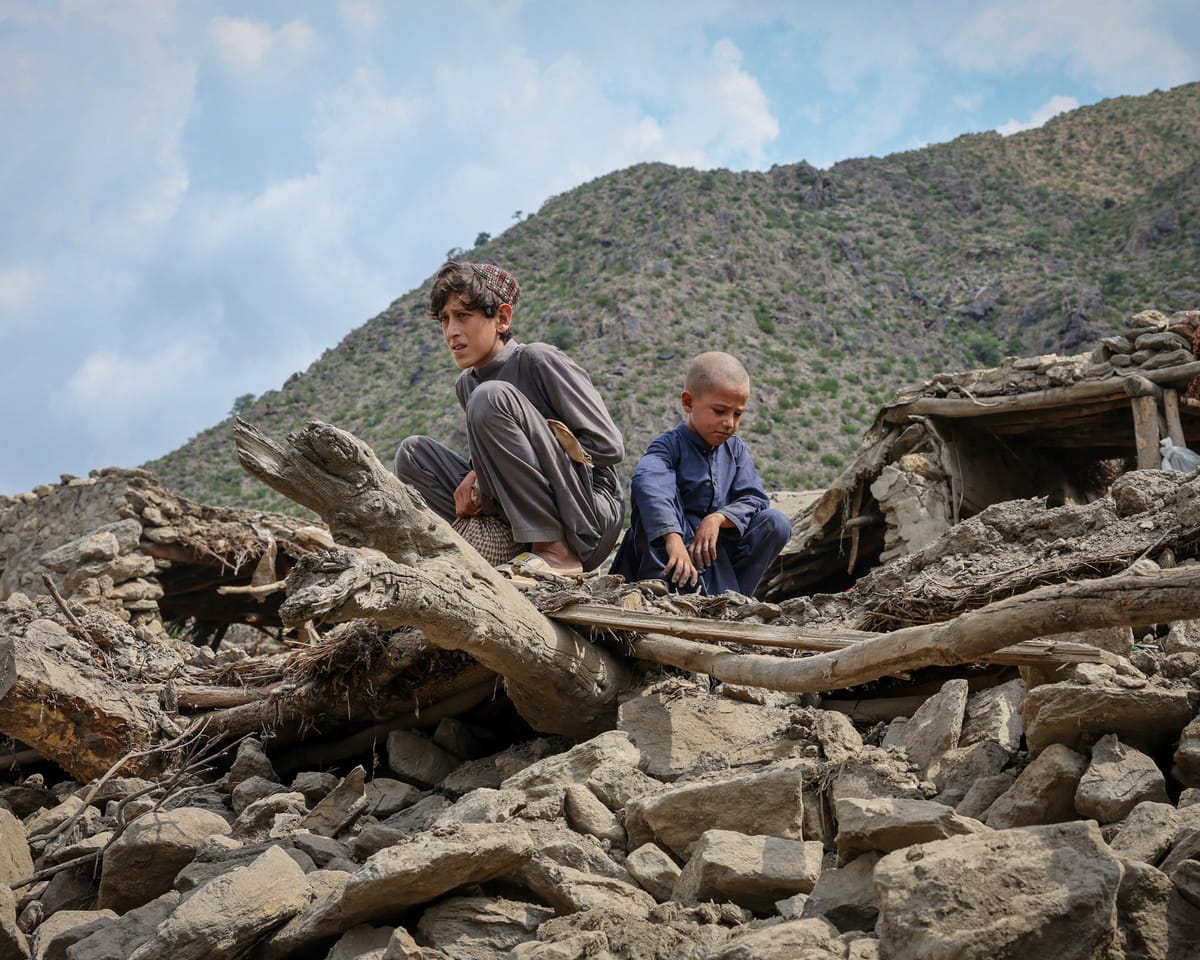
The quake struck the remote eastern highlands late on Sunday, flattening entire villages and burying people under collapsed structures.
Most deaths occurred in Kunar province, where many homes are constructed from mud brick and wood, leaving them prone to earthquake damage.
Rescuers finally reached villages previously inaccessible due to the destruction, and more bodies were recovered from the wreckage on Thursday.
Islamic Relief estimated that nearly all buildings in Kunar were damaged or destroyed.
The rugged landscape has complicated relief operations. Taliban officials dispatched helicopters and troops to locate and assist survivors. Workers reported trekking for hours to reach villages isolated by landslides.
Muhammad Israel recounted how the quake triggered a landslide that buried his house, livestock, and possessions in Kunar. “The mountain rocks fell,” he said. “I barely saved my children. The aftershocks continue—it’s uninhabitable now.”
He and his family were staying at a UN medical camp in Nurgal, one of the hardest-hit regions. “We have no shelter—we’re under the open sky,” he added.
A shortage of funding and resources has obstructed recovery efforts. Since 2021, when the Taliban regained control and enforced strict religious rules, international aid groups have struggled to operate, leading to a sharp decline in assistance.
Humanitarian organizations urgently require personnel and supplies to care for the injured and provide for tens of thousands left without homes, food, or water. Roughly 84,000 people have been impacted.
The Norwegian Refugee Council, which had 1,100 staff in Afghanistan during the last major quake in 2023, now has fewer than 450 workers in the country. It also lacks emergency reserves, with only one storage facility.
“Funding must come first, but procurement could take weeks—and help is needed immediately,” said Maisam Shafiey, an advisor for the council in Afghanistan.
Read next

Pete Hegseth's proposal to stream executions aligns US with controversial nations.
If the US defense secretary, Pete Hegseth, proceeds with plans to livestream the execution of a soldier radicalized to extremist Islam, who killed 13 people at a military base in Texas, the US would join a group of lesser powers and rogue actors known for public executions in recent years.

Criminals steal €5m from renowned Italian winery
In a significant theft in Tuscany, thousands of wine bottles valued at €5 million have been stolen from the renowned Marchesi Antinori winery, marking what is considered the largest heist of its kind in Italy. A group of at least seven masked individuals breached the winery's cellar in

Illuminated Theater in Havana – A Photographic Journey
Widespread blackouts have become more frequent in Cuba since the US imposed energy sanctions in January. These outages often last longer than 24 hours as the aging electrical grid struggles to cope. The Impulso theatre group has been forced to adapt, as the power cuts present significant challenges for the