
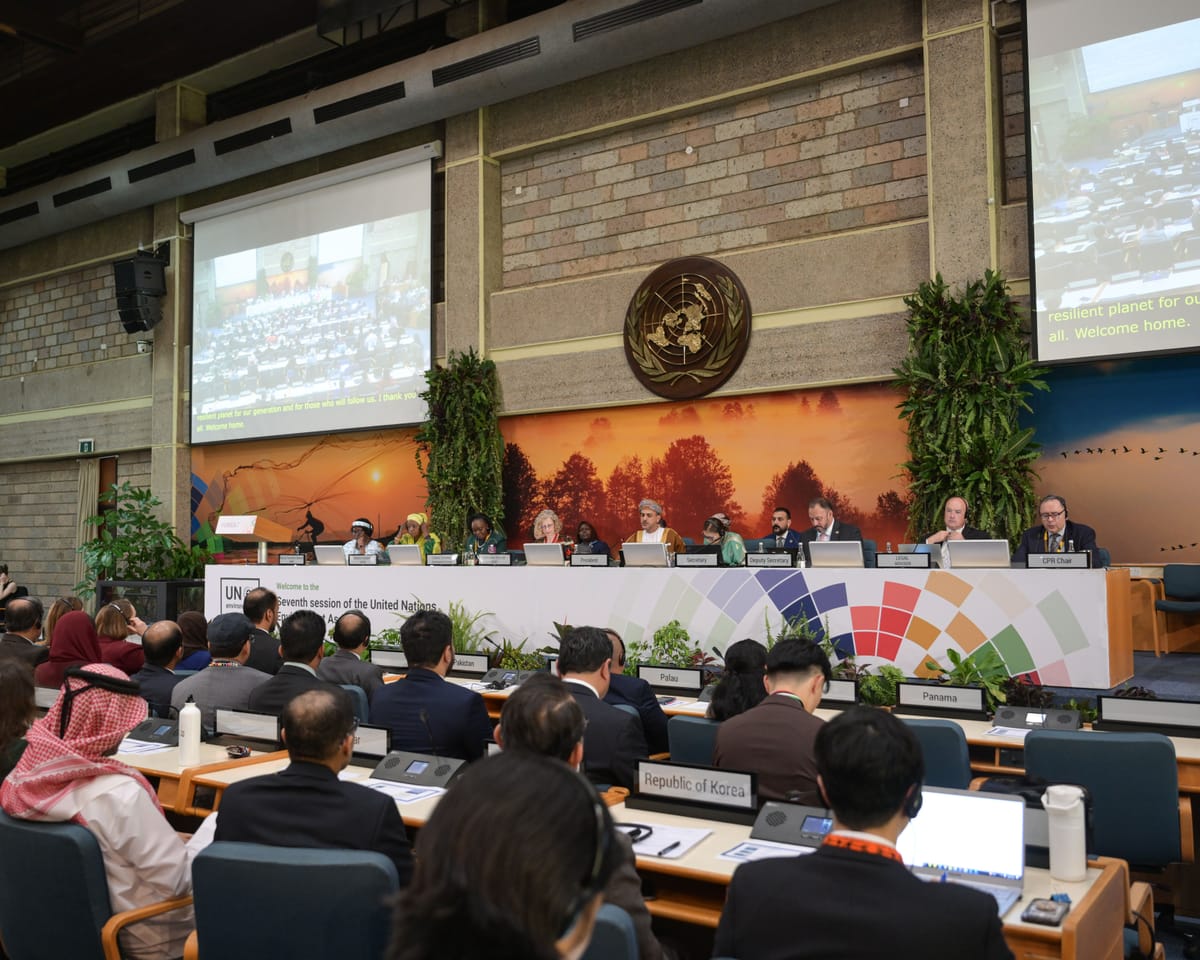
It is appropriate that this week’s United Nations environmental discussions are happening in Nairobi, as Africa plays a central role in shaping global climate dialogue. Diplomats from the continent are addressing the complex issue of whether attempting to cool Earth by reducing sunlight exposure is a prudent approach. While not officially on the summit agenda, African representatives are urging an end to framing solar geoengineering as a viable response to planetary warming — a stance difficult to contest.
African governments have mobilized against becoming testing grounds for speculative projects aiming to inject atmospheric particles to deflect solar radiation for minimal, uncertain cooling benefits. They emphasize environmental, ethical, and geopolitical dangers, advocating instead for an international agreement prohibiting public financing, outdoor trials, patent claims, and government endorsement of these technologies.
The rationale for restraint is clear: solar geoengineering fails to reduce greenhouse emissions. Potential consequences include disrupted rainfall patterns threatening food security and the peril of sudden temperature surges if interventions cease — known as termination shock. Last year, African opposition compelled the withdrawal of a Swiss-proposed resolution on solar radiation modification during UN negotiations.
Nonetheless, an industry is emerging around controlling Earth’s climate systems. A U.S.-Israeli company is designing spray systems for future governmental "cooling services," while pushback grows. Mexico banned solar geoengineering tests in 2023 after a U.S. startup conducted unauthorized experiments.
Academic critics note that the U.K.’s Advanced Research and Invention Agency recently became the first major government to fund solar radiation modification (SRM) research, backing hardware development and small-scale trials. Scientists have labeled this poorly governed and ineffective at proving SRM’s safety, urging policymakers to reconsider.
Research initiatives carry political dimensions. Infrastructure and careers depend on them; risky technologies attract deep-pocketed supporters. The role of the United States — the top oil and gas producer — warrants scrutiny. Solar geoengineering could allow temperature management without loosening fossil fuel dependence, aligning with interests seeking simultaneous control over energy systems and climate mechanisms.
Africa’s proposal for a solar geoengineering non-use pact — mirroring bans on landmines and chemical weapons — acknowledges that some technologies concentrate power so radically they create uncontrollable threats. A boundary must be established.
Read next

The world craves more compliments; just don’t make it awkward | Emma Beddington
I hope you won’t take offense at my remark that you look particularly sharp today. No, that’s not quite right—let’s begin again.
Lately I’ve been mulling over the nature of compliments: their purpose, their delivery, the ones that lift and the ones that fall flat.

The Guardian editorial: Trump's war on Iran will burden the world's poorest the most.
Rising fuel costs, the termination of mortgage schemes and the likelihood of higher prices for everything from groceries to smartphones are straining households. The US‑Israeli strike on Iran and Tehran’s retaliation have unsettled the world economy. Consumers are already bearing the brunt of the most severe energy‑supply

Who's to blame for the expanding surveillance age? Chances are, it's you – Tatum Hunter
A TikTok comedian recently set up a bogus ICE tip line and was flooded with calls – one even came from a teacher urging agents to investigate a kindergartener in her class. While governments and corporations design the framework of surveillance, ordinary citizens are increasingly eager to take part. The focus