
Argentinian Scientists Struggle as Austerity Measures Take Toll
Leonardo Amarilla is struggling. The geneticist and PhD in biological sciences holds a full-time research position at Argentina’s national science council, Conicet, where he studies ways to improve the productivity of crops like peanuts, soybeans, and sunflowers.
But after President Javier Milei implemented deep austerity policies—dubbed the "chainsaw" plan—Amarilla’s income dropped sharply, leaving him unable to afford basic necessities or help support his elderly parents.
To make ends meet, he started driving for Uber, working four hours daily on weekdays and six on weekends.
“I’m putting in 12 to 13 hours a day in total,” he says. “I’m exhausted. It’s hurting my research and my teaching. Before, I’d go home and read scientific papers—now I just head straight back out to drive.”
Amarilla’s situation is not unique. With rapidly declining wages, many of Argentina’s leading scientists are leaving research or taking on additional jobs—as ride-hailing drivers, food sellers, tutors, or craftspeople.
Since Milei assumed office in December 2023, Conicet salaries have lost nearly 35% of their value, according to a report by the Ibero-American Center for Research in Science, Technology and Innovation (CIICTI). Meanwhile, the government halted the hiring of 850 researchers previously approved under the last administration. Other state science organizations, including the atomic commission and the agricultural institute, have also been affected by the cuts.
Milei, who describes himself as an "anarcho-capitalist" and rejects climate science, has singled out public research institutions as wasteful. “If your work is so valuable,” he said in a 2024 speech, “test it in the marketplace—publish a book and see who buys it.”
The budget reductions have gone beyond salaries. According to the UK’s Inter-University Council, contracts with academic publishers have been suspended, cutting access to scientific journals; all international research partnerships have lost funding; and procurement systems for lab supplies have been dismantled.
In Buenos Aires, a cancer researcher named Valeria—who asked not to be fully identified out of concern for her colleagues—recently quit her research entirely. She had been investigating a protein linked to several cancers, hoping to develop a treatment. But with a monthly salary of 950,000 pesos ($787) no longer covering living expenses, she switched to teaching high school biology, where she earns more.
“I hope to continue my research abroad,” she says. “I don’t want my training to be wasted.”
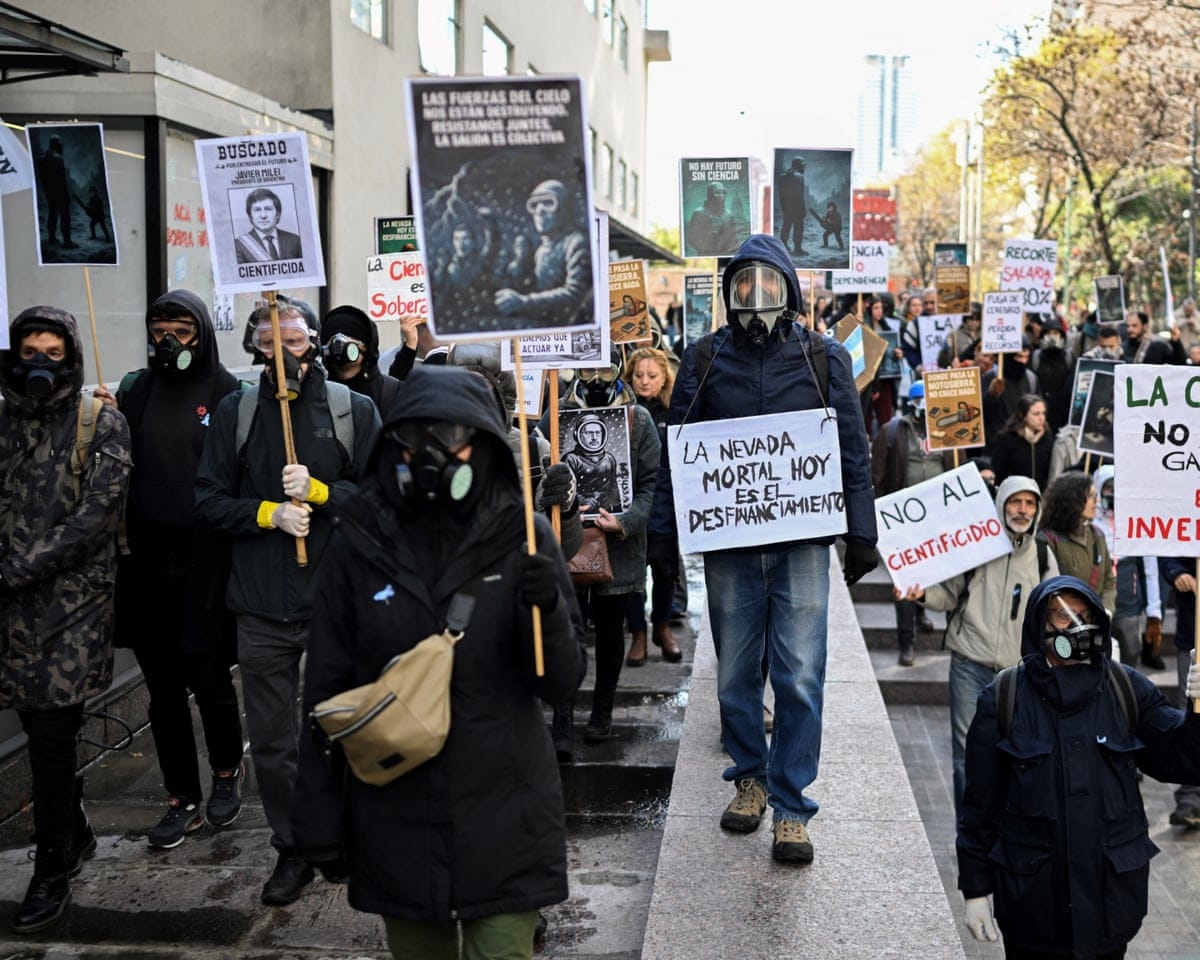
Last month, thousands of scientists, dressed as the protagonist from the Argentine sci-fi series *The Eternaut*, protested outside the science ministry. The researchers, their faces hidden behind helmets resembling those in the show, demanded an end to the cuts.
Read next

Bolivia Probes Ex-President Evo Morales for Suspected Involvement in 2009 Killings
The Bolivian attorney general has initiated an investigation into former leftist president Evo Morales, citing allegations of his involvement in the murder and torture of European nationals in 2009.
In 2009, police conducted a raid on a Santa Cruz hotel, resulting in the deaths of Eduardo Rózsa Flores, a Bolivian-
Argentina Closes Iguazu Falls Temporarily Due to El Niño-Induced Water Surge
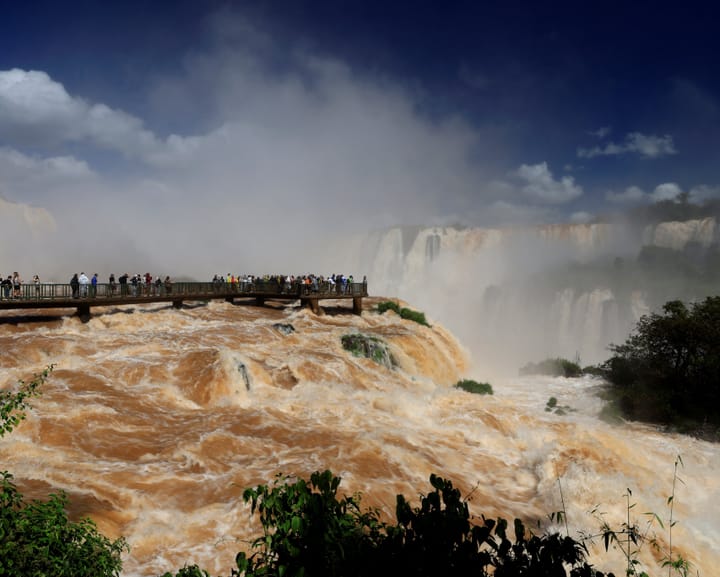
Heavy rainfall driven by a potent El Niño weather pattern temporarily led Argentinian authorities to close tourist access to the renowned Iguazu Falls. The closure occurred due to concerns that rising water levels might cause the river to overflow its banks.
On Monday, national park officials implemented this precautionary measure

Mysterious Drones Strike Two Vessels Near Bulgarian Coast – Europe Live
Morning Update: Two Ships Targeted by Drones Off Bulgarian Coast
This morning, two ships in the Black Sea near Bulgaria were struck by drones of unknown origin. The attack led to the sinking of one vessel and initiated emergency rescue operations, as reported by Bulgarian Prime Minister Rumen Radev. Rescue