
Barclays Maintains Confidence in Private Credit Controls Amid Industry Concerns
Barclays has reiterated that its oversight measures are sufficient to handle its £20 billion involvement in the private credit sector, despite apprehensions raised by the International Monetary Fund (IMF) and the Bank of England.
The bank’s chief executive, CS Venkatakrishnan, stated that Barclays operates with strong risk management and is confident in its lending practices for this sector. This comes after the bank recorded a £110 million loss linked to Tricolor, a US sub-prime auto lender that failed last month amid fraud accusations.
The simultaneous collapse of Tricolor and US auto parts firm First Brands has sparked worries about possible lapses in lending standards within private credit. Some fear the repercussions could affect traditional banks that provide funding to the less-regulated shadow banking industry.
Bank of England governor Andrew Bailey recently cautioned that these developments bear concerning similarities to the sub-prime mortgage crisis that triggered the 2008 financial meltdown. The IMF also warned last week that further instability could spread across the financial system, as banks increasingly engage with the lightly regulated private credit market.
Venkatakrishnan acknowledged that interactions exist between banks and non-bank financial institutions but described the IMF’s assessment as speculative. When questioned about remarks from JP Morgan’s CEO, Jamie Dimon, who suggested more problems could surface in private credit, Venkatakrishnan responded, “I’m not an entomologist.”
He emphasized that all lending must be conducted cautiously, with appropriate safeguards. Regarding private credit, Barclays restricts its involvement to portfolios managed by established, reputable firms. “We apply strict oversight and have long prioritized risk management in this area,” he said.
Despite multiple approaches, Barclays declined opportunities linked to First Brands. Venkatakrishnan noted that while Tricolor’s collapse aligned with expectations, the fraud element was unexpected. “Fraud is no justification—we take credit risk seriously in all circumstances,” he added, stressing that lenders must prepare for all risks, including misconduct.
Barclays’ £20 billion exposure to private credit is relatively small compared to its £346 billion in total loans to consumers and businesses. The bank recently reported a 7% decline in pre-tax profits to £2.08 billion for the quarter ending in September, down from £2.2 billion a year earlier, partly due to the Tricolor loss.
Read next
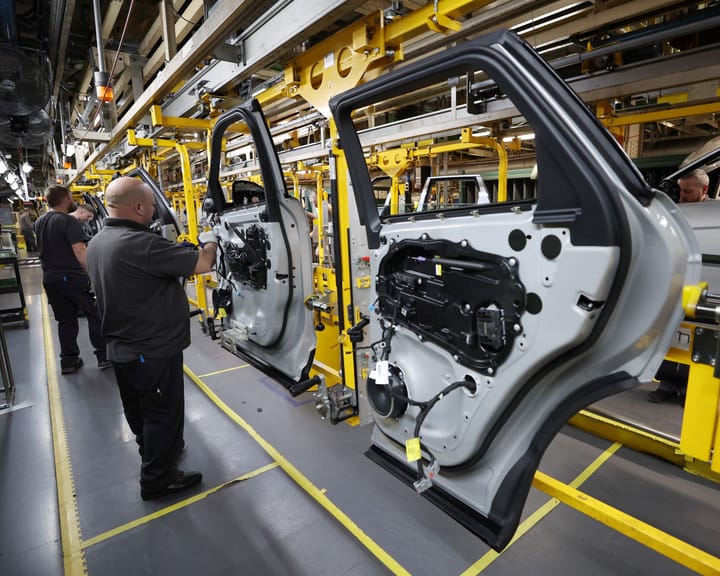
Jaguar Land Rover suppliers voice ‘everything is against us’ amid cutbacks
David Roberts, chair of Coventry-based Evtec, says the outlook for Britain’s automotive sector is grim, with “everything against us.” Evtec is a tier 1 supplier to Jaguar Land Rover, which this week announced 4,000 job cuts over two years despite chancellor John Healey’s attempt to talk

Europe’s fighter jet plans in disarray: what comes next?
When former ECB president and Italian PM Mario Draghi urged Europe to catch up economically with the US and China, defence collaboration was prescribed. No more should each nation build independent boats, tanks or jets; allies should share costs and technologies.
Europe stumbled at the first hurdle. German Chancellor Friedrich

John Healey supports growth but insists Labour must be truthful about spending
John Healey has stated that his primary goal as chancellor will be to boost economic growth, while acknowledging that Labour must be straightforward about controlling public spending at next month's budget.
In his first major address since assuming the role in July, Healey said the leading focus of