
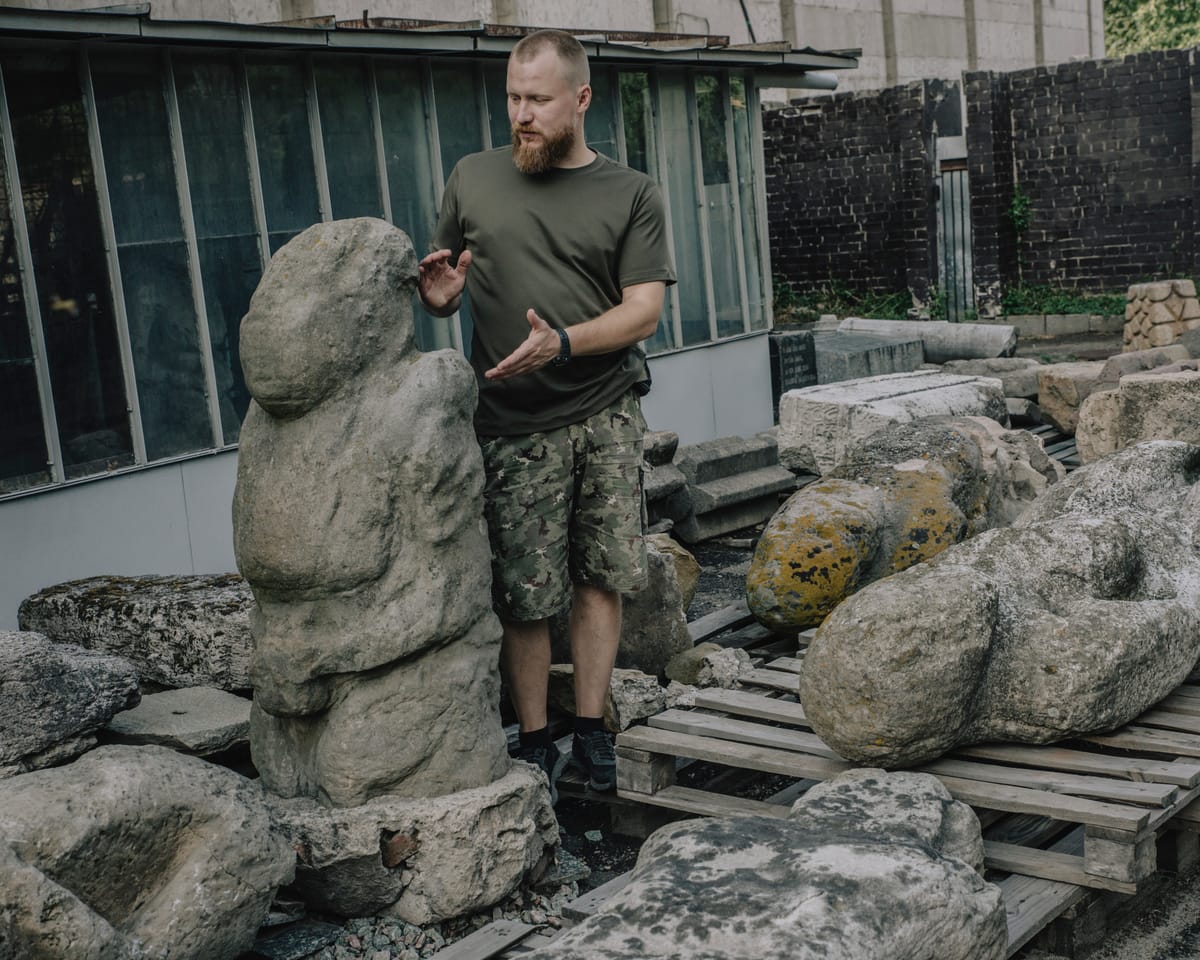
A specialist with a beard and a team of Ukrainian military personnel arrived in the village of Slovianka on a unique assignment. Their objective was not to engage with invading forces but to save a rare historical artifact before the advancing conflict reached it.
The soldiers placed a large object onto a wooden pallet—an intricately carved stone figure dating back roughly 800 years. The sculpture, depicting a woman holding a ceremonial vessel, wearing a necklace, and with small legs, was carefully loaded onto a truck. “We didn’t expect to have to move it, but it’s necessary. It’s unfortunate,” said Yurii Fanyhin, who organized the effort.
Today, Slovianka is a quiet farming area near the administrative border between Dnipropetrovsk and Donetsk regions. Centuries ago, however, it was part of a major trade route across the steppe. A nomadic Turkic group—known as the Cumans or Polovtsy—thrived in this area north of the Black Sea. They were known as formidable warriors.
Their legacy endures through detailed burial statues called *babas*, which once dotted southern Ukraine’s landscape. Each statue represents a deceased individual. Some depict warriors with weapons and armor, while others—uncommon for the time—are women. Many wear jewelry; one shows a pregnant figure, with all having their hair covered by headwear.
In early 2024, Fanyhin and a group of volunteer soldiers traveled to the besieged city of Velyka Novosilka, now under foreign control. They recovered a statue damaged by shelling. Others standing on a nearby hill were harmed when a northeastern city was taken. So far, the team has saved 11 *babas*, transporting them to a history museum in Dnipro.
The museum houses over 100 Polovtsian sculptures—the largest such collection in the world. Some are well-preserved, while others, worn by centuries of weather, have lost definition, their smooth forms resembling abstract art. A recent strike nearby shattered part of the museum’s glass pavilion where they are stored.
The museum’s director, Oleksandr Starik, expressed hope that international institutions might assist in preserving the artifacts. With cultural funding limited during wartime, he emphasized their importance as national heritage—proof of Ukraine’s long-standing, diverse history.
In 2022, false claims about the region’s history were used to justify invasion. “Russia tries to assert that only Slavs lived here. But the steppe was always diverse, home to many peoples,” Starik said. “Our ancestors were nomads, unconnected to Russia. We must show their true story.”
Read next

Pete Hegseth's proposal to stream executions aligns US with controversial nations.
If the US defense secretary, Pete Hegseth, proceeds with plans to livestream the execution of a soldier radicalized to extremist Islam, who killed 13 people at a military base in Texas, the US would join a group of lesser powers and rogue actors known for public executions in recent years.
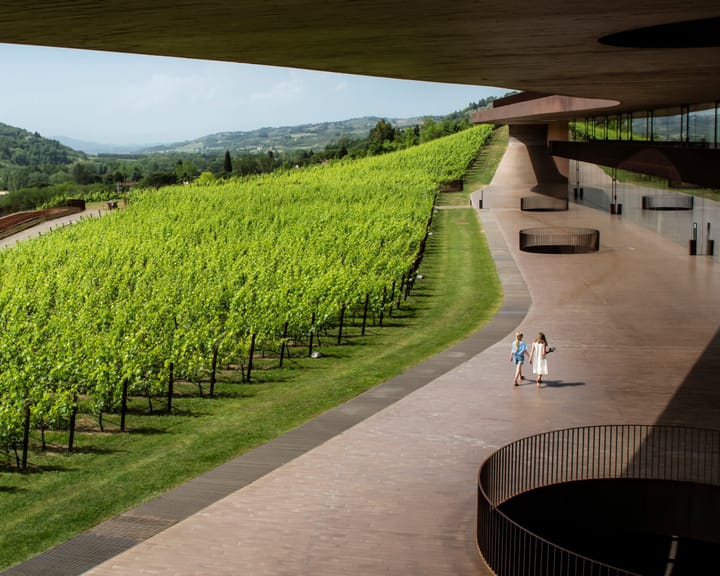
Criminals steal €5m from renowned Italian winery
In a significant theft in Tuscany, thousands of wine bottles valued at €5 million have been stolen from the renowned Marchesi Antinori winery, marking what is considered the largest heist of its kind in Italy. A group of at least seven masked individuals breached the winery's cellar in
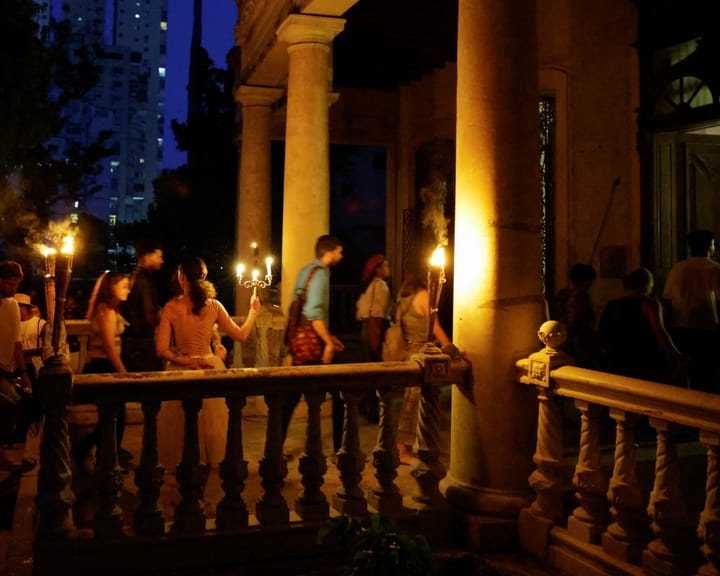
Illuminated Theater in Havana – A Photographic Journey
Widespread blackouts have become more frequent in Cuba since the US imposed energy sanctions in January. These outages often last longer than 24 hours as the aging electrical grid struggles to cope. The Impulso theatre group has been forced to adapt, as the power cuts present significant challenges for the