
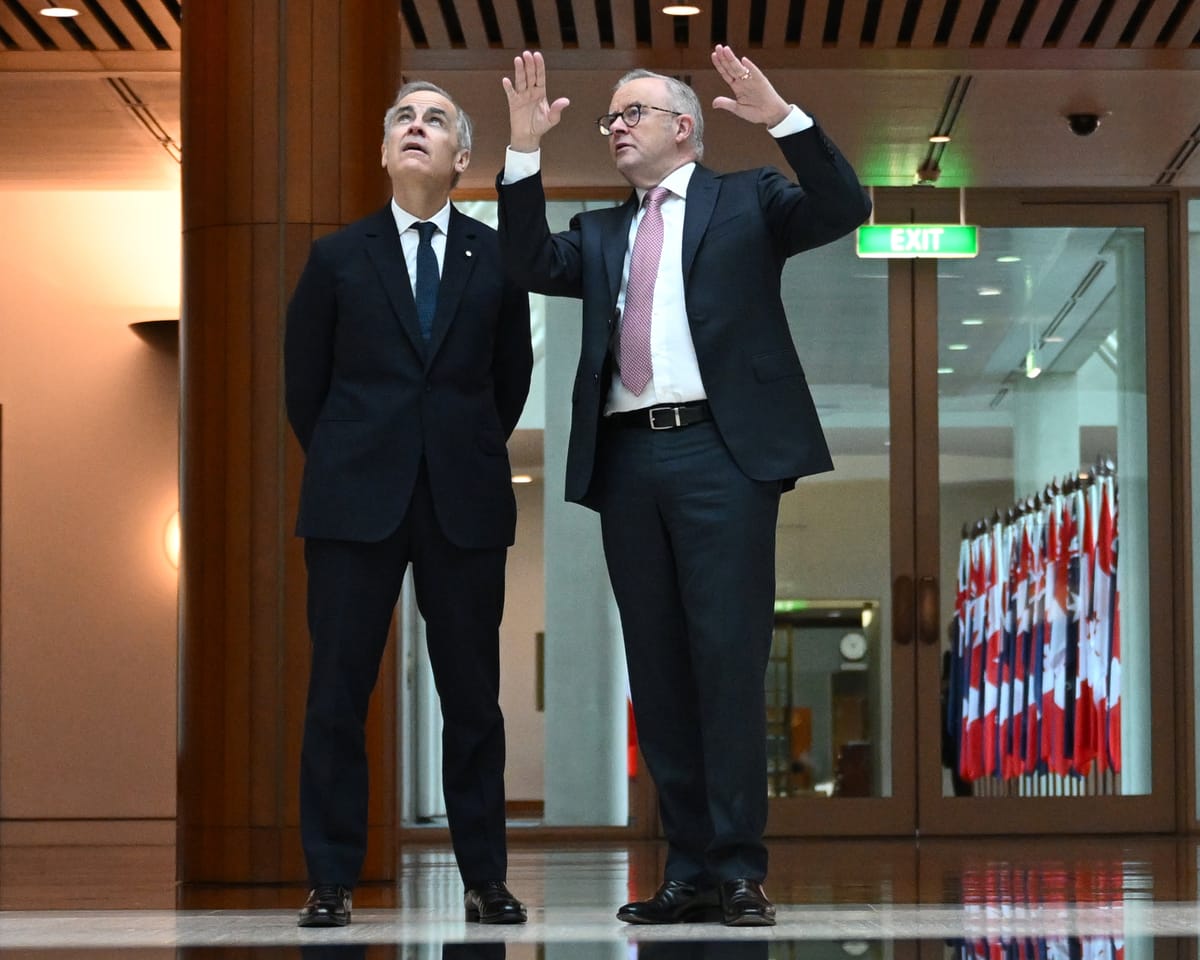
Canada and Australia will negotiate more effectively together with major powers such as Donald Trump’s United States, acting as “strategic cousins” rather than rivals, Mark Carney told the Australian federal parliament.
Speaking in Canberra on the final full day of his Australian tour, the Canadian prime minister urged deeper cooperation on critical minerals, defence and trade and announced that Australia would join the G7 critical‑minerals partnership, the largest bloc of democracies with substantial reserves worldwide.
Carney added that his visit was meant to reaffirm the Ottawa‑Canberra alliance amid a “global architecture now unraveling from successive crises.”
Together, Canada and Australia account for 34 % of the world’s lithium, 32 % of uranium and 41 % of iron‑ore production.
“In the old order, and even partly today, the lure has been to view each other as competitors,” he said after a formal welcome on Thursday morning.
“In this new era, we should be strategic collaborators – to increase investment, speed up technical cooperation, strengthen supply‑chain resilience, broaden domestic processing capacity, and enhance our strategic autonomy.”
In a Lowy Institute address in Sydney on Wednesday night, Carney softened his stance on US and Israeli strikes against Iran. He said he welcomed the removal of Ayatollah Ali Khamenei’s regime but did not consider the attacks lawful, describing them as “another illustration of the breakdown of the international order.”
Carney noted that the US‑Israeli actions seemed unlawful because they lacked United Nations Security Council endorsement and were not prompted by an imminent threat.
“The action was taken without our consultation,” he said. “There was no broader process. Prima facie, it appears inconsistent with international law.”
Carney has earned commendation globally for championing renewed middle‑power diplomacy, questioning the existing rules‑based order and urging nations such as Australia, Japan, India, South Korea and Canada to unite in defending institutions and pursuing shared interests.
His remarks at the World Economic Forum in Davos in January were viewed as the most forceful rebuttal to the Trump administration and other major powers, including China, urging countries not to linger on the post‑World‑War II framework but to shift toward safeguarding and expanding national sovereignty.
On Thursday he affirmed that Canada and Australia are right to expand defence capabilities, including next‑generation drones, surveillance aircraft, cyber tools and artificial‑intelligence systems.
As members of the international coalition working toward peace in Ukraine, Carney said that once the war sparked by Russia’s invasion ends, nations will need to “provide robust security guarantees” to prevent further conflict in Europe.
Read next
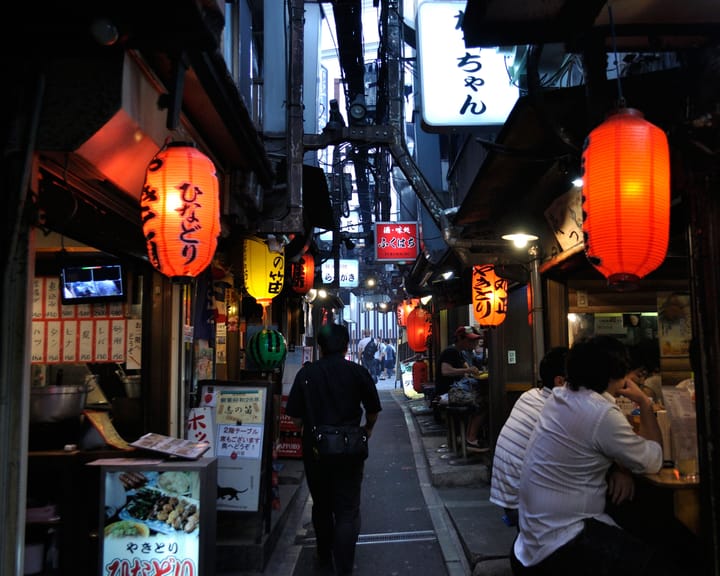
Tokyo tourist hotspot outlaws short-term rentals amid complaint surge
Shinjuku Ward, Tokyo, has moved to ban short-term rental accommodations in residential areas and near schools and important cultural sites, following a slew of complaints about visitor behaviour. The decision, to be enacted through a local ordinance, marks the latest sign that Japan’s patience with mass tourism is
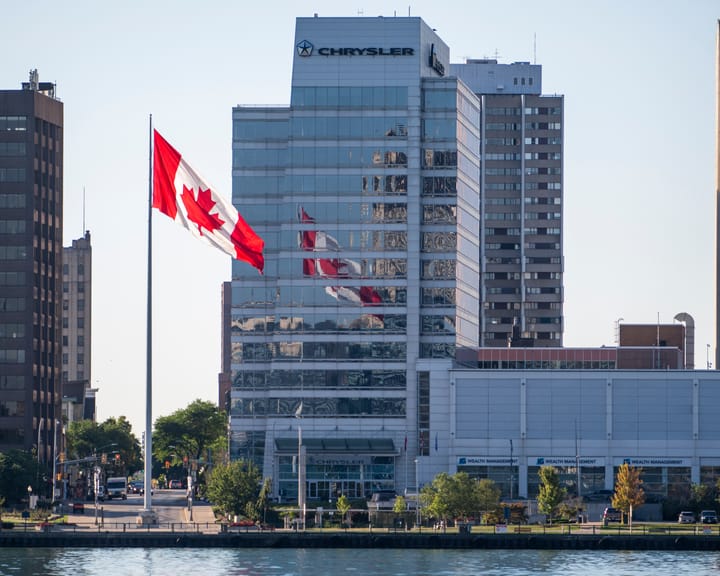
Canada implements retaliatory US tariffs as trade dispute intensifies
Canada’s retaliatory tariffs on about $20 billion worth of American imports took effect at 12.01am on Tuesday, ranging from 15% to 50% and applying to steel, dairy, appliances, agricultural equipment, pulp and paper, and electronics. The measures, a response to the United States’ 50% tariff on $20 billion
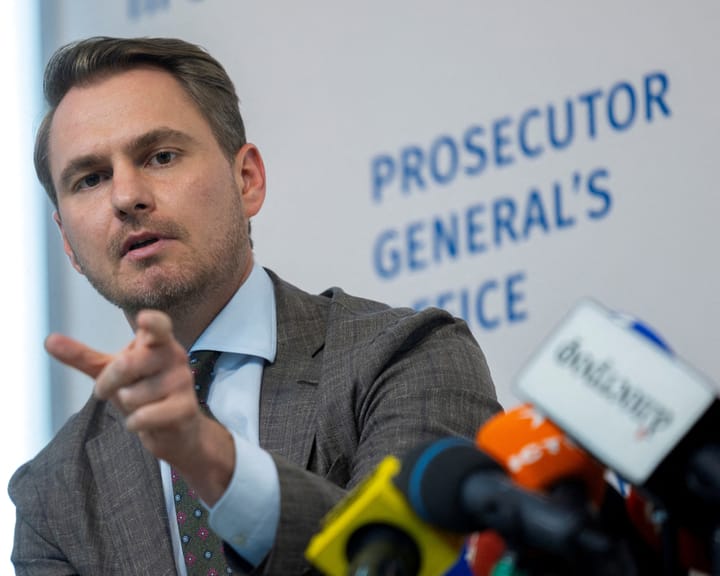
Prosecutor general resigns amid political turmoil in Kyiv during Ukraine war
Ukraine’s prosecutor general Ruslan Kravchenko resigned amid corruption accusations after anti-graft officers searched his offices at the weekend. He called the allegations “completely unsubstantiated” and denied wrongdoing. The National Anti-Corruption Bureau (NABu) and Specialised Anti-Corruption Prosecutor’s Office (Sapo) announced Saturday they uncovered a money-laundering