

South African runner Caster Semenya has urged for greater protection of athletes' rights following a ruling by Europe’s highest human rights court that she did not receive a fair hearing when challenging regulations requiring her to reduce her testosterone levels to compete in women's sports.
The decision, issued by the European Court of Human Rights on Thursday, marks another development in the Olympic champion’s lengthy legal struggle.
Semenya, a middle-distance runner who secured gold in the 800m at the 2012 and 2016 Olympics and has always been legally recognized as female, was born with what sports officials refer to as "differences in sex development," resulting in naturally higher testosterone levels than most women.
Track and field authorities have long insisted that Semenya must undergo treatment to lower her testosterone levels to compete as a woman. The policy was upheld by the Court of Arbitration for Sport in 2019 and later by a Swiss federal court in 2020, prompting Semenya to escalate her challenge to the European Court of Human Rights.
Speaking to reporters outside the court, Semenya praised the decision, calling it "significant for me, significant for athletes." The 34-year-old stressed the importance of respecting athletes and prioritizing their rights.
However, the ruling does not alter the regulations that effectively halted her career after her Olympic and world championship victories. The court declined to uphold an earlier conclusion that she faced discrimination, ruling the complaints inadmissible as they fell outside Swiss jurisdiction.
Still, the court awarded her a partial victory by stating that the case warranted a thorough judicial review, as serious personal rights were at stake, and the Swiss court’s earlier assessment had failed to meet this requirement. Switzerland was ordered to compensate Semenya €80,000 for legal costs.
The decision allows the case to be re-examined by the Swiss federal court.
From 2011 to 2015, Semenya followed the governing body's rules, taking medication to reduce her testosterone levels. She later described the experience as being treated like a "test subject," citing side effects such as persistent illness, anxiety, and pain, despite her continued success on the track.
Track authorities maintain that testosterone limits are essential for fairness in women's sports, though critics argue there is insufficient scientific evidence to support this stance.
After the governing body, World Athletics, formalized its testosterone policy in 2018, Semenya chose not to comply, resulting in her exclusion from competition. As of Thursday, World Athletics had not commented on the European court’s ruling.
Read next

Weekly Sports Quiz: Focus on Harry Kane, Victor Wembanyama, and WSL Champions
Local Community Efforts Drive Environmental Change
In a small town nestled between rolling hills and dense forests, residents have taken it upon themselves to spearhead a movement aimed at fostering environmental sustainability. This grassroots initiative is drawing attention for its comprehensive approach to tackling ecological challenges.
At the heart of

France and US Reign in Rapid and Blitz at Pall Mall Masters Chess Event
Mastering chess in central London is uncommon, though the annual ChessFest in Trafalgar Square draws over 20,000 visitors.
In London's Pall Mall club scene, the RAC clubhouse has been the site for the Oxford vs. Cambridge Varsity match for nearly fifty years. In 2023, the Athenaeum hosted
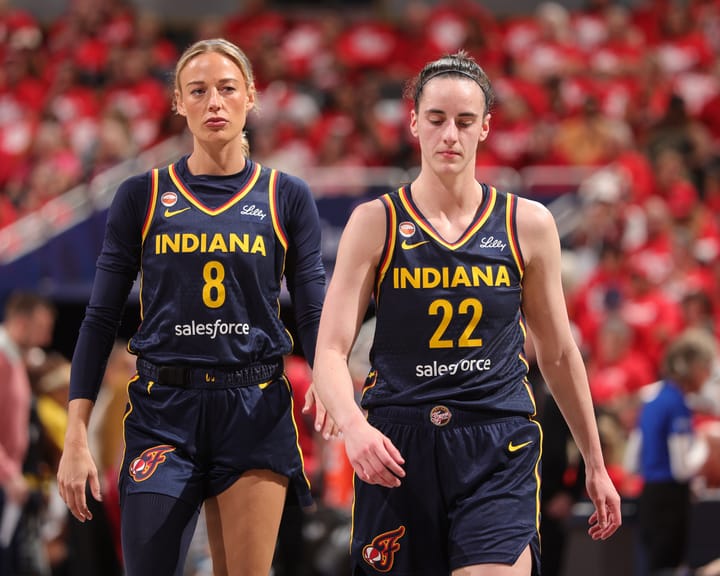
Indiana Fever and the Magasphere: A Risky Route to Fame for a WNBA Team
The Indiana Fever's season has concluded, marked by both its on-court performance and off-court controversies. Despite being eliminated by the Las Vegas Aces for the second consecutive year, the team has drawn significant attention, becoming a focal point in the WNBA this season.
The Fever'