
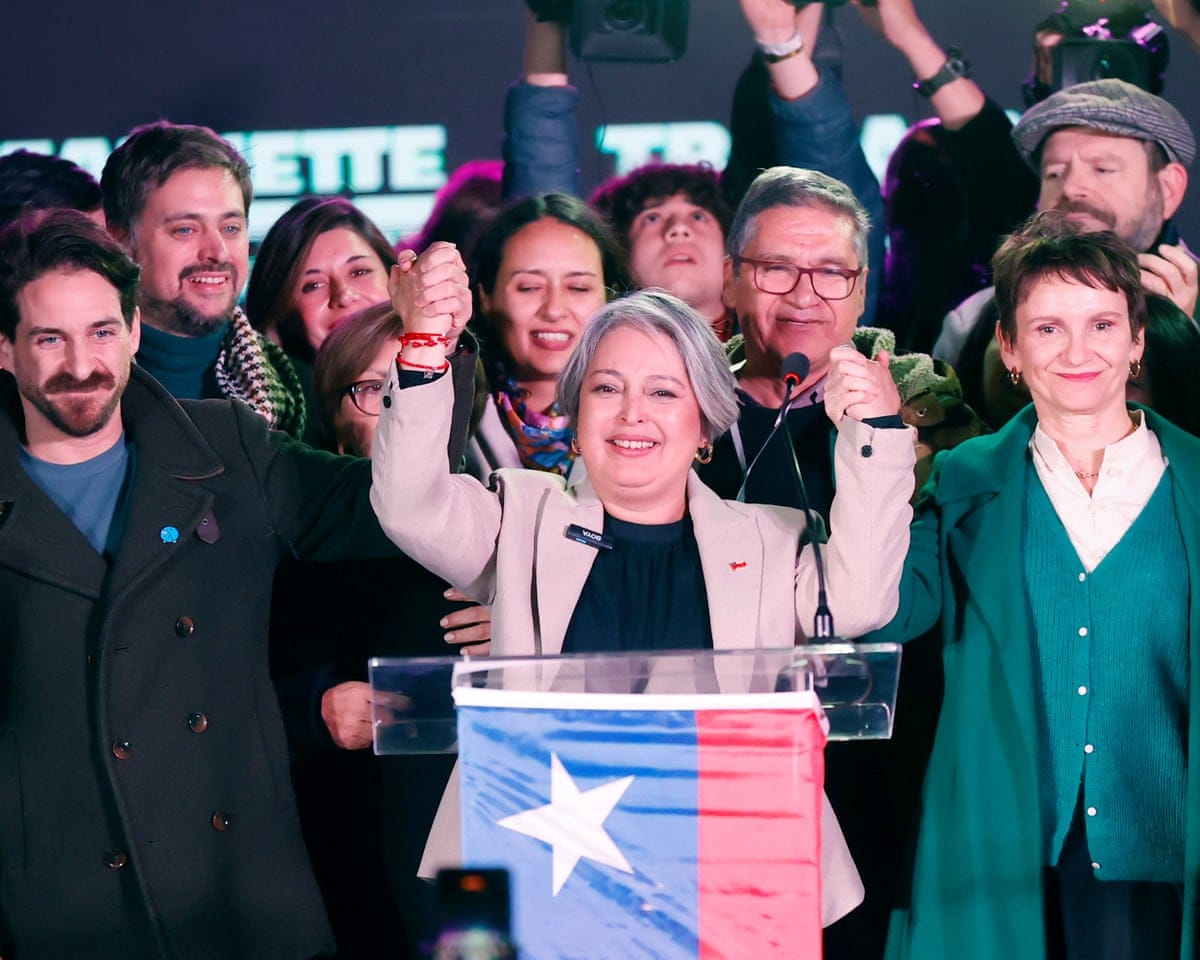
Jeannette Jara, a communist leader and former labor minister in Chile, secured a clear victory in the leftwing primary election, gaining over 60% of the vote and defeating her more moderate competitor.
The win positions Jara, 51, as the candidate of Chile’s embattled current government in the November elections, where she will contend with center-right and far-right opponents who have gained traction in recent polls.
Due to term limits, the incumbent leftist president, 39-year-old Gabriel Boric, is unable to seek re-election.
Jara, a lawyer and Communist party member who resigned as labor minister to enter the presidential race, won 60.5% of the vote. Her closest rival, former interior minister Carolina Tohá from the Democratic Socialist party, received 27.7%.
“Today marks the start of a new journey we will take together, committed to building a fairer and more democratic Chile,” Jara wrote online. “Against the far right’s threat, we stand united through dialogue and hope.”
Voting became mandatory after Boric’s 2022 election, introducing uncertainty into this year’s contest.
Early reports from electoral officials indicated low turnout, with only about 1.4 million people voting out of Chile’s 15.4 million eligible voters.
While Jara’s overwhelming victory signals a shift toward hardliners in Boric’s coalition, analysts describe her as less rigid and more pragmatic than some of her communist counterparts. As labor minister, she was recognized for raising the minimum wage and reducing the workweek to 40 hours.
She has drawn comparisons to Michelle Bachelet, Chile’s former center-left president and a symbol of female leadership, who served from 2006 to 2010 and again from 2014 to 2018.
Honoring Bachelet in her victory speech, Jara said, “She proved that nothing is impossible.”
However, Jara faces significant challenges. Recent surveys show declining support for the leftwing government amid economic stagnation and growing concerns over crime and migration in what has traditionally been one of the region’s most stable democracies.
These issues have bolstered backing for rightwing candidates, including ultraconservative lawyer and former legislator José Antonio Kast, setting the scene for a highly divided election.
Another prominent rightwing figure is Evelyn Matthei, a former labor minister whose pro-business policies have attracted investor interest.
Chileans will vote on 16 November to choose a president for the 2026-2030 term.
Read next
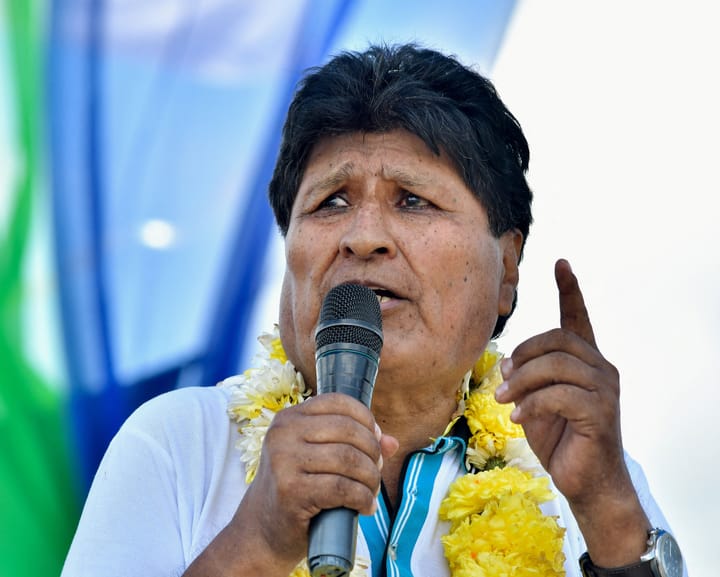
Bolivia Probes Ex-President Evo Morales for Suspected Involvement in 2009 Killings
The Bolivian attorney general has initiated an investigation into former leftist president Evo Morales, citing allegations of his involvement in the murder and torture of European nationals in 2009.
In 2009, police conducted a raid on a Santa Cruz hotel, resulting in the deaths of Eduardo Rózsa Flores, a Bolivian-

Argentina Closes Iguazu Falls Temporarily Due to El Niño-Induced Water Surge
Heavy rainfall driven by a potent El Niño weather pattern temporarily led Argentinian authorities to close tourist access to the renowned Iguazu Falls. The closure occurred due to concerns that rising water levels might cause the river to overflow its banks.
On Monday, national park officials implemented this precautionary measure
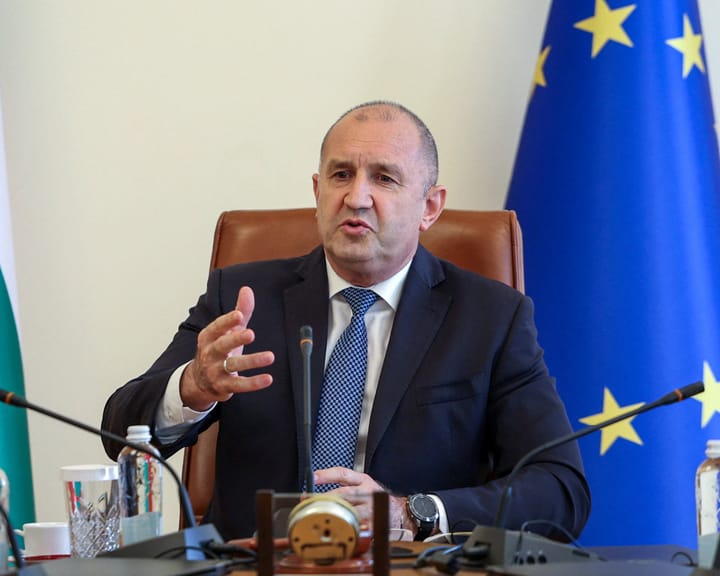
Mysterious Drones Strike Two Vessels Near Bulgarian Coast – Europe Live
Morning Update: Two Ships Targeted by Drones Off Bulgarian Coast
This morning, two ships in the Black Sea near Bulgaria were struck by drones of unknown origin. The attack led to the sinking of one vessel and initiated emergency rescue operations, as reported by Bulgarian Prime Minister Rumen Radev. Rescue