

In a week’s time a new chapter will open in Formula One as a substantial revision of the rules introduces an element of uncertainty when the Australian Grand Prix commences in Melbourne.
The machines have been reduced in size and mass to make them more agile, easier to handle and to promote closer racing. The wheelbase has been shortened by 20 cm to 340 cm and the track width cut by 10 cm to 190 cm. Modifications to the chassis and power unit have lowered the total weight by 30 kg. Drivers such as Lewis Hamilton have expressed general satisfaction with the sharper handling of the lighter cars, which will generate roughly 40 % less aerodynamic drag. However, they will produce less down‑force and will not match the outright speed of last year’s cars, and are expected to be one to two seconds per lap slower than the 2025 figures.
The introduction of new hybrid power units and a host of design and technical alterations has also created a fresh terminology that must be mastered, from active aerodynamics to super‑clipping. Below is a concise technical overview of the principal 2026 changes.
New hybrid power units
The most significant alteration in the updated regulations is the adoption of new hybrid power units, which now provide an almost even division of output between the internal‑combustion engine and the electrical system.
The 1.6‑litre V6 turbocharged internal‑combustion engine, now running on fully sustainable fuel, will produce about 400 kW (536 bhp). It will be paired with the motor‑generator unit‑kinetic (MGU‑K), capable of delivering 350 kW (469 bhp), an increase of nearly 300 % over the electrical output of the previous season.
The motor‑generator unit‑heat (MGU‑H) has been eliminated. Previously it harvested energy while the throttle was closed to keep the turbocharger spooled and to mitigate turbo‑lag – the delay in power delivery as the turbo accelerates.
Turbo‑lag will therefore become a factor drivers and teams must manage, especially at race starts and on corner exits. The FIA has tested a new start protocol that holds cars on the grid for five seconds, allowing the engines to build revs and spin the turbos. Drivers are also experimenting with lower‑gear cornering to keep revs high and improve energy recovery. Ferrari have chosen a smaller turbocharger, reporting brisk starts and strong acceleration out of bends.
Active aerodynamics
To cut drag and address the loss of electrical energy that can slow cars on long straights, both front and rear wings will be permitted to open on a straight and close when negotiating corners. (In one experimental Ferrari concept the entire rear wing is inverted.) Similar to the former drag‑reduction system on the rear wing, which has now been removed, this new capability will be available to a.
Read next

Mathieu van der Poel dominates to win Omloop Het Nieuwsblad
The Dutch rider Mathieu van der Poel attacked 16km from the finish and rode alone to win the season‑opening cobbled spectacular classic Omloop Het Nieuwsblad on Saturday race.
The ex‑road‑race world champion approached the classic after securing a record eighth cyclo‑cross world title, remaining unbeaten throughout

On the plane or at home? England's Rugby World Cup squad takes shape
Not long ago, Steve Borthwick’s roster for the 2027 World Cup was coming together smoothly. He selected a fairly predictable 36‑man panel for the Six Nations, and the same can be said of his match‑day 23 to meet Wales in England’s opening championship game. Borthwick is
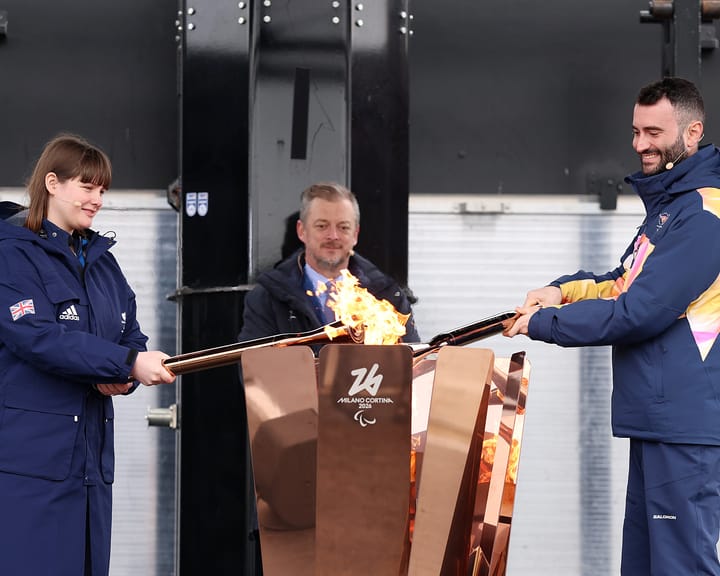
Winter Paralympics balances Russia's inclusion against a possible ceremony boycott
The Paralympic torch departed its birthplace in Stoke Mandeville this week and has reached the entrance to the Dolomites.
The cities of Bolzano and Trento will stage “flame festivals” this weekend to greet the Paralympic movement and mark its development on the 50th anniversary of the inaugural Winter Games.
It