
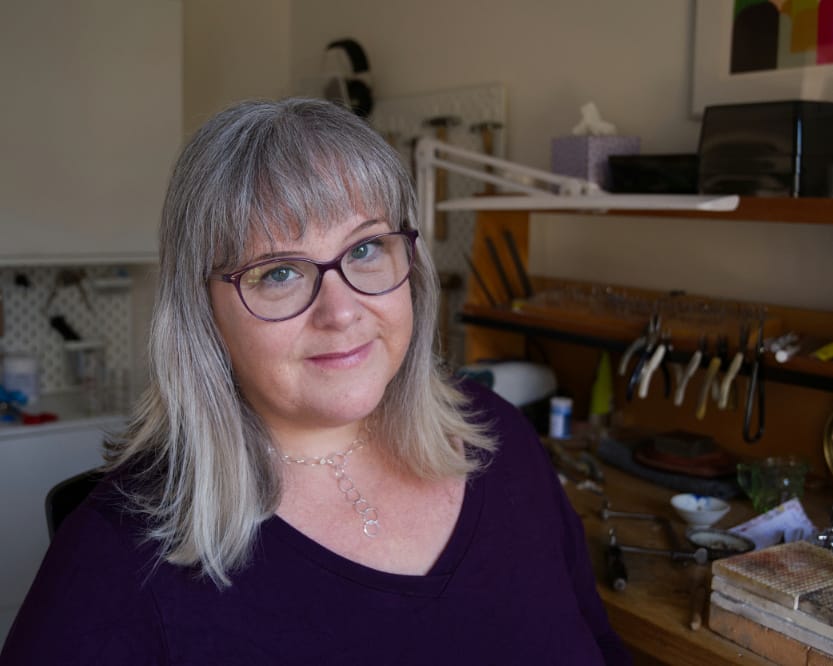
For over three decades, I have crafted jewelry, drawing on my background in visual arts to create unique pieces from silver and gold. My journey began with selling my work at markets in Adelaide and various boutiques and galleries throughout Australia.
In 2006, I ventured into the online marketplace Etsy, skeptical of its potential for jewelry sales. To my surprise, my first online sale occurred within an hour of listing a few pieces. Encouraged by this unexpected success, I established one of Australia's early independent online stores at a time when online shopping was not yet widespread.
I dedicated myself to building my business, managing every aspect from jewelry creation and order fulfillment to website maintenance and bookkeeping, which I particularly disliked. My efforts led to a growing customer base worldwide, initially focused in the US and Europe, and later in Australia as online shopping gained popularity.
Running my own jewelry business was a dream come true, yet by late 2013, exhaustion set in. After another demanding Christmas season, my physical health suffered. The intense work schedule, often exceeding 100 hours a week, left me with little time for anything else. Despite my hard work, my income remained below average, and I felt financially strained.
Over Christmas, I reflected on my situation and questioned the true meaning of success. Although I loved my work, the reality of managing a handmade business was overwhelming. A friend visiting my Adelaide Hills home suggested marketing strategies to boost sales, but I was already at my limit and couldn't increase production or prices.
Our discussions continued into the early hours of the new year, leading to a pivotal idea: I could design the components but outsource their production, assembling and finishing the pieces myself. This approach made business sense, though it challenged my identity as a maker.
After researching potential partners, I visited an overseas workshop to ensure ethical practices. To my amazement, the workshop was not a sweatshop. The skilled artisans worked in a well-organized, safe environment with set hours, contrasting sharply with my own inadequate workspace and excessive working hours.
I placed my first order with the workshop, integrating their components into my designs. To my relief, my customers remained satisfied, and my business continued to grow. This shift allowed me to reduce my workload and improve my quality of life significantly.
Reflecting on the workshop visit, I realized that I had unwittingly created a sweatshop for myself. Outsourcing has since transformed my business and life. I am no longer constrained by my own production limits, and my designs have become more refined. I still spend time at my jewelry bench, but now I enjoy regular days off, time for self-care, and opportunities to pursue other interests. I also have more time to focus on the business as a whole, despite my continued aversion to bookkeeping.
Read next

Century-Old Spectacular: World's Oldest Crowd Surfer at 99 Hits the Waves
In 2013, at the age of 87, I was playing basketball with my grandson, Ross, in Ohio while he was home from college. He recorded a video of me blocking his shot, posted it online, and it quickly gained attention. This led us to start creating comedy skits together, now

Let Your Mind Roam, Skip Retirement, and Quit Fretting: Unexpected Strategies to Shield Your Brain from Cognitive Decline
How can thinking about brain change rather than cognitive decline alter the way we think and remember?
Dr Norman Swan: There are three things you need to know which are not widely known.
Think cognitive change not cognitive decline: one way people think about our cognitive function is by comparing
Panic Attack on Public Transport Unveiled a Shocking Secret That Transformed My Life
In 2000, the writer had been living in London for just over a decade and working at EMI Records for five years. Having moved to Brixton from Surrey in the late 1980s, they noticed a growing sense of anxiety and claustrophobia, particularly on public transport.
The situation worsened, leading to