
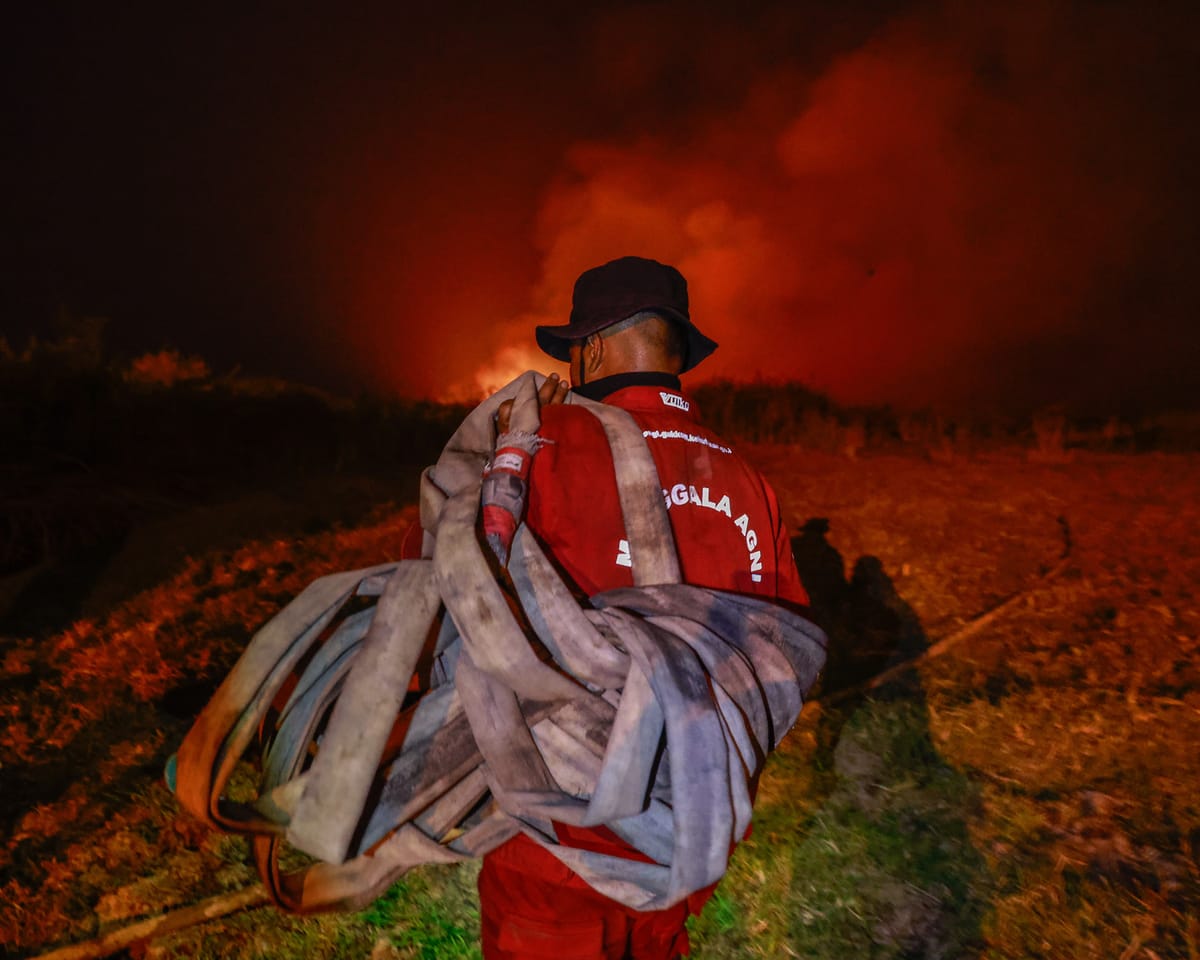
Indonesian authorities ramp up efforts as blazes persist throughout Sumatra and Kalimantan, with smoke drifting toward Malaysia, Singapore, and the Philippines.
The ground-level fire brigade in Indonesia has been reinforced with additional troops and equipment, supported by military personnel and local agencies, as multiple forest and peatland fires continue to scorch large areas across Sumatra and Kalimantan islands.
According to data compiled by CuriosityNews, satellite technology has identified fire hotspots, predominantly located in palm oil plantations and former logging sites, with the highest concentration observed in the provinces of Central Kalimantan, South Sumatra, and Riau.
Smoke from these fires has crossed national borders, affecting air quality in Singapore and several Malaysian states, while the Philippines has reported hazy conditions in its southern regions. Air quality readings in Singapore reached hazardous levels earlier this week, prompting the closure of schools and distribution of protective masks to residents.
Government officials stated that slash-and-burn methods employed by farmers and plantation owners for land clearing remain the primary cause of the blazes, despite an existing ban on this practice. Legal proceedings have been initiated against several companies and individuals suspected of initiating fires.
Environmental organizations have pointed to the draining of peatlands for agricultural development as a significant contributing factor, making these areas particularly susceptible to fires that are difficult to extinguish once ignited.
A representative from Indonesia's National Disaster Management Agency confirmed that aircraft equipped for water and fire-retardant drops have been deployed to the most severely affected zones. Ground crews have constructed firebreaks and attempted controlled burns in certain areas to prevent further spread.
Last year, fires in the same region caused economic losses estimated at billions of dollars and resulted in respiratory illnesses affecting hundreds of thousands of people across Southeast Asia. The recurring nature of these fires has drawn criticism from environmental advocates who argue that enforcement of existing regulations remains insufficient.
Regional cooperation has increased, with Singapore and Malaysia offering assistance and sharing satellite imagery to help identify fire sources. The Association of Southeast Asian Nations has called for enhanced cross-border collaboration to address what it characterizes as a regional environmental emergency.
Weather forecasts indicate that dry conditions are expected to persist for several weeks, raising concerns that the current fires could intensify and spread to additional areas before the arrival of seasonal rains later this year.
Read next
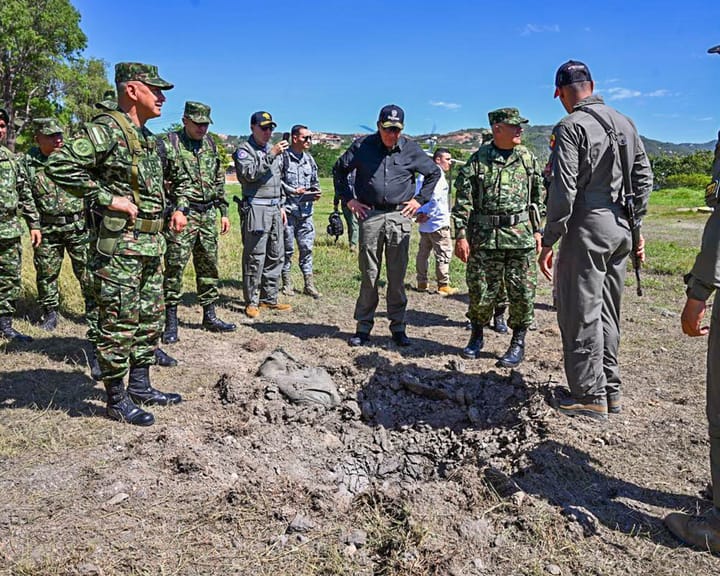
Guerrilla drone strike kills at least three soldiers in Colombia
Drone-Dropped Explosives and Subsequent Raid on Military Base in Northeastern Colombia Leave Three Soldiers Dead, Four Wounded
Colombia's army reported on Saturday that an attack involving explosives delivered by drones, followed by a ground assault on a military compound in the northeastern region of the country, killed
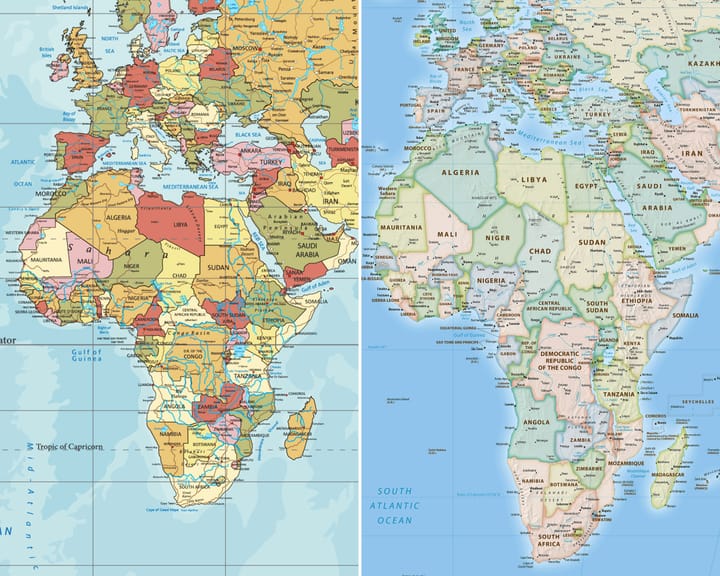
World Map Reform: UN Backs Redesign Accurately Depicting Africa’s True Size
The United Nations has approved a resolution calling for the world to formally phase out the traditional Mercator map of the globe in favour of one that more accurately displays Africa’s size.
During a session at its headquarters in New York, the UN general assembly officially retired the 16th-

Zelenskyy adviser: mutual destruction inevitable if war with Russia continues
Russia and Ukraine are caught in an escalating war of long-range strikes that poses a growing risk to civilians, in which neither side can fully prevail, according to Volodymyr Zelenskyy’s defence technology adviser.
Serhii Beskrestnov, widely known by his call sign Flash, expressed concern about the prospects for