
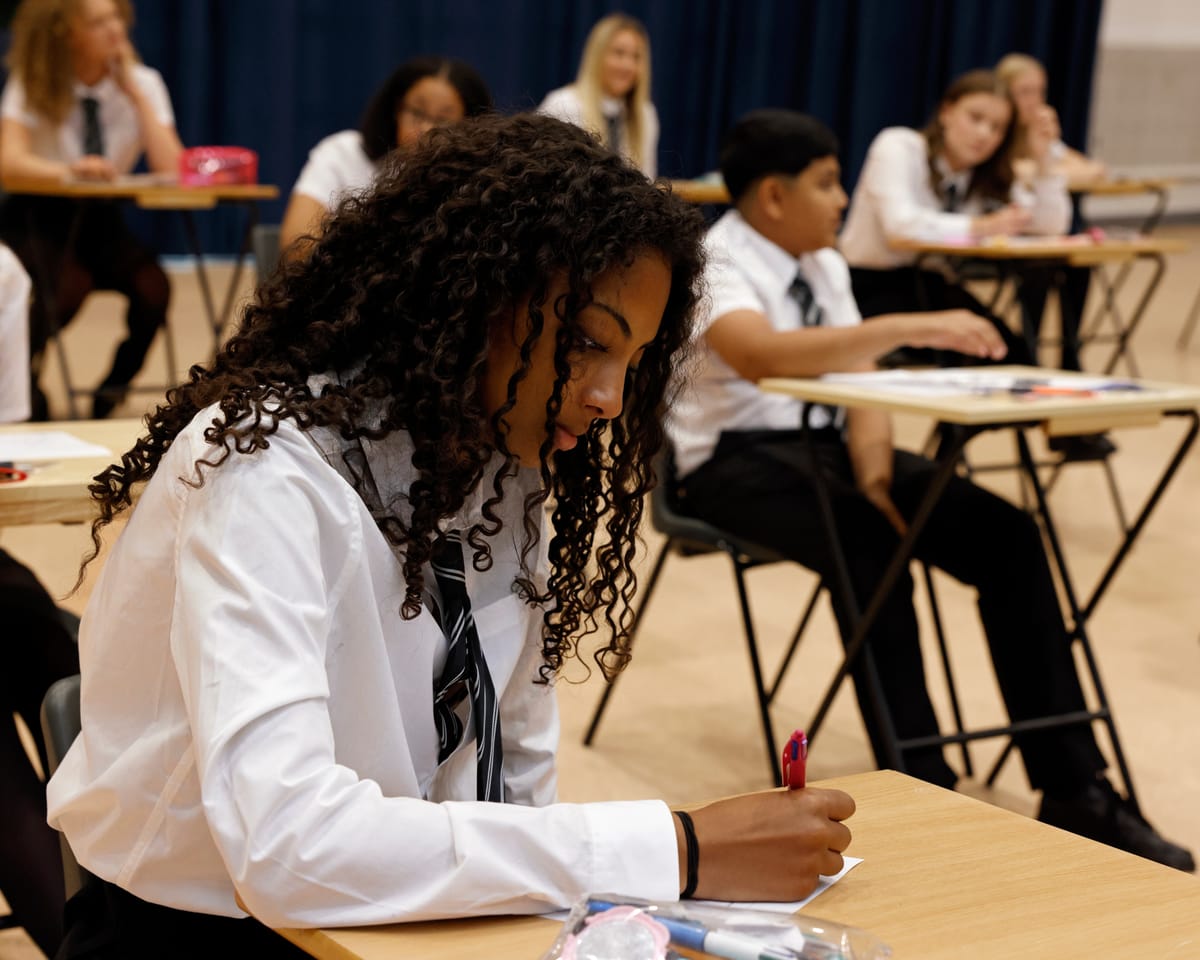
OECD Pisa tests of 760,000 15-year-olds across 91 countries and regions last year show results dipped in most member nations, with England and a handful of others the exception. England’s steady performance lifted the UK into the top 10 internationally, while Scotland, Wales and Northern Ireland recorded slightly lower results than previous years.
England’s biggest improvement came in science, but it was reading that stood out, placing ahead of Australia, the US, Finland and France, behind only Singapore, Taiwan, and China’s Beijing, Shanghai, Jiangsu and Zhejiang regions. Prof Mary Richardson of University College London, lead author of Pisa reports for Wales and Northern Ireland, noted that despite international declines, 15-year-olds in England, Wales and Northern Ireland read as well as in 2022, with science and maths scores particularly strong in England and Northern Ireland.
Schools minister Georgia Gould said the government was “determined to build on these positive results” and ensure all pupils leave with strong literacy and numeracy, adding that the “next leap forward” would come from pupils engaged and excited to be at school. Shadow education secretary Laura Trott condemned the government’s move away from academic emphasis as “bonkers”, warning that reducing standards would hit the most disadvantaged hardest.
The OECD’s overall analysis was gloomy, stating that learning outcomes have stagnated or declined in many countries for over a decade. It called the international drop in reading scores “most concerning”, with average scores falling double digits since 2018, implying that most 15-year-olds in 2025 performed at a level once expected of 14-year-olds. Analysts linked declines to changing attitudes towards reading, digital distractions at school and rising absenteeism, saying systems are struggling to adapt to social, technological and economic change.
OECD education director Andreas Schleicher said the Covid pandemic was a common explanation, but the reading downturn preceded it. He warned that declining reading for enjoyment and the shift towards digital reading – skimming social media feeds and rapidly processing information – may compromise students’ ability to engage with complex texts. While some digital device use for learning benefits pupils, countries allowing devices for leisure at school saw “substantially lower” performance, raising questions over whether smartphones, designed to maximise attention, are compatible with sustained academic focus.
A report for the Scottish government described the 2025 result as “a mixed but more positive picture”, with science, maths and reading little changed since 2022. However, it concluded scores remain significantly below those of previous cycles, and a substantial proportion of pupils, especially in mathematics, did not reach the OECD baseline proficiency level. Scottish education secretary Màiri McAllan recognised the positives but said the results underline the need for change in certain areas.
Read next

"‘Oldest baby’ born from 30-year-old frozen embryo"
Oldest Known Frozen Embryo Results in Birth in the U.S.
A child has been born in the U.S. from an embryo frozen in 1994, according to reports.
Thaddeus Daniel Pierce was delivered on 26 July in Ohio to Lindsey and Tim Pierce after they received an embryo preserved

The Impact of Nitrous Oxide on Global Development and Culture Transformation
Oxide Boils at Room Temperature, but Pressurized Gases Can Be Used as Liquids in Bottles
While oxide may boil immediately at room temperature, the process of pressurizing gases allows them to be stored as liquids within pressurized containers. This technique is commonly utilized for storing butane gas used in camping