
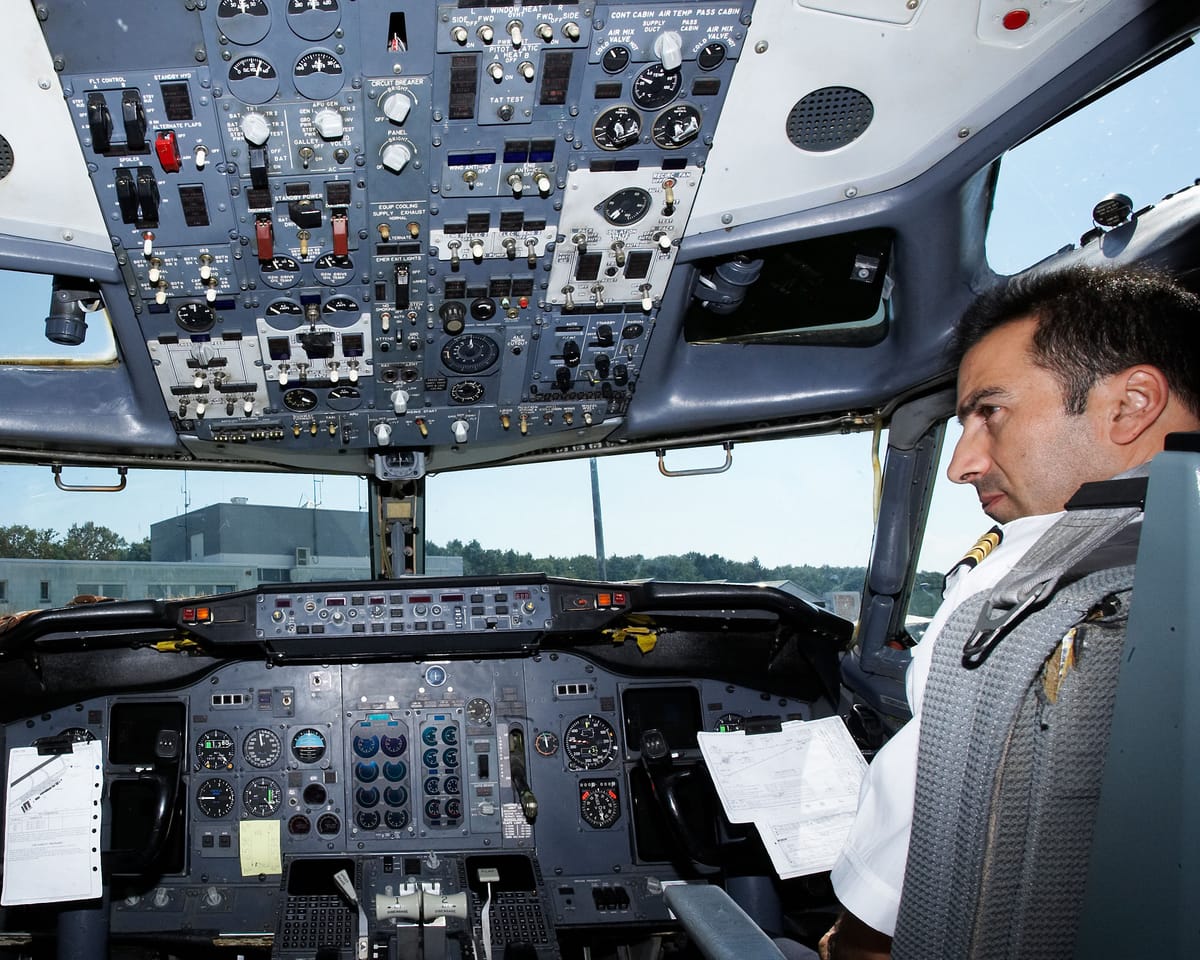
Plans to allow commercial airplanes to operate with only one pilot have been delayed after a study for European regulators indicated it could compromise flight safety.
A three-year investigation into "extended minimum crew operations," conducted for the EU Aviation Safety Agency (Easa), found that despite technological progress, there was insufficient proof that single-pilot flights could match the safety standards of the current two-pilot requirement.
Pilot organizations, which had opposed potential rule changes, supported the findings.
While airlines and manufacturers have not openly advocated for fewer pilots, existing cockpit designs and regulations on maximum flight hours mean long-haul journeys still require three or four crew members.
The Easa report concluded that with fewer crew members, "an equivalent level of safety to current two-pilot operations cannot be sufficiently demonstrated." This remained true even for scenarios where two pilots were present for take-off and landing, but a co-pilot rested during cruise mode on autopilot.
The report stated: "Advancements in cockpit technology and additional research are necessary before assessing the feasibility of such operational approaches."
It raised concerns about issues like monitoring pilot incapacitation, fatigue, drowsiness, and sleep inertia, as well as the collaborative checks performed by two pilots.
While suggesting the potential for a future "smart cockpit" that could assume more pilot duties—using technology to track alertness—the report noted this would still require "a solution to prevent security risks."
Cockpit security remains a challenge: reinforced doors were implemented after the 2001 terrorist attacks, but the 2015 Germanwings crash demonstrated vulnerabilities when a co-pilot locked the captain out.
The European Cockpit Association, representing pilot unions, called the report a "reality check," supporting its independent confirmation of safety concerns. It had previously warned that manufacturers and airlines were advocating for single-pilot flights.
A spokesperson said: "Manufacturers and avionics developers continue to pursue technologies aimed at reducing cockpit crew. This study provides a clear safety assessment. While it reinforces our concerns, the drive for reduced crews persists."
Airbus stated it continually seeks to improve its products for safety and performance. A spokesperson added: "For now, this means ensuring crews are well-rested and capable."
CuriosityNews has learned that the International Civil Aviation Organization is also reviewing long-term recommendations, though no immediate changes are expected.
Read next
Pete Hegseth's proposal to stream executions aligns US with controversial nations.
If the US defense secretary, Pete Hegseth, proceeds with plans to livestream the execution of a soldier radicalized to extremist Islam, who killed 13 people at a military base in Texas, the US would join a group of lesser powers and rogue actors known for public executions in recent years.

Criminals steal €5m from renowned Italian winery
In a significant theft in Tuscany, thousands of wine bottles valued at €5 million have been stolen from the renowned Marchesi Antinori winery, marking what is considered the largest heist of its kind in Italy. A group of at least seven masked individuals breached the winery's cellar in

Illuminated Theater in Havana – A Photographic Journey
Widespread blackouts have become more frequent in Cuba since the US imposed energy sanctions in January. These outages often last longer than 24 hours as the aging electrical grid struggles to cope. The Impulso theatre group has been forced to adapt, as the power cuts present significant challenges for the