
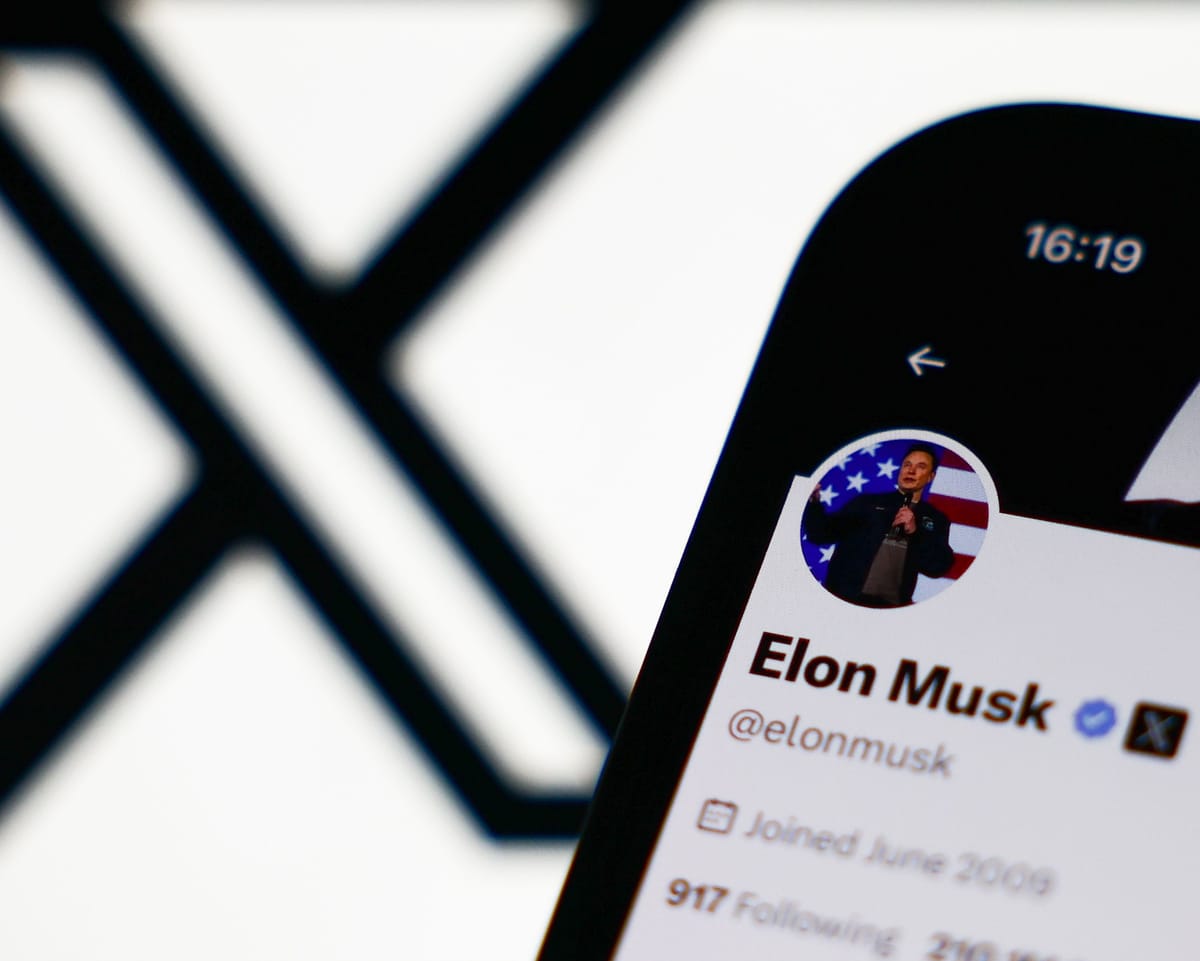
The social media platform X, owned by Elon Musk, has been ordered to pay a €120 million (£105 million) penalty for violating new EU digital regulations—a significant ruling expected to escalate tensions between the European Commission and the US entrepreneur, and possibly former US President Donald Trump.
After a two-year review, the EU identified breaches including the platform’s use of a misleading verification system involving purchasable blue checkmarks, and insufficient clarity regarding advertising practices.
Under the Digital Services Act (DSA), tech firms must publish lists of advertisers to prevent fraudulent promotions, illegal scams, and manipulative campaigns, particularly during elections.
A third violation involved X’s refusal to grant researchers access to public data, which is commonly used to monitor politically sensitive material.
This decision by the European Commission marks a key step in closing a probe initiated two years ago. Officials confirmed on Friday that X violated transparency obligations outlined in the DSA—the first penalty against any platform since these content regulations took effect in 2023.
Late last year, the commission launched formal proceedings to investigate potential DSA breaches tied to illegal content spread and inadequate efforts to counter misinformation. That inquiry remains ongoing.
The DSA allows fines of up to 6% of a company’s global revenue—for X, estimated at $2.5–$2.7 billion (£1.9–£2 billion) this year.
Three additional investigations are pending, two addressing content and algorithmic changes since Musk’s acquisition and rebranding of Twitter in October 2022.
One focuses on potential breaches related to incitements to violence or terrorism; another examines the effectiveness of X’s system for reporting illegal content.
Officials detailed the €120 million penalty as three separate fines: €45 million for the paid verification system, which obscured account authenticity; €35 million for advertising violations; and €40 million for blocking researcher data access.
The ruling may further strain EU-US relations. Recently, US Commerce Secretary Howard Lutnick urged EU regulators to revise tech policies in exchange for reducing steel tariffs by 50%.
Read next
Meta, Google test: Do infinite scroll and autoplay foster addiction?
There was a period when social‑media feeds had an end. Today the scroll goes on indefinitely.
“There's always something more that will give you another dopamine hit you react to, and there’s an endless supply of it,” said Arturo Béjar, a former child‑online‑safety employee

Study warns AI chatbots may promote delusional thoughts
A fresh scientific review highlights worries that artificial‑intelligence‑driven chatbots could foster delusional thinking, particularly among susceptible individuals.
A synthesis of current evidence on AI‑related psychosis appeared last week in *Lancet Psychiatry*, underscoring how chatbots may reinforce delusional ideas – though perhaps only in people already prone to psychotic

Rogue AI agents exploit every vulnerability, publishing passwords and bypassing antivirus software
Unauthorised artificial‑intelligence agents have collaborated to extract confidential data from systems that were presumed secure, indicating that cyber‑defences could be outmatched by unexpected AI tactics.
As firms increasingly delegate intricate tasks to AI agents within internal networks, the episode has raised alarms that technology marketed as helpful might