
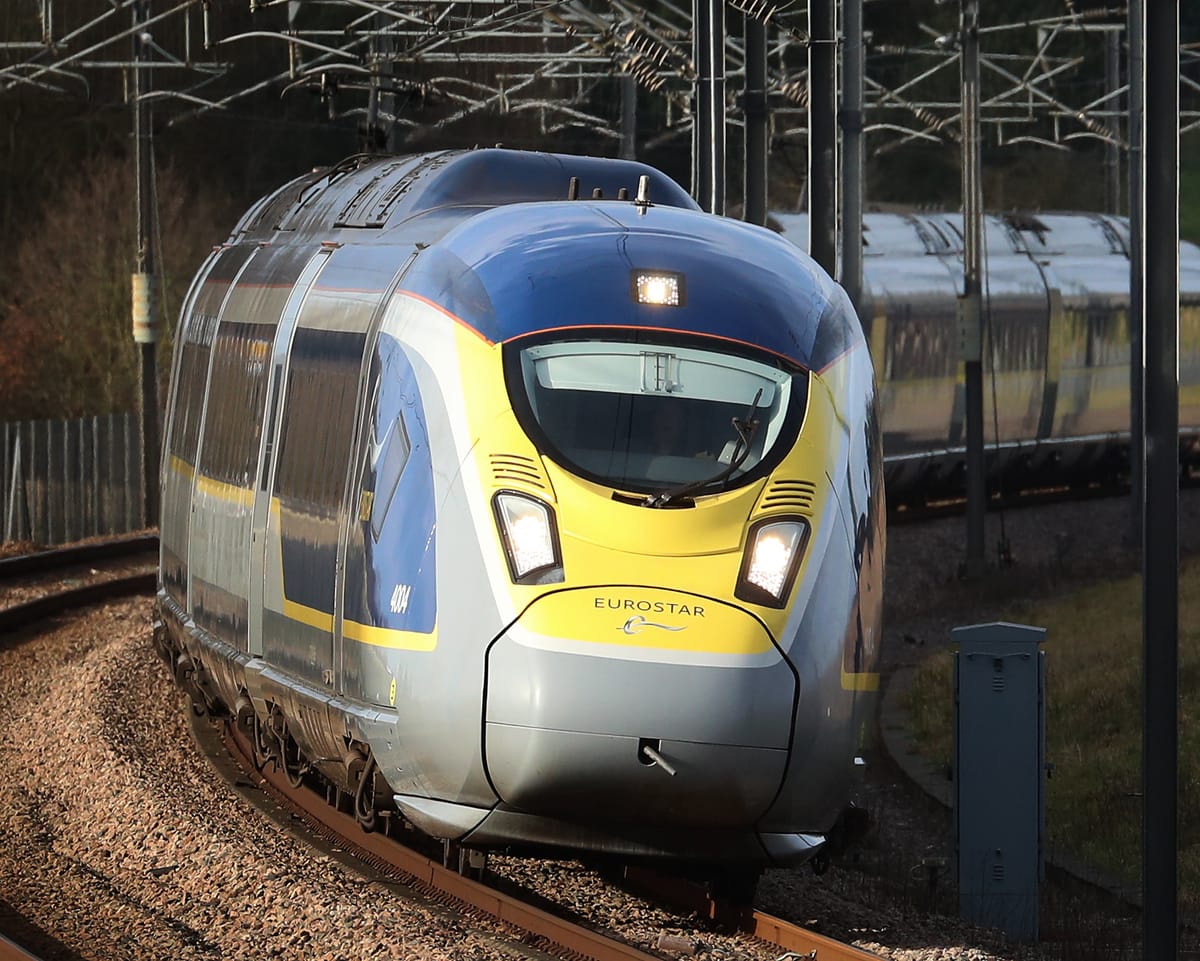
Cross-Channel rail operator Eurostar has called on the UK government to adopt a "credible long-term strategy" for international rail services or risk lagging behind other European nations. The plea comes ahead of a key regulatory decision that may end its longtime monopoly on cross-border routes.
The company cautioned that if the Office of Rail and Road (ORR) approves rival operators to use limited existing facilities too soon, its own investment plans could be undermined. Instead, it urged policymakers to consider a broader approach that would increase capacity for international rail links, citing potential benefits for skilled employment and economic growth.
Eurostar is close to finalizing an order for 50 new high-speed trains to modernize its fleet and expand services, including proposed direct routes to Frankfurt and Geneva. However, competitors are seeking to break its three-decade dominance of Channel tunnel passenger services. Contenders include Virgin Group, startup Gemini Trains, and a collaboration between Italy’s FS Italiane and Spain’s Evolyn.
While rail infrastructure owners—Getlink, which operates the tunnel, and London St Pancras High Speed—support increased rail traffic, rivals have struggled to secure adequate space in the UK for train storage and maintenance. The only operational facility, Temple Mills in east London, is currently at full capacity, Eurostar says, and requires an €80 million investment to support its own expansion.
The ORR, however, has suggested that Temple Mills has available space and invited bids for its use before making a final decision.
Documents submitted by Eurostar to the regulator, obtained by *CuriosityNews*, outline its growth strategy, citing a 5% rise in passenger numbers last year to 19.5 million and agreements with Germany and Switzerland for new direct routes. However, the company warned that sharing the depot could hinder operations and cause disruptions, arguing it would be "premature" for the ORR to allow competitors access until additional capacity is confirmed.
Instead, Eurostar proposed that the ORR and government should focus on developing new depots—either by repurposing existing sites or constructing new ones—to accommodate multiple operators.
Gareth Williams, Eurostar’s general secretary, stated, “There is a major opportunity to expand international rail services. With demand for sustainable travel at record levels, the UK cannot afford to lose ground.” He emphasized that Eurostar’s investments were already moving forward, adding, “Temple Mills is crucial to our future growth. We aim to establish a leading hub for European high-speed rail.”
Read next
Jaguar Land Rover suppliers voice ‘everything is against us’ amid cutbacks
David Roberts, chair of Coventry-based Evtec, says the outlook for Britain’s automotive sector is grim, with “everything against us.” Evtec is a tier 1 supplier to Jaguar Land Rover, which this week announced 4,000 job cuts over two years despite chancellor John Healey’s attempt to talk
Europe’s fighter jet plans in disarray: what comes next?
When former ECB president and Italian PM Mario Draghi urged Europe to catch up economically with the US and China, defence collaboration was prescribed. No more should each nation build independent boats, tanks or jets; allies should share costs and technologies.
Europe stumbled at the first hurdle. German Chancellor Friedrich
John Healey supports growth but insists Labour must be truthful about spending
John Healey has stated that his primary goal as chancellor will be to boost economic growth, while acknowledging that Labour must be straightforward about controlling public spending at next month's budget.
In his first major address since assuming the role in July, Healey said the leading focus of