
Inthe besieged harbours of Odesa, a research vessel rides at anchor, its hull scarred by unseen harm. No one can approach the damage to the Boris Alexander caused by Russian drones and artillery that have struck the port city throughout four years of war in Ukraine; the risk is too great, just as the full toll of the conflict on the Black Sea remains unmeasured.
“We can only wait,” says Dr Jaroslav Slobodnik, director of the Environmental Institute, based in the Slovak Republic. “The biodiversity landscape has been completely reshaped. Some species appear to have vanished, yet we lack the data to confirm this. The war blocks any attempt to gather the needed information.”
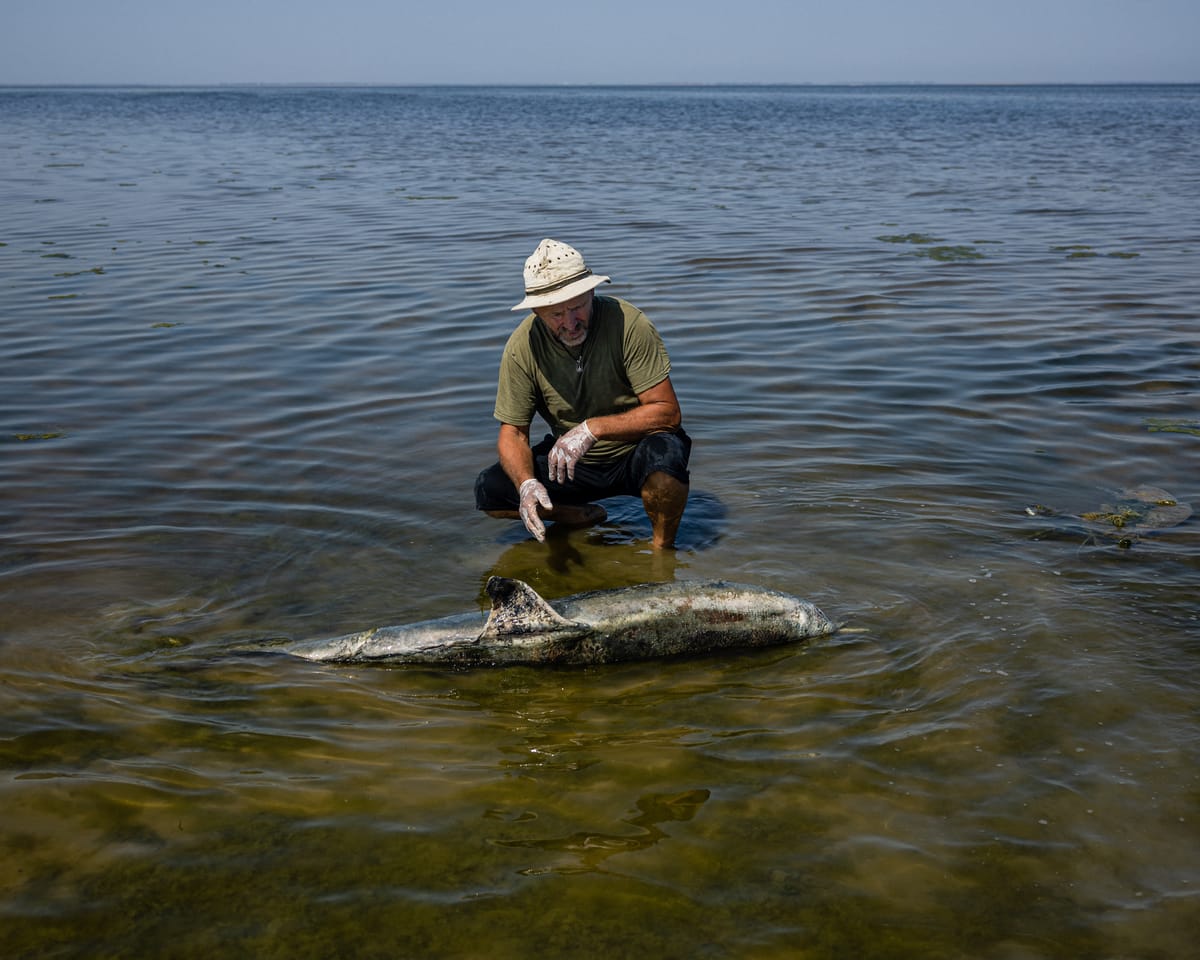
Before the invasion, three dolphin species inhabited the Black Sea. Since the start of the conflict, carcasses of poisoned dolphins have been washing up regularly along Ukraine’s 1,729‑mile (2,782 km) shoreline. In the first year of the Russian assault, about 125 were logged; last year the count fell to 49. Beyond oil spills and unexploded ordnance, experts believe acoustic disturbance from military sonar poses a grave threat to cetaceans, provoking strandings and fatalities. Sonar activity from both surface ships and submarines is likely especially intense near the Kerch Bridge and in Russian‑held zones.
Monitoring these mammals—key indicators of the Black Sea’s health—or determining what is killing them is hampered by the war. Fewer observers are available to count, fewer reports come from a weary populace, and the occupied Crimean peninsula creates a de‑facto no‑man’s‑land.
“The dolphins are the sentinels of marine ecology because they sit at the top of the food chain,” Slobodnik notes. The combined impact of “thousands and thousands” of bombs, oil leaks and sunken vessels can only be speculated. “All we can say is that the Black Sea is at a tipping point, perhaps already past it, due to this war.”
Nearly three years have passed since the Kakhovka dam disaster in June 2023, when Russian forces are suspected of sabotaging the structure on the Dnipro River in southern Ukraine. The breach killed dozens, inundated fields and homes across roughly 230 square miles (600 km²), and flushed significant pollutants and heavy metals into the Dnipro, then onward to the Black Sea, while depositing toxic waste and rotting animal carcasses into the river delta’s sediment.
Slobodnik calls this event “a toxic punch to the face of the Black Sea”.
Prior to the February 2022 invasion, Ukraine had been aligning its water policies with EU environmental standards, and in 2020 it had proclaimed the Black Sea “alive” again after years of feeder rivers injecting toxic industrial chemicals and agricultural pesticides. Tens of thousands of euros had been spent on bringing the water purity.
Read next

My final clashwith my Palestinian dad lingers, leaving the past unburied for both of us
The last argument my father andI ever had took place on a May night in 2021, the evening before his first chemotherapy session. At that point in our story I had just become a mother, and he was a year and a half away from dying. To treat his stage‑

Italy confiscates€20 million in assets tied to embezzlement from Ursula Andress
Italian authorities have confiscated assets worth €20 million (£17.3 million) in Tuscany, comprising real‑estate, vineyards and olive groves, allegedly purchased with funds embezzled from the actress Ursula Andress.
The 90‑year‑old Swiss‑born star lodged a complaint in her home country claiming a “progressive and significant depletion
Zelenskyy says US makes security guarantees conditional on Ukraine ceding Donbas
TheUnited States is tying its security guarantees for a Ukraine peace agreement to Kyiv surrendering the entire eastern Donbas region to Russia, President Volodymyr Zelenskyy told Reuters in an interview. He said that, with Washington’s attention turned to its own dispute with Iran, former President Donald Trump is pressuring