
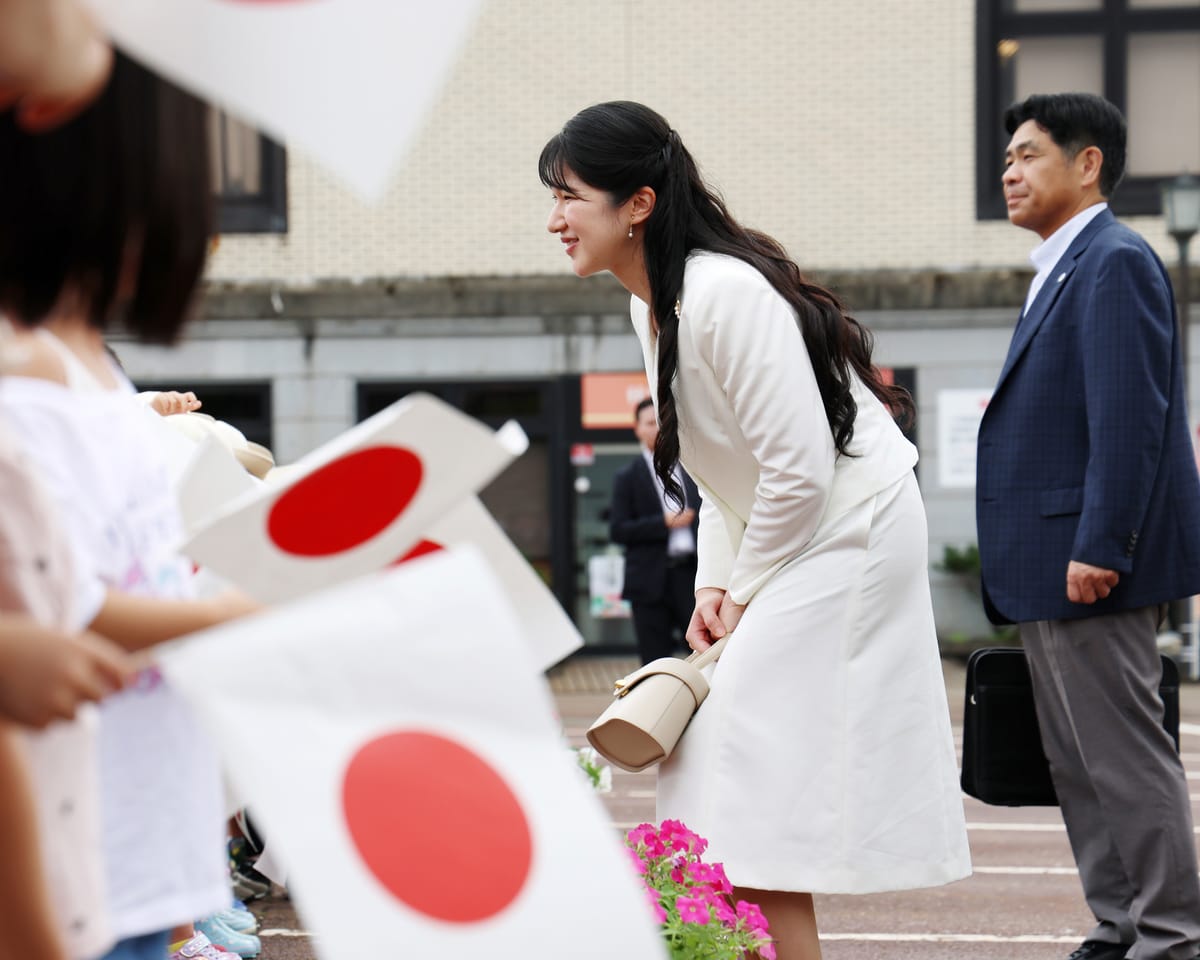
Princess Aiko, 24, is a prominent figure in Japan, often featured on magazine covers and sought after by fans for her fashion sense. Her public appearances draw large crowds eager to see her, admired for her elegance and presence. Despite her popularity, she is barred by law from becoming empress, sparking a debate as Japan faces a shortage of imperial heirs.
Aiko, the daughter of Emperor Naruhito and Empress Masako, has grown from a reserved schoolgirl into a confident young woman in the public eye. Japan's succession laws, established nearly 140 years ago, prohibit women from ascending the throne. This law contradicts the public's growing support for gender equality in the imperial succession, especially as the number of royal family members dwindles—down to 16, with only five males.
A recent poll by the Mainichi Shimbun found that 72% of Japanese citizens support allowing a woman to become emperor, while only 10% oppose it. The current succession line consists of just three men: Crown Prince Akishino, his son Prince Hisahito, and Prince Hitachi. Without a male heir from Prince Hisahito, the line may end within a generation.
Efforts to address the succession issue have been hindered by conservative opposition. In 2023, the government, led by Prime Minister Sanae Takaichi, amended the law to maintain male-only succession, allowing women to keep royal status if they marry non-royals. This change also reinstates male descendants from certain branches of the family.
Internationally, the issue has drawn attention. In 2024, the UN women's rights committee called for gender equality in the imperial succession, but Japan dismissed the suggestion, citing national identity concerns. Takaichi, Japan's first female prime minister, has emphasized the historical male-line succession as crucial to the emperor's legitimacy.
Despite this, Princess Aiko's popularity and the public's favorable view of her may influence future discussions. Aiko is seen as embodying the qualities needed for an imperial role, with many viewing her as a fitting successor to her father.
Japan has had eight female monarchs in the past, though their roles were largely symbolic until a male heir appeared. While the royal family cannot publicly comment on politics, they have expressed a desire for public understanding of succession issues. Prince Akishino has emphasized the importance of societal progress and equality in roles, reflecting a potential shift in perspective within the imperial family.
Read next

Teen's Mountaineering Attempt with Claude Ends in Emergency Rescue in Canadian Mountains
The Widowmaker Arete, a towering 1,700-foot wall in British Columbia, is misleadingly labeled as featuring "mostly easy slab climbing" with "short steep sections" including "finger cracks" and "blocky face climbing." Climbing it necessitates meticulous planning and the appropriate gear.
Last

India's 'Cockroach' Party Accuses Government of Detaining Members Before Weekend Protest
India’s Cockroach Janta Party (CJP), initially a satirical movement, is now gaining political traction among Gen Z as it faces mass detentions ahead of a major anti-government protest in Delhi. The opposition, alongside student groups and the CJP, has been organizing nearly daily protests, demanding the resignation of

Millions Warned as Hurricane Isaias Threatens with Dangerous Storm Surge
As Hurricane Isaias approaches the US Gulf coast, millions from Louisiana to Florida are under hurricane warnings. Weather officials caution about the threat of dangerous storm surge, hurricane-force winds, heavy rainfall, and flooding.
Isaias escalated from a tropical storm to a hurricane on Wednesday night, marking the start of