
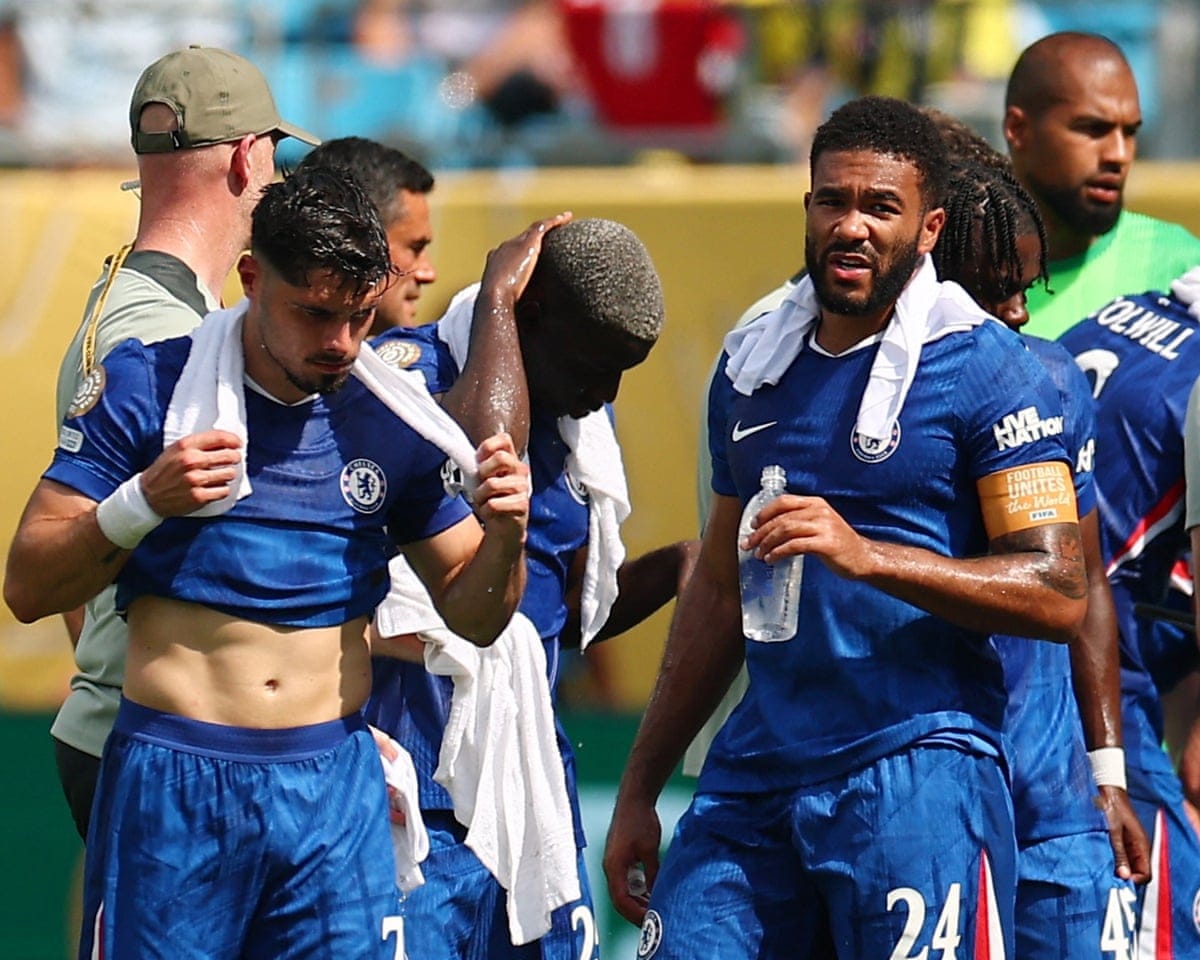
Half-time intervals should be increased to 20 minutes in extreme heat, according to the global players’ union. Fifpro has urged additional steps to safeguard footballers after what it calls the "alarming conditions" at the Club World Cup, where matches took place under intense temperatures over the past two weeks.
Current regulations allow for three-minute cooling breaks in each half if temperatures rise above a certain limit. Dr. Vincent Gouttebarge, Fifpro’s medical director, stated that a longer half-time could be a vital measure to help maintain players' core body temperatures.
"Cooling breaks are typically three minutes long and aimed at reducing body heat using ice," he said. "However, we lack clear evidence on the ideal duration for such breaks. A 15-minute half-time may not be sufficient to lower core temperatures effectively. Research is ongoing to explore other strategies, and a 20-minute half-time could make a difference. Laboratory tests support this, and together with Portugal’s players' union, we plan to test this approach in August."
Concerns over temperatures exceeding 40°C at the Club World Cup in the US have been prominent throughout the event. Alex Phillips, Fifpro’s general secretary, confirmed that discussions with FIFA over the past two weeks have led to some adjustments.
"We are somewhat satisfied because FIFA has been receptive once the tournament began," he said. "They have adjusted their heat management policies during matches based on our recommendations. Ideally, this should have been addressed earlier, but it’s positive that extra measures, like additional water and towels, were introduced, and cooling breaks were triggered more frequently. FIFA’s response has been encouraging."
"However, moving forward, this isn’t just FIFA’s responsibility. Any competition held in extreme heat must adopt stronger safeguards, like those in Australia and the US, where leagues regularly adjust schedules due to high temperatures." (For example, MLS avoids midday matches in Florida, while Australia has protocols for match delays.)
Phillips also cautioned that European football must adapt to weather conditions dictating international tournaments shifting to winter. "The trend in recent years is clear—football is now played year-round, whether in summer, winter, or different global seasons," he said.
Alexander Bielefeld, Fifpro’s policy and strategic director, further emphasized the need for proactive planning.
Read next

Weekly Sports Quiz: Focus on Harry Kane, Victor Wembanyama, and WSL Champions
Local Community Efforts Drive Environmental Change
In a small town nestled between rolling hills and dense forests, residents have taken it upon themselves to spearhead a movement aimed at fostering environmental sustainability. This grassroots initiative is drawing attention for its comprehensive approach to tackling ecological challenges.
At the heart of

France and US Reign in Rapid and Blitz at Pall Mall Masters Chess Event
Mastering chess in central London is uncommon, though the annual ChessFest in Trafalgar Square draws over 20,000 visitors.
In London's Pall Mall club scene, the RAC clubhouse has been the site for the Oxford vs. Cambridge Varsity match for nearly fifty years. In 2023, the Athenaeum hosted
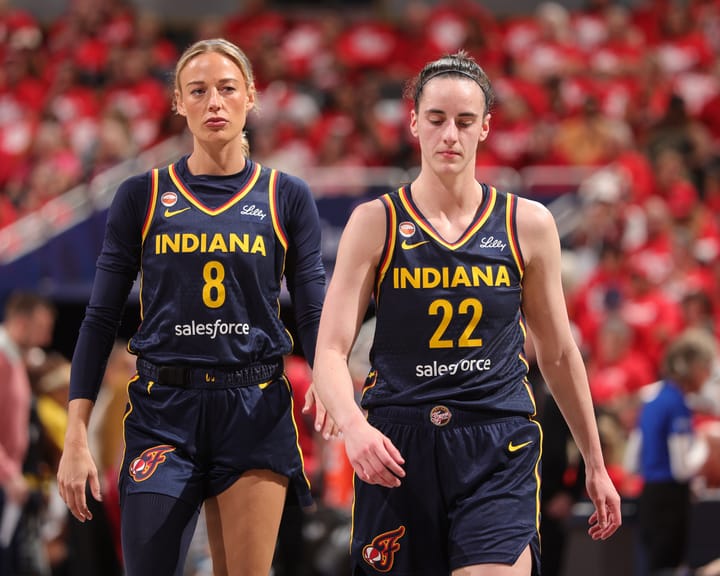
Indiana Fever and the Magasphere: A Risky Route to Fame for a WNBA Team
The Indiana Fever's season has concluded, marked by both its on-court performance and off-court controversies. Despite being eliminated by the Las Vegas Aces for the second consecutive year, the team has drawn significant attention, becoming a focal point in the WNBA this season.
The Fever'