

Lithium‑ion cells now pose a fresh technological risk, a fire‑science specialist admits keeps him restless at night, while fire‑service leaders caution that the proliferation of these cells in daily items is outstripping public awareness and safety rules.
The inferno that ravaged a historic Glasgow structure and forced the shutdown of Central Station, Scotland’s principal rail hub, is thought to have originated in a vape shop, the devices being powered by lithium‑ion cells. Central Station has subsequently reopened.
Recent figures show a marked rise in battery‑related blazes throughout Scotland, and London fire crews are called to an e‑bike or e‑scooter fire roughly every other day.
Paul Christensen, professor of pure and applied electrochemistry at the University of Newcastle, stressed that although the chance of a lithium‑ion battery igniting is minimal, the danger is “extremely high, as demonstrated by the Glasgow fire”.
Guillermo Rein, professor of fire science at Imperial College London, observed: “It is a new technology that brings an unforeseen hazard, one that keeps me awake at night.
“A lithium‑battery fire – in how it starts, how we detect it and how we extinguish it – is wholly unlike the fires we have traditionally defended our homes, workplaces and public venues against. It penetrates most of the protective layers we rely on, and the batteries are everywhere.”
Lithium‑ion cells power smartphones, tablets, laptops, electric toothbrushes, power tools, toys and vapes, as well as e‑bikes, e‑scooters and electric cars.
When mishandled or damaged, they can enter a state known as thermal runaway: a runaway heat reaction that causes the cell’s temperature to soar, releasing toxic gas under pressure, producing a torch‑like flame and potentially exploding.
Data indicate a pronounced surge in such incidents in recent years. The London Fire Brigade recorded 206 e‑bike and e‑scooter fires in 2025, up from 12 in 2019, with a total of 521 battery‑related fires versus 80 in 2019. Of five deaths in the past three years, none involved the owner of the e‑bike. The brigade notes that these incidents have had a “devastating effect” on families and communities.
England and Wales lack a dedicated register for lithium‑battery fires, a matter now under review. However, Freedom‑of‑Information data from the Scottish Fire and Rescue Service show 69 lithium‑battery incidents in Scotland in 2025, compared with 20 in 2019, including ten residential fires last year, two in hospitals and three in prisons. Records dating back to 2009 confirm no fatalities linked to such fires in Scotland.
Improper disposal of these cells – they should not be placed in ordinary waste but can be recycled at many supermarket collection points – has already sparked serious bin fires.
Read next

Senior European reporter suspended for using AI‑generated quotations
The owner of the Dutch daily De Telegraaf and the Irish Independent has placed a senior reporter on leave for now after he confessed to employing artificial intelligence to “incorrectly attribute statements to individuals.”
Peter Vandermeersch, who previously led Mediahuis’s Irish division, said he “succumbed to hallucinations” – the label
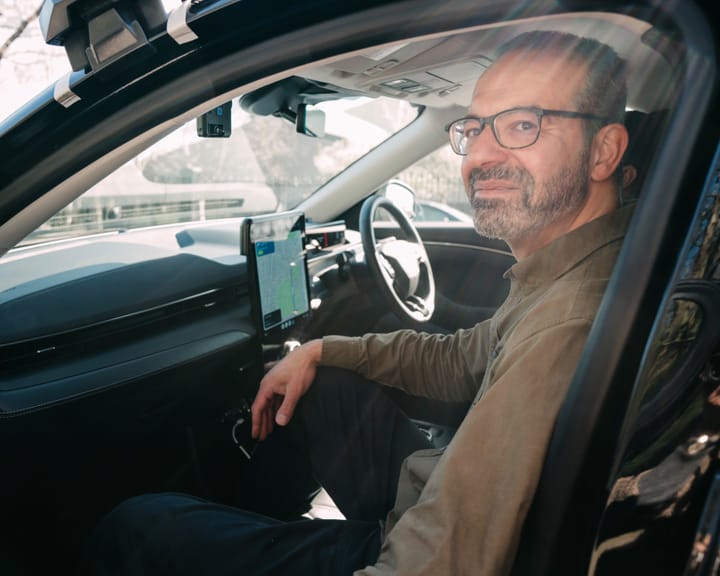
No instructions needed: My experience riding a self-driving taxi
“I’m really excited to show you this,” says Alex Kendall, chief executive of Wayve, as he settles into the driver’s seat of the firm’s electric Ford Mustang. He then does nothing. The vehicle moves to a junction on a busy King’s Cross road entirely on its

Meta, Google test: Do infinite scroll and autoplay foster addiction?
There was a period when social‑media feeds had an end. Today the scroll goes on indefinitely.
“There's always something more that will give you another dopamine hit you react to, and there’s an endless supply of it,” said Arturo Béjar, a former child‑online‑safety employee