
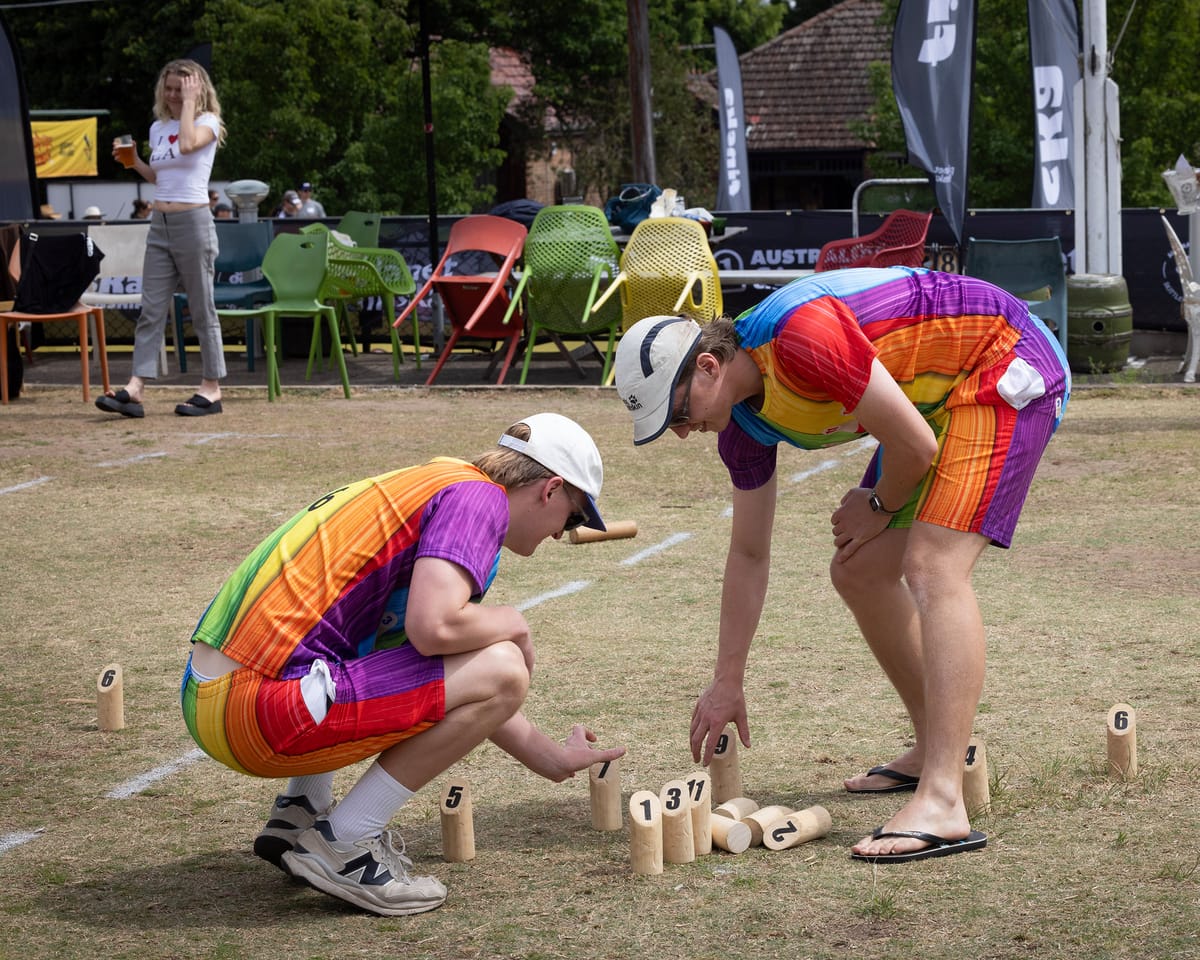
Bernie Bolger and his brother had little familiarity with Finska when they came across details about the national championships in Sydney four years ago.
“We told some friends and thought it would be amusing to enter,” he recalls. “We weren’t sure how organized or competitive the event would be.”
The small-scale wooden-pin game, originating in Finland, is primarily enjoyed casually in Australia during summer gatherings in parks and beaches.
Bolger noted that the championships felt more like a relaxed social outing than an intense contest. However, meeting Damien Landais, then the head of the sport’s international association, who had recently moved to Australia from France, led to an unforeseen opportunity.
“We mentioned how much we enjoyed it, and he said, ‘If you want more tournaments, Australia doesn’t have any, but there’s a World Championships abroad and no Australian team,’” he says.
Landais explained that in Europe, the game was treated with greater competitiveness.
“Right away, we decided to go for it—like in *Cool Runnings*,” Bolger says, referencing the film about Jamaica’s debut bobsleigh team. “From January onward, he trained us, teaching different techniques and strategies.”
“It almost felt absurd that we were representing the country just by default—since all you had to do was register and show up,” he adds.
“We played for Australia because nobody else was.”
Aiming for Finska Recognition
Finska gained traction in Australia around 2009 when Peter Nicholl, seeking a change from corporate work, began distributing the game after finding an eBay listing for 1,000 sets. He also organized the initial championships where Bolger and his friends participated.
“It has definitely become more popular in recent years,” Nicholl notes.
At first glance, the game resembles bowling, with cylindrical pins arranged together. However, instead of a ball, players toss a wooden log to knock them over.
Based on the Finnish tradition of *kyykkä*, played for centuries in Scandinavia, the modern variation has been standardized into games like Mölkky and Finska.
Victory requires reaching exactly 50 points. Each pin carries a specific value, though the rules can be complex. After each turn, the pins are reset, often spreading farther apart and increasing the challenge.
The sport’s competitive appeal in Australia has grown, partly thanks to Bolger and his friends forming the country’s first national team, known as the Finskaroos.
Read next

"Sovereign citizen surge tests Australia's top-tier gun laws"
Porepunkah Suspect Details Licence Cancellations in Court Hearing
In 2024, the alleged Porepunkah gunman, Dezi Freeman, told the Victorian supreme court that his firearm licence had been revoked.
“My firearms licences were cancelled, and I lost my club membership,” Freeman stated in a submission. During the hearing, he attempted to
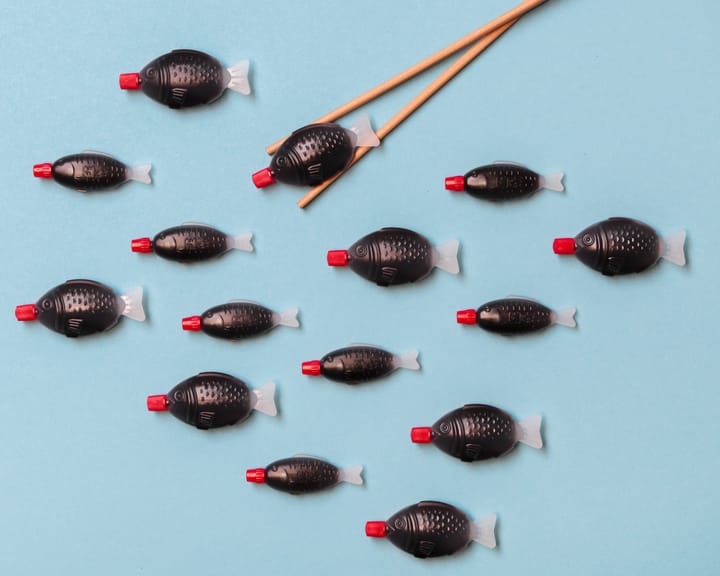
Australia first to outlaw fish-shaped soy sauce plastic containers
The End of an Era for Iconic Fish-Shaped Soy Sauce Dispensers
For decades, the small fish-shaped soy sauce container has been a common sight in sushi outlets worldwide, but its days may now be numbered.
South Australia is set to become the first place in the world to