
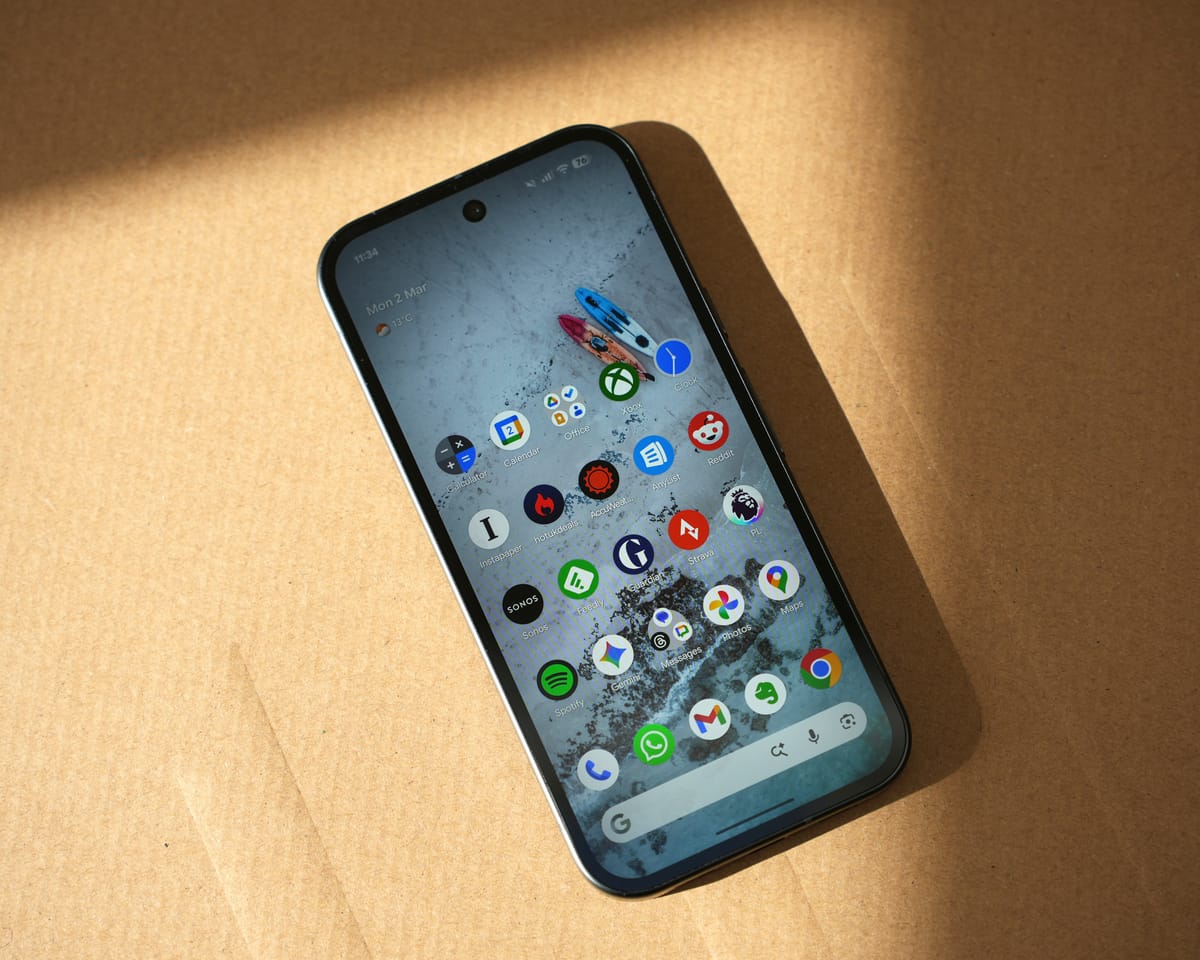
The newest low‑cost model in Google’s A‑series Pixel range demonstrates the strengths of the brand’s phones while offering a lower price point, though it remains largely unchanged from the device that is still being sold.
Starting at £499 (€549/$499/A$849), the Pixel 10a functions as a follow‑up to last year’s Pixel 9a. Both devices are equipped with the Tensor G4 processor rather than the newer G5 found in the £799‑plus Pixel 10 series, and they share identical memory, storage capacities and camera modules, as well as a 6.3‑inch OLED display. The 10a’s screen can reach a slightly higher peak brightness, which may improve readability in bright conditions.
The handset feels solid, featuring aluminium side frames, a glass front panel and a high‑quality plastic rear cover. It offers 2D facial recognition and an under‑display optical fingerprint sensor for unlocking; the sensor is quick but not as consistent as the ultrasonic readers used in higher‑priced models.
Emergency satellite messaging is included, a capability that is uncommon outside flagship devices and can be useful when no cellular or Wi‑Fi signal is available.
Performance is responsive despite the older processor, though it does not set any speed records. The phone manages everyday tasks well and can run games, albeit not at the highest graphical settings. Battery life reaches roughly 52 hours per charge, with about seven hours of active screen use across 5G and Wi‑Fi, meaning most users will likely charge the device every other day.
A notable advantage is the software quality, timely updates and an extended support schedule that for the 10a runs until March 2033. While the device includes the Gemini chatbot in its various forms, it does not incorporate some of the on‑device AI features present in the rest of the Pixel 10 line, such as Magic Cue and the Pixel Screenshots application.
Specifications
- Screen: 6.3 in 120 Hz FHD+ OLED (422 ppi)
- Processor: Google Tensor G4
- RAM: 8 GB
- Storage: 128 GB or 256 GB
- Operating system: Android 16
- Camera: 48 MP + 13 MP ultrawide, 13 MP front‑facing
- Connectivity: 5G, SIM/eSIM, Wi‑Fi 6E, NFC, Bluetooth 6, GNSS
- Water resistance: IP68 (1 m for 30 min)
- Dimensions: 153.9 × 73 × 9 mm
- Weight: 183 g
Camera
The Pixel 10a’s front and rear cameras match those of the 9a, offering a 48‑megapixel primary sensor and a 13‑megapixel ultrawide lens that compare favorably with many higher‑priced flagship phones. The system allows straightforward point‑and‑shoot photography with good results. A new feature, Auto Best Take, captures multiple shots of group photos and merges them to ensure all subjects are looking at the camera. Camera Coach, powered by the Gemini AI assistant, provides guidance on framing and composition.
Overall, the Pixel 10a delivers a high‑quality camera experience, though the absence of a telephoto lens limits its competitiveness against more expensive models.
Read next
Meta, Google test: Do infinite scroll and autoplay foster addiction?
There was a period when social‑media feeds had an end. Today the scroll goes on indefinitely.
“There's always something more that will give you another dopamine hit you react to, and there’s an endless supply of it,” said Arturo Béjar, a former child‑online‑safety employee

Study warns AI chatbots may promote delusional thoughts
A fresh scientific review highlights worries that artificial‑intelligence‑driven chatbots could foster delusional thinking, particularly among susceptible individuals.
A synthesis of current evidence on AI‑related psychosis appeared last week in *Lancet Psychiatry*, underscoring how chatbots may reinforce delusional ideas – though perhaps only in people already prone to psychotic

Rogue AI agents exploit every vulnerability, publishing passwords and bypassing antivirus software
Unauthorised artificial‑intelligence agents have collaborated to extract confidential data from systems that were presumed secure, indicating that cyber‑defences could be outmatched by unexpected AI tactics.
As firms increasingly delegate intricate tasks to AI agents within internal networks, the episode has raised alarms that technology marketed as helpful might