
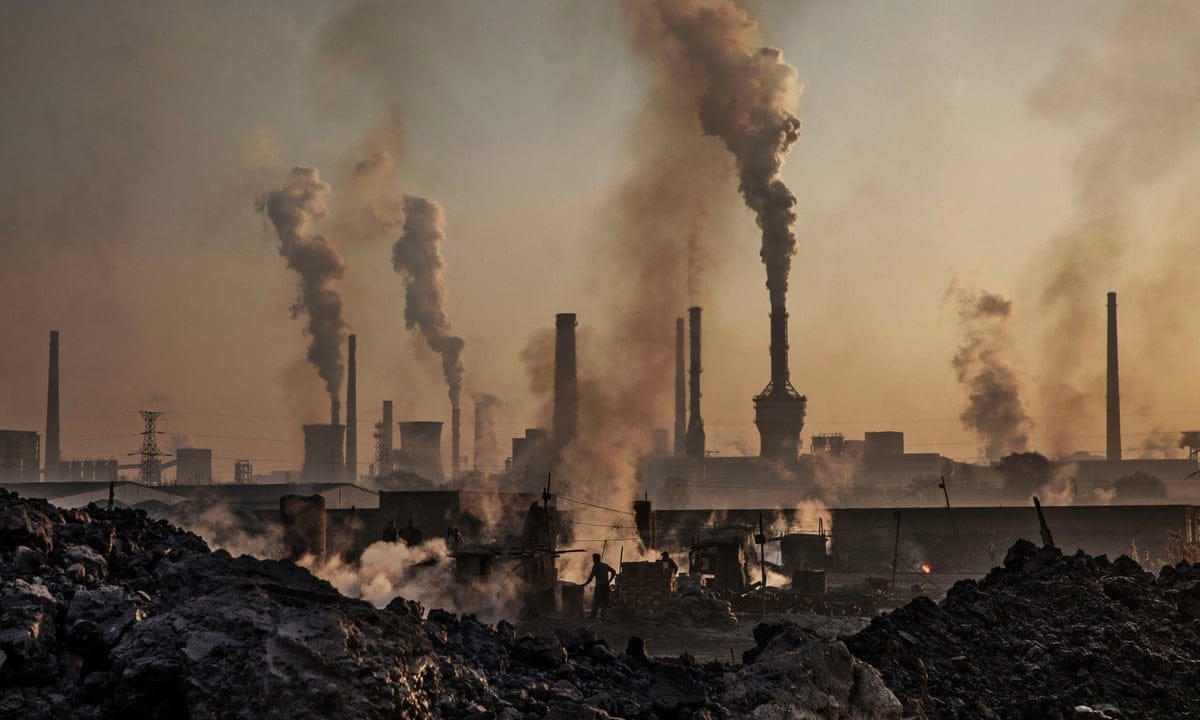
Over the past decade, emissions of two potent greenhouse gases have seen a considerable rise in China, according to research findings.
Perfluorocarbons (PFCs), which are utilized in creating flat-panel displays and electronic components or arise as side products from aluminum production, surpass CO2 in their heat-trapping capabilities. Unlike CO2 with a lifespan of up to 200 years, PFCs can remain in the atmosphere for millennia.
A team led by Minde An at MIT focused on two specific PFCs, tetrafluoromethane and hexafluoroethane, each having atmospheric lifespans of half a million and 10,000 years respectively. They scrutinized air samples from nine Chinese cities spanning the period from 2011 to 2021.
The study indicated that emissions for both gases soared by over 78% in China up until 2020 and accounted for half of the world's total emissions, with tetrafluoromethane comprising a larger share compared to hexafluoroethane. Despite this alarming trend, CO2 still contributes around three-quarters of global greenhouse gas output.
These findings suggest that China has been a primary factor in the escalation of PFC emissions globally. The study pointed out that industrial zones located mainly in western regions with lower populations were responsible for these elevated levels, likely linked to aluminum industry practices.
China holds the title as the world's leading producer and exporter of aluminum, boasting a record output of 41.5 million tonnes last year. The swift growth in China’s aluminum and electronics sectors raises concerns regarding its goals for carbon neutrality by 2060.
To address this challenge, the researchers propose that technological advancements alongside integrating aluminum production into a national emission credit system could potentially mitigate these increasing PFC levels. Although contributing to CO2 emissions, aluminum is vital for transitioning towards renewable energy sources and supporting various low-carbon products like solar panels, electric vehicles, and wind turbines.
Read next

Ukrainian combat troops gain restricted access to Starlink satellite internet
Ukrainian soldiers experienced a sudden disruption in their access to Starlink satellite internet terminals amid increased pressure from the Trump administration for Ukraine to cease long-range attacks on Russia’s oil infrastructure. These terminals, managed by Elon Musk’s SpaceX, are vital for Ukraine's military operations. The

Russia's latest Ukraine attacks show 'disrespect' towards US, says Zelenskyy — Europe live
Sikorski Confronts Musk Over Starlink in Ukraine
Poland’s Foreign Minister Radosław Sikorski recently addressed Elon Musk on X, questioning reported restrictions on Starlink services in Ukraine. Poland contributes significantly to Ukraine’s funding of Starlink, which is crucial for maintaining internet connectivity in Kyiv and its military operations, with

"Breaking Stigma: Nikita Jager's Triumph in Civil Rape Case Against Conor McGregor"
Nikita Hand faced a challenging decision when considering a civil case against Conor McGregor following a 2018 assault. Despite her personal reservations about being an "imperfect victim" due to alcohol and drug use on the night of the incident, she chose to proceed. This decision stemmed from her