
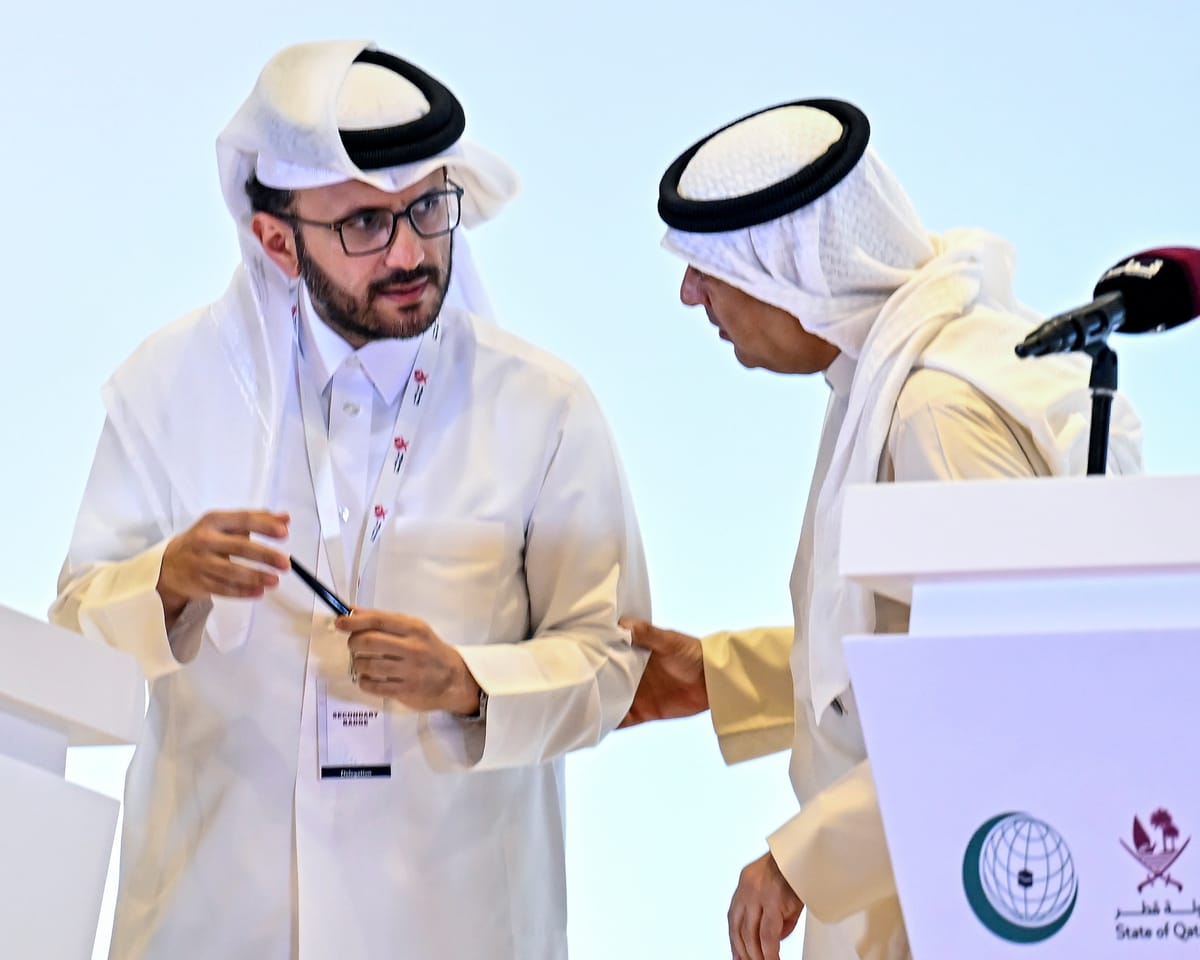
Not long after Donald Trump said the USwas engaged in “strong talks” to bring the war with Iran to an end this week, Qatar took the unusual step of distancing itself from the alleged diplomatic negotiations.
Qatar was not involved in any mediation efforts, said government spokesperson Majed al‑Ansari at a briefing on Tuesday night, before adding as a telling aside: “If they exist.”
It signalled a notable break from Qatar’s historic and recurring position as chief mediator in Middle East and wider regional conflicts. Whether for negotiations between Israel and Hamas, talks between the US and the Taliban or attempting to broker peace deals in Lebanon and Sudan, orchestrating diplomatic summits has formed a cornerstone of the small Gulf state’s international heft.
Yet this time, over the past three or more weeks, Qatar and fellow Gulf countries have found themselves on the frontlines of the war, after their mediation efforts to try to prevent the conflict were ultimately spurned by the US.
The US has attacked Iran twice during negotiations aimed at halting the Iranian nuclear programme, which were championed and led by the Gulf state of Oman. Discussions last June were halted as the US and Israel conducted strikes on Iran’s nuclear facilities. Revived talks this February were also quickly rendered useless when US president Donald Trump began bombing Tehran with Israel before the final round of meetings.
Since the war began, Gulf states have been forced to spend billions rebuffing a daily onslaught of Iranian missiles and drones, their economies and sovereignty taking an increasingly substantive hit.
Analysts said their reluctance to cheerlead the alleged ceasefire efforts reflected both the heavy toll they continued to suffer from the war, as well as a lingering suspicion over whether Trump’s talk of peace was genuine or another foil for escalation.
“They’ve been burned by their previous experience,” said Bilal Saab, senior managing director of advisory group Trends US and former Pentagon official in the first Trump administration.
He added: “They previously thought they played a useful mediating role – until they realised that it was all for naught. Not to mention that they have been directly implicated in the war and are still being attacked by the Iranians. So there’s a lot of pent‑up frustration and disappointment that is affecting their willingness, and perhaps even ability, to mediate anything.”
The lack of clarity around the current alleged negotiations between the US and Iran, and a deep mistrust of the Trump regime, have left Gulf leaders reluctant to put themselves on the frontlines of talks for the time being, said analysts.
It is still unclear exactly who the US is talking to in Iran to put forward their proposal for peace.
Read next
My final clashwith my Palestinian dad lingers, leaving the past unburied for both of us
The last argument my father andI ever had took place on a May night in 2021, the evening before his first chemotherapy session. At that point in our story I had just become a mother, and he was a year and a half away from dying. To treat his stage‑
Experts WarnRussia's War Is Pushing Black Sea Dolphins to Breaking Point
Inthe besieged harbours of Odesa, a research vessel rides at anchor, its hull scarred by unseen harm. No one can approach the damage to the Boris Alexander caused by Russian drones and artillery that have struck the port city throughout four years of war in Ukraine; the risk is too
Italy confiscates€20 million in assets tied to embezzlement from Ursula Andress
Italian authorities have confiscated assets worth €20 million (£17.3 million) in Tuscany, comprising real‑estate, vineyards and olive groves, allegedly purchased with funds embezzled from the actress Ursula Andress.
The 90‑year‑old Swiss‑born star lodged a complaint in her home country claiming a “progressive and significant depletion