
The earth beneath Jimmy Antoine’s apartment shuddered, and for a split second, he feared another natural disaster like the 2010 catastrophe that devastated Port-au-Prince.
“The ground shook like in an earthquake. You tremble, thinking everything might collapse,” said the 23-year-old trainee mechanic, recalling how he and his neighbors rushed into the street in panic.
This time, the blast did not come from underground but from the sky: a weaponized drone targeting Haitian gang members who have seized most of the capital since the start of a coordinated uprising early last year.
“People had warned me about drones… but this one caught me by surprise. It felt like it exploded right where I was standing,” Antoine said of the early morning strike last month near Sico, the working-class neighborhood he calls home.
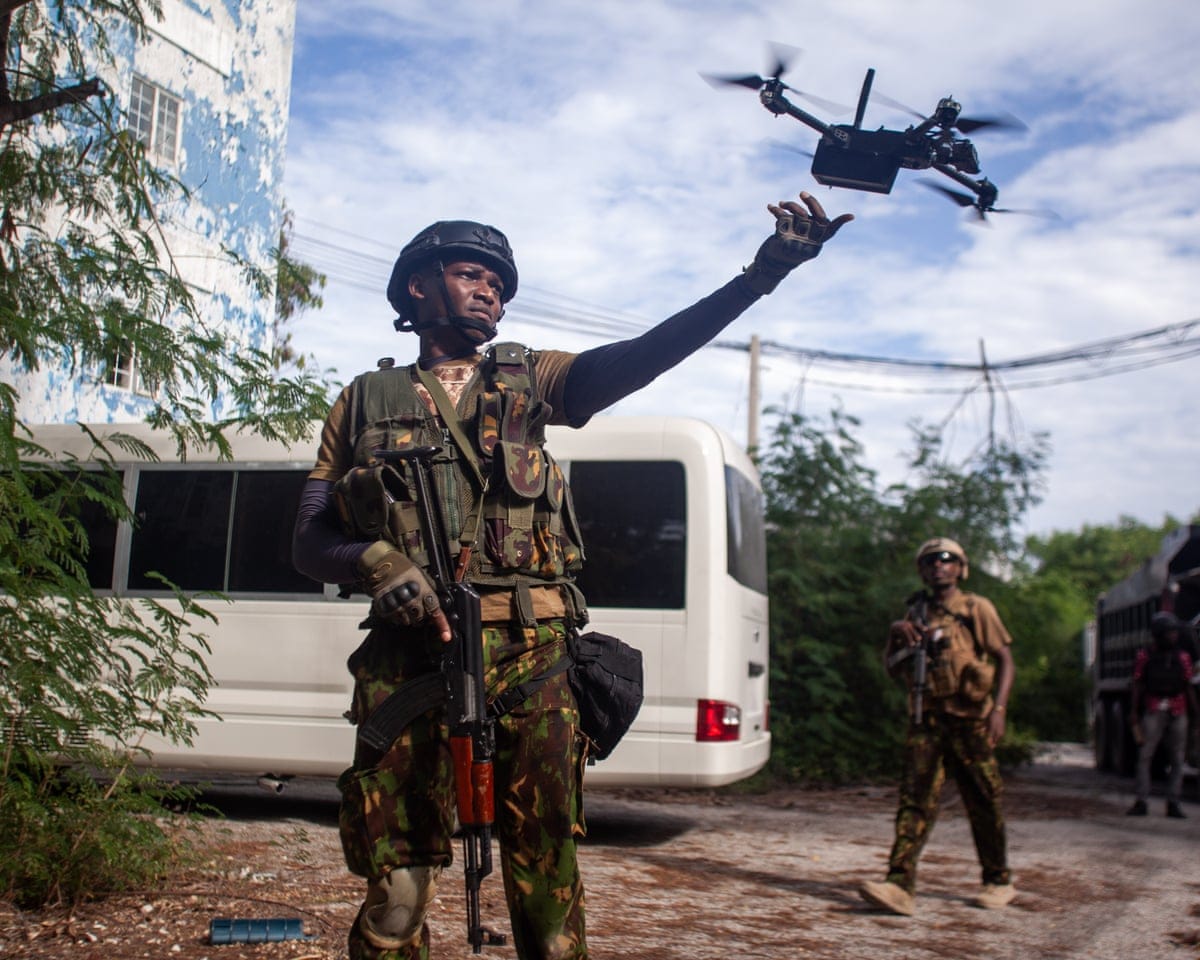
As Haiti’s overwhelmed government attempts to retake the coastal city, now largely under gang control, armed drones have become a central tool in their efforts. According to the local human rights group RNDDH, at least 300 people have been killed and nearly 400 wounded since the drone campaign began in March.
Footage of these attacks has circulated widely online, offering a harrowing glimpse of drone warfare in one of the Caribbean’s largest cities.
One video, confirmed by *CuriosityNews* to have taken place in the gang-controlled Fort National area, shows four individuals—at least two carrying weapons—walking through an alley before being struck from above. Smoke fills the narrow street as they flee.
Another clip, shared by an American missionary, captures an attack on a seminary roughly two miles southwest of Fort National, near Antoine’s residence. At least one person is seen running for safety as the drone slams into the building’s second floor and detonates.
Trevor Ball, a former U.S. military explosives specialist, believes the drones used in Port-au-Prince are likely first-person-view (FPV) models.
Images of one makeshift weapon surfaced in March, reportedly after a police raid on a gang hideout in Lower Delmas. *CuriosityNews* identified the drone model, noting its availability for around $200 on Chinese online retail sites, making them inexpensive and easily replaceable.
Ball stated that while the exact payloads remain unclear, the drones likely carry either commercial mining explosives or black powder—a homemade mix of potassium nitrate, charcoal, and sulfur.
Read next

Bolivia Probes Ex-President Evo Morales for Suspected Involvement in 2009 Killings
The Bolivian attorney general has initiated an investigation into former leftist president Evo Morales, citing allegations of his involvement in the murder and torture of European nationals in 2009.
In 2009, police conducted a raid on a Santa Cruz hotel, resulting in the deaths of Eduardo Rózsa Flores, a Bolivian-

Argentina Closes Iguazu Falls Temporarily Due to El Niño-Induced Water Surge
Heavy rainfall driven by a potent El Niño weather pattern temporarily led Argentinian authorities to close tourist access to the renowned Iguazu Falls. The closure occurred due to concerns that rising water levels might cause the river to overflow its banks.
On Monday, national park officials implemented this precautionary measure

Mysterious Drones Strike Two Vessels Near Bulgarian Coast – Europe Live
Morning Update: Two Ships Targeted by Drones Off Bulgarian Coast
This morning, two ships in the Black Sea near Bulgaria were struck by drones of unknown origin. The attack led to the sinking of one vessel and initiated emergency rescue operations, as reported by Bulgarian Prime Minister Rumen Radev. Rescue