
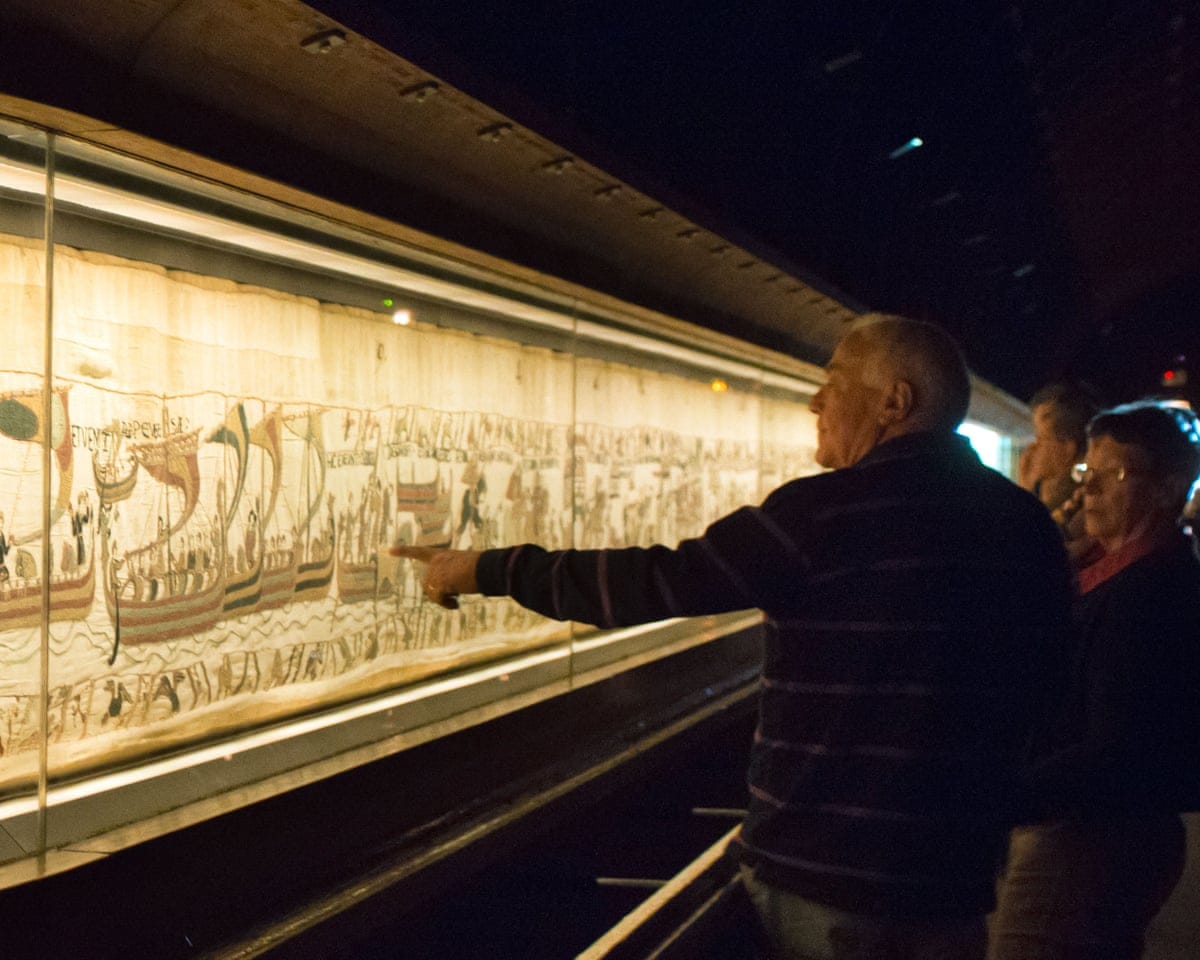
In 2018, when Emmanuel Macron suggested lending the Bayeux Tapestry to Britain, numerous conservators and specialists expressed concerns, arguing that the nearly 1,000-year-old artifact was too delicate to be relocated.
Antoine Verney, head curator of the Bayeux Museum, stated that the embroidery depicting the Norman conquest of England in 1066 was in such poor condition that he "could not imagine" it being transported. Even minor adjustments for inspection, he later noted, required a team of 50 people and were described as a nerve-racking process. Frédérique Boura, a cultural official from Normandy, agreed, declaring: "The piece is worn, aged, and fragile. It cannot be moved."
Seven years later, attitudes have shifted. This week, Macron and Keir Starmer finalized a significant loan agreement during the French president's state visit to Britain. As part of the arrangement, the 70-meter-long, 50-centimeter-high tapestry will be sent to the British Museum in exchange for Anglo-Saxon relics from the Sutton Hoo burial site, the Lewis chess pieces, and other artifacts traveling to France.
While the change in stance may seem abrupt, the Bayeux Museum stated that recent assessments—including a trial with a replica—convinced experts the tapestry could be safely transported.
"In 2018, we lacked sufficient knowledge about its condition, so the loan had to be postponed, though we always believed it was feasible," said Loïc Jamin, Bayeux’s deputy mayor for cultural affairs. "The expertise we have now gathered and shared with the Ministry of Culture has been crucial in making this happen."
The tapestry, illustrating William the Conqueror’s victory over King Harold II at the Battle of Hastings, is currently displayed vertically behind glass in a climate-controlled setting. It will be moved by extending the rails supporting it and placing it on a folding screen-like structure to minimize strain on the fabric and stitching. Once secured, it will be double-crated and transported by road and rail through the Channel Tunnel.
The Bayeux Museum is set to close at the end of August for extensive renovations, requiring the tapestry’s relocation regardless of the loan agreement.
"Of course, there’s always some risk, but we must move it anyway as part of the museum’s transformation," a spokesperson said. "Our experts have developed methods to reduce stress on the artifact. The journey to London simply means it travels further—it won’t be on display here during the renovations either."
Read next

Bolivia Probes Ex-President Evo Morales for Suspected Involvement in 2009 Killings
The Bolivian attorney general has initiated an investigation into former leftist president Evo Morales, citing allegations of his involvement in the murder and torture of European nationals in 2009.
In 2009, police conducted a raid on a Santa Cruz hotel, resulting in the deaths of Eduardo Rózsa Flores, a Bolivian-

Argentina Closes Iguazu Falls Temporarily Due to El Niño-Induced Water Surge
Heavy rainfall driven by a potent El Niño weather pattern temporarily led Argentinian authorities to close tourist access to the renowned Iguazu Falls. The closure occurred due to concerns that rising water levels might cause the river to overflow its banks.
On Monday, national park officials implemented this precautionary measure

Mysterious Drones Strike Two Vessels Near Bulgarian Coast – Europe Live
Morning Update: Two Ships Targeted by Drones Off Bulgarian Coast
This morning, two ships in the Black Sea near Bulgaria were struck by drones of unknown origin. The attack led to the sinking of one vessel and initiated emergency rescue operations, as reported by Bulgarian Prime Minister Rumen Radev. Rescue