
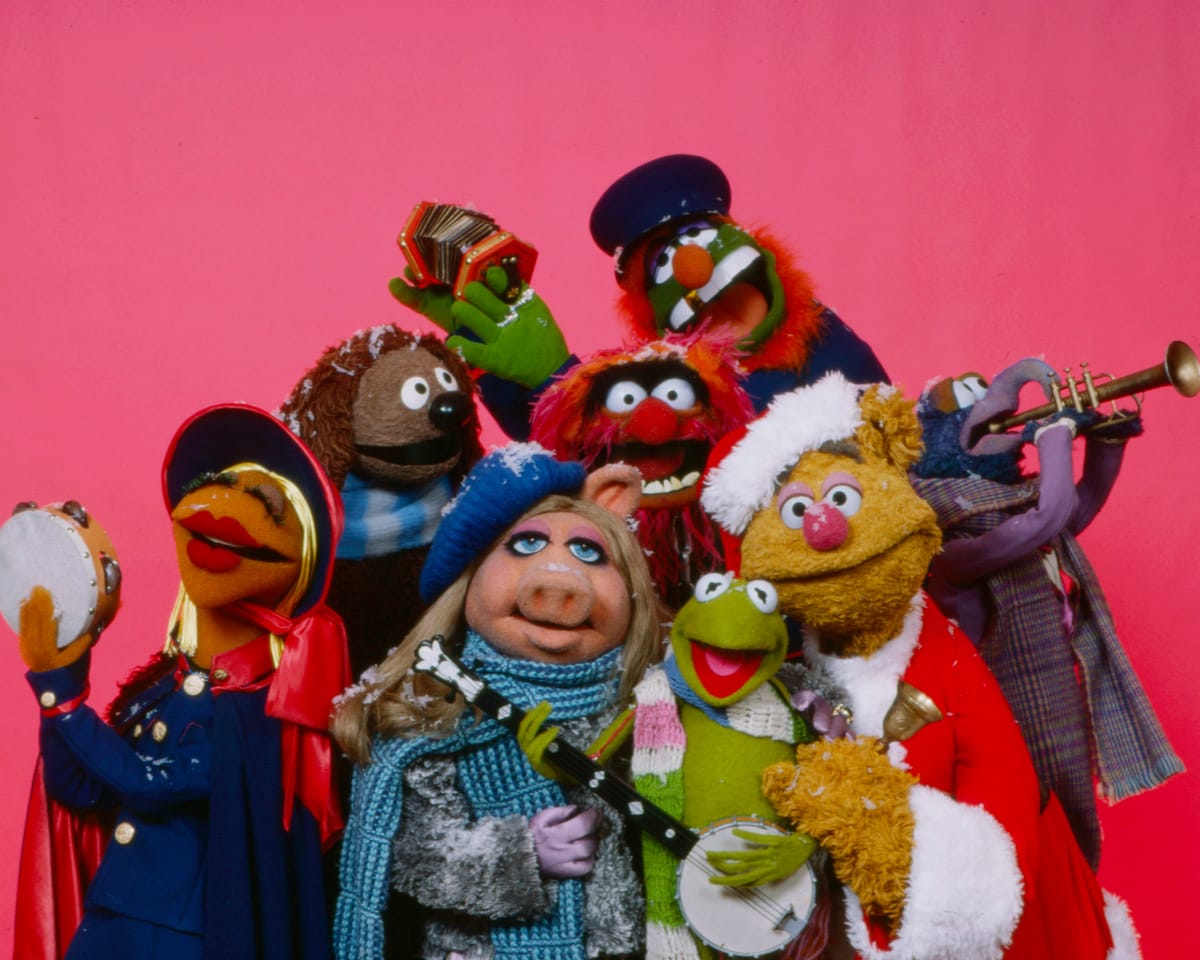
Fifty years ago today, it was time to play the music and time to light the lights. On 5 September 1976, the British public first encountered the Muppets – a significant moment in the history of light entertainment whose impact remains visible today.
This was the show that saw Rita Moreno end a performance of Fever by smashing a puppet’s head between two cymbals, Alice Cooper convince the characters to sell their souls to the devil and Vincent Price perform Carole King’s You’ve Got a Friend, accompanied by ghosts. The Muppet Show was unlike other television programmes.
Jim Henson had built his reputation as a puppeteer on Sesame Street, a show that remains a benchmark for educational children’s television. It debuted in 1969, the same year Monty Python’s Flying Circus first aired, a programme Henson admired and one that was produced in the country where The Muppet Show would eventually find a home.
Henson, one of television’s true originals, was reluctant to be defined as a children’s entertainer, so as the years passed he began to conceive of a more adult-oriented project with Kermit the Frog at its centre, a character who had first appeared on screen in 1955. Two specials were produced for ABC in 1974 and 1975 but did not lead to a series. Then Lew Grade of ATV in the UK offered support, recognising the potential of a puppet show in a way his US counterparts initially did not.
Crucially, Henson’s Muppets featured in the first season of Saturday Night Live, which meant the team learned how to create a show from scratch in a week, as well as gathering contacts from the upper ranks of American entertainment in the mid-1970s. It did not work out for Henson and his team at SNL, but they recovered quickly on arrival at Elstree Studios in Hertfordshire.
In the first season of The Muppet Show, the creative team were forced to persuade stars to travel to Britain to guest on the show. Remarkably, when the first episode aired, Joel Grey was at the centre of the mayhem, reprising his role as the master of ceremonies from Cabaret. This was a role for which he had won an Oscar, a Bafta, a Golden Globe and a Tony – and now he was singing Willkommen to a nightclub full of Muppets. The air of anarchy was established from the start.
Showtunes were just a small part of the wide-ranging mix of music in every episode. There were novelty songs (I’m My Own Grandpaw), classical pieces, light opera, poems set to music (Halfway Down the Stairs, Jabberwocky) and pop written by the likes of Randy Newman, Harry Chapin and Harry Nilsson – whose song Coconut was used years before Quentin Tarantino thought to use it in Reservoir Dogs. It shouldn’t have worked, but it consistently did.
By December 1976, 14 million viewers in the UK were tuning in to watch the mayhem unfold on a Sunday evening, and by January 1977 more than 100 countries had acquired the show or were trying to do so. When ballet superstar Rudolf Nureyev offered his services in season two, celebrities became keen to appear, and agents were approaching the staff of The Muppet Show rather than the other way around.
It has been said that Monty Python carried the spirit of the Beatles into the 1970s, and it feels as though the Muppets were next to continue that tradition. The show was equal parts anarchic and absurdist, appealing to the widest possible demographic. No child could fail to be entertained by a number like the nonsense classic Mah Nà Mah Nà (written by the Italian film composer Piero Umiliani), and few teenagers in 1981 would not have welcomed the sight of Debbie Harry duetting on Rainbow Connection with Kermit, arguably the two coolest beings on the planet. Even grandparents were included, with guests like Milton Berle and Bob Hope, not to mention the vaudeville routines that evoked a bygone era.
The characters might have been made of felt but they were fully formed. Kermit, Fozzie Bear, Gonzo, Miss Piggy, Animal, Rowlf the Dog, the Swedish Chef, Waldorf, Statler and countless others remain embedded in popular culture long after one would struggle to name a single character from other 1970s TV hits. Henson and his team appeared to have an instinctive understanding of showbusiness, and the plight of the comedian has rarely been better embodied than by Fozzie, a sensitive standup who bombs every week but always returns.
Unsurprisingly, the episodes hosted by comedians were the show’s creative peak. Steve Martin’s “wild and crazy guy” character was entirely in sync with the chaos of the Muppets, while Python John Cleese co-wrote his episode during a period that included Fawlty Towers and The Life of Brian, and had his character tied to a chair and forced to appear with the Muppets against his will. When Peter Sellers appeared, a hero to Henson for his work with the Goons, he refused to do the standard interview with Kermit in the middle of the episode, explaining: “Ask me to do anything, but don’t ask me to be myself. I’ll be Queen Victoria, but I don’t know how to be me.” The section was replaced by a sketch in which the comic played Queen Victoria.
The Muppet Show looked back to a world of variety and burlesque but did so with a self-aware sensibility best exemplified by Waldorf and Statler heckling from the box (“You know this show was doing very good? Yeah, and then what? They raised the curtain”). There was surrealism inherited from Python and the Goons but endless heart from the idealistic figure at the centre of it all. The Simpsons would not exist without the Muppets – another show that uses adult humour in a traditionally child-friendly format involving celebrities sending themselves up.
Such is their influence on pop culture that even The Office opened its second series with David Brent and Gareth Keenan performing Mah Nà Mah Nà. When The Muppet Show first aired, Mel Brooks said: “I love the Muppets. Their comedy and what they mean stand for one thing – the meek shall inherit the earth.” Half a century has passed and he wasn’t wrong.
Read next
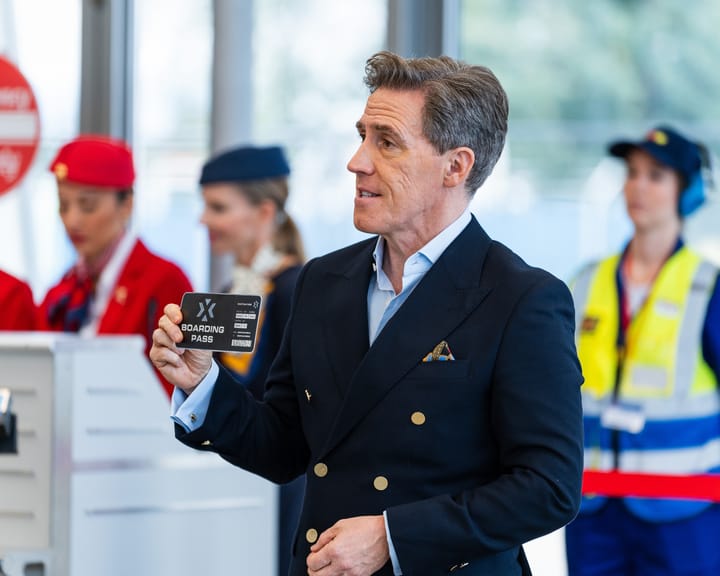
"BBC’s new reality show Destination X is a surreal, mind-bending experience"
A New Reality Competition Tests Contestants’ Wits in Unknown Locations
CuriosityNews— Imagine The Traitors on wheels, or Race Across the Worldwithout any visual cues. That’s the concept behind the new competition series Destination X.
The setup is straightforward. Thirteen participants meet at Baden-Baden airport in Germany, then travel
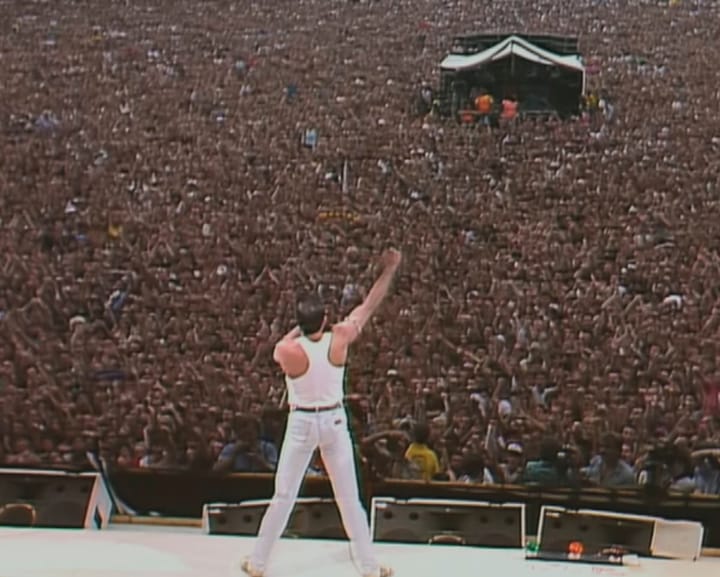
"Live Aid at 40: Bob Geldof's Tearful Moment Stuns in Rock History Review"
On the evening of 23 October 1984, Bob Geldof, frontman of the declining band the Boomtown Rats, had plans to attend a gathering. He had been asked to join an event in Mayfair for the release of a book by Peter York, who wrote about London’s affluent socialites. But
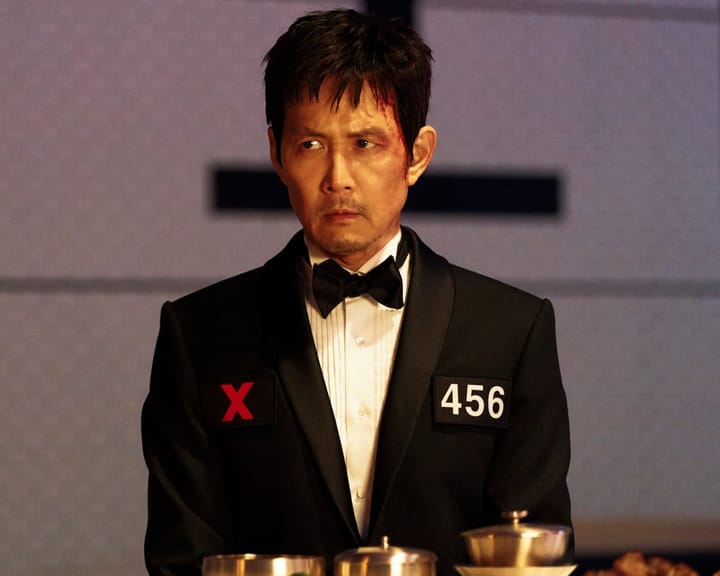
"Top actor's role in 'Squid Game' finale reveals its darkest truth"
Spoiler Alert: Before continuing, please note that this article discusses the ending of Squid Game. If you haven’t watched the finale, stop reading now. But if you have—what an ending, right?
Leading up to the final season, hints suggested a grim conclusion. Creator Hwang Dong-hyuk, who endured