
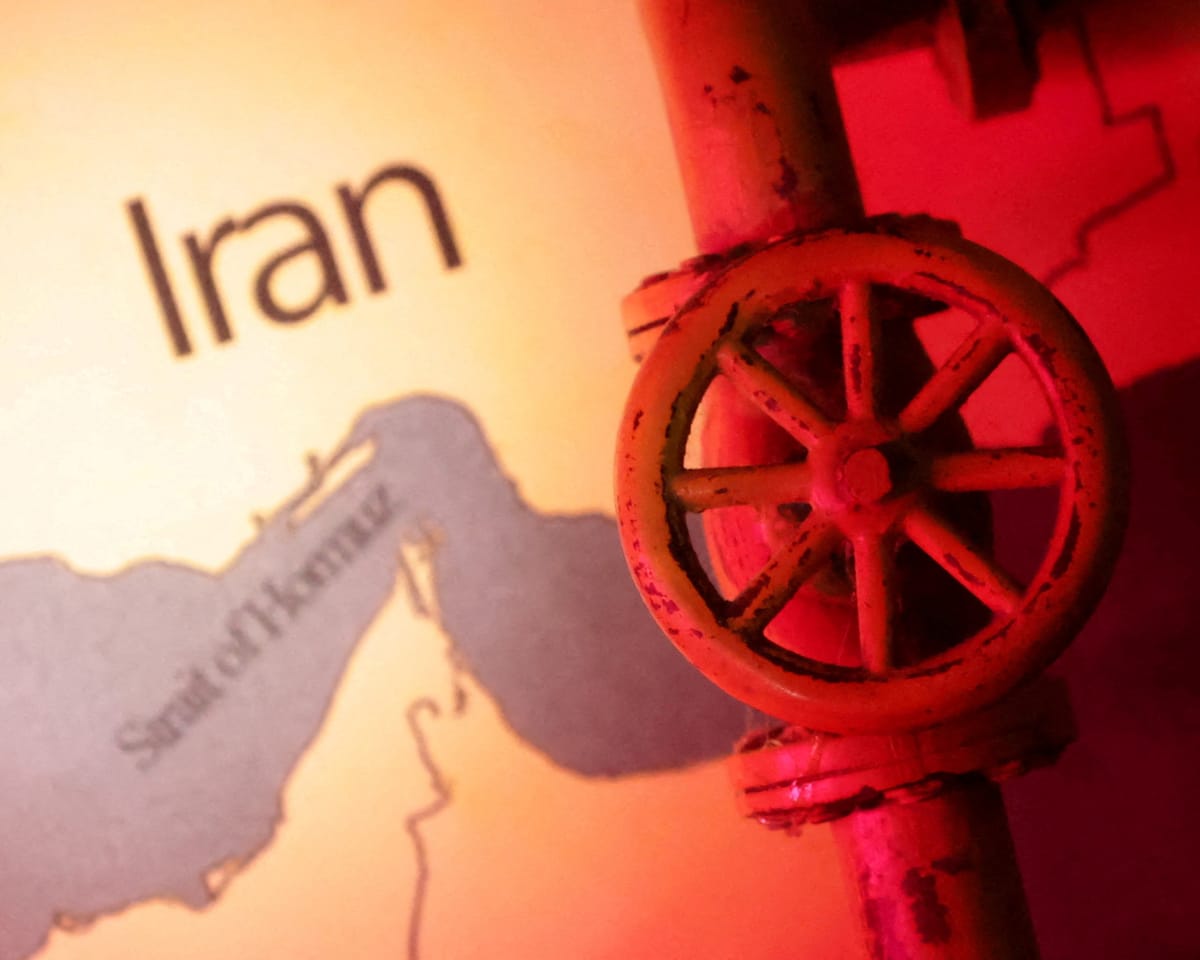
Why does the Strait of Hormuz matter?
The Strait of Hormuz ranks among the globe’s key maritime corridors for international commerce. Roughly one‑fifth of worldwide oil shipments and a similar share of gas carriers traverse it.
The waterway sits between Oman and Iran. It connects the northern Gulf with the Gulf of Oman to the south and the Arabian Sea beyond. At its tightest point it measures 33 km across, while the designated lanes are only about 3 km wide in each direction.
Its position turns it into a vital choke point for petroleum flows from OPEC members to buyers in Asia. Alternatives that avoid the strait are few.
Could Iran officially close the passage?
For many years Tehran has cautioned that it could exploit its geography to block the strait in response to hostile actions, yet it has never enacted a sustained seal on the route. Analysts now think the present situation could differ.
Jorge León, head of geopolitical analysis at Rystad Energy, observed that Iran has responded in “a considerably more forceful and expansive way than in earlier incidents,” which “signifies a structural broadening of the clash beyond limited or symbolic attacks.”
Ajay Parmar, a director with the energy‑market firm ICIS, remarked: “Sealing the strait would be a measure of last resort for Iran. We would anticipate such a step only in a full‑scale war scenario.”
León added: “Whether the passage is shut by direct force or made unusable through risk avoidance, the effect on shipments is essentially the same.”
Tankers are already reported as “stranded” within the narrow channel. Reuters cited an official from the EU naval mission Aspides who said on Saturday that, although Tehran has not announced an official closure, Iran’s Revolutionary Guard has warned vessels not to proceed.
Among the ships cited is a vessel hired by Centrica, the parent of British Gas, carrying a spot‑market cargo of liquefied natural gas (LNG) from Qatar. The ship’s exact destination remains unclear, though it may have been bound for Asia. A Nigerian tanker scheduled to reach Qatar on 5 March to load LNG for Europe turned back before entering the strait.
Tamsin Hunt, senior analyst at S‑RM, a global intelligence and cyber‑security consultancy, said, “A total shutdown would be catastrophic for Iran’s own economy, as it would halt all oil and other exports.”
“Iran would probably resort to a full closure only if the regime feels its very survival is at stake.”
Parmar noted that U.S. leaders would also seek to prevent an escalation that pushes global oil prices higher, increasing costs for American voters ahead of the November midterm elections.
Nevertheless, a complete blockage is not the sole option available to Iran. Hunt explained: “Ships might encounter signal‑jamming, detentions of vessels and crews, warning‑shot fire, and sea‑mines that would partially impede the passage.”
“Even modest interruptions would generate a disproportionately large impact.”
Read next
Jaguar Land Rover suppliers voice ‘everything is against us’ amid cutbacks
David Roberts, chair of Coventry-based Evtec, says the outlook for Britain’s automotive sector is grim, with “everything against us.” Evtec is a tier 1 supplier to Jaguar Land Rover, which this week announced 4,000 job cuts over two years despite chancellor John Healey’s attempt to talk
Europe’s fighter jet plans in disarray: what comes next?
When former ECB president and Italian PM Mario Draghi urged Europe to catch up economically with the US and China, defence collaboration was prescribed. No more should each nation build independent boats, tanks or jets; allies should share costs and technologies.
Europe stumbled at the first hurdle. German Chancellor Friedrich
John Healey supports growth but insists Labour must be truthful about spending
John Healey has stated that his primary goal as chancellor will be to boost economic growth, while acknowledging that Labour must be straightforward about controlling public spending at next month's budget.
In his first major address since assuming the role in July, Healey said the leading focus of