
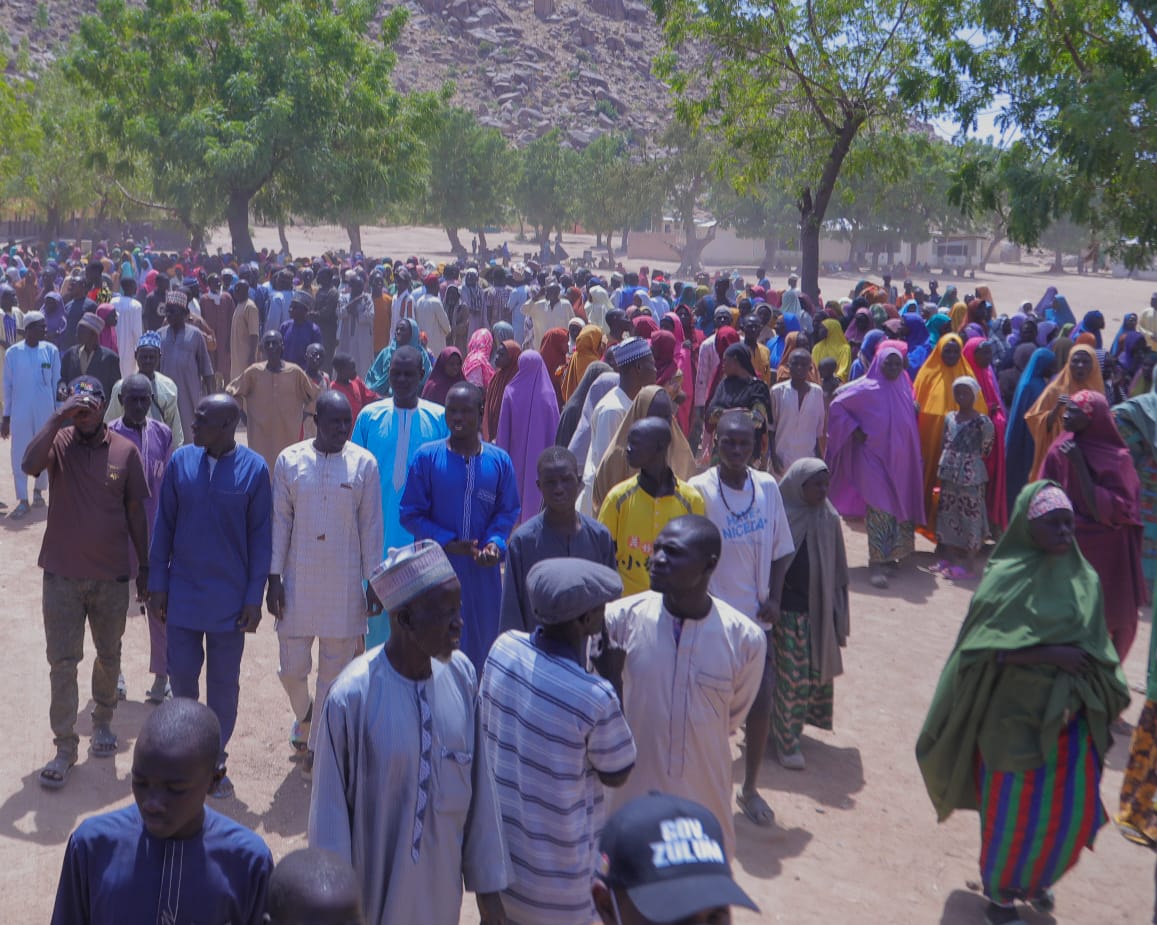
At least 65 Nigerian soldiers have been slain in jihadist assaults across the country’s northeast over the past fortnight, as the West African nation strives to curb one of the world’s most lethal terror outfits.
On 5 and 6 March, gunmen belonging to Islamic State West Africa Province (ISWAP) overran four military installations in Borno state, the heart of the insurgency. The Nigerian daily the Punch reported that roughly 40 soldiers lost their lives in the attacks.
In a statement issued on 7 March, the same day a collective burial was held for the deceased troops, the armed forces questioned the reported casualty figure but did not supply an alternative count.
Nigerian forces “successfully repelled multiple coordinated assaults launched by ISWAP militants on military sites in Delwa, Goniri, Kukawa and Mainok” on 8 and 9 March, the army said in a further communiqué.
According to the Armed Conflict Location & Event Data project, 300 individuals, including women and children, were also seized by ISWAP gunmen, who employed advanced weaponry such as anti‑aircraft machine guns and drones during the raids.
The incidents follow a pattern of synchronized attacks by jihadists on military facilities in the north, a region ravaged by an almost two‑decade‑long insurgency that intensified after the extrajudicial killing of Boko Haram leader Mohammed Yusuf in July 2009.
Nigeria has struggled to contain the conflict, which has spread across the Lake Chad basin, also affecting Cameroon, Chad and Niger. More than two million people have been displaced by the violence.
Since then, the movement has fractured into at least three factions, including the ruthless ISWAP. In November, a general was killed by jihadists who then taunted authorities by releasing footage of his death, even as officials denied his capture.
Last month, 200 U.S. troops arrived in northern Nigeria to train their counterparts, weeks after the U.S. president announced airstrikes on terrorist elements in the area.
The Nigerian leadership, including President Bola Tinubu, has faced sharp criticism for appearing to prioritize a mass wedding involving ten children of junior defence minister Bello Matawalle in Abuja last month. On Tuesday, Matawalle also attracted censure for a social‑media post praising the defection of Zamfara’s governor—his home state—to the ruling party amid a week of multiple ISWAP attacks.
The minister’s last military‑related post was on 15 January, Nigeria’s Armed Forces Remembrance Day. “We also remember our fallen heroes – those who paid the ultimate price so our nation may live in peace,” he wrote. “Their sacrifice will never be forgotten.”
Read next
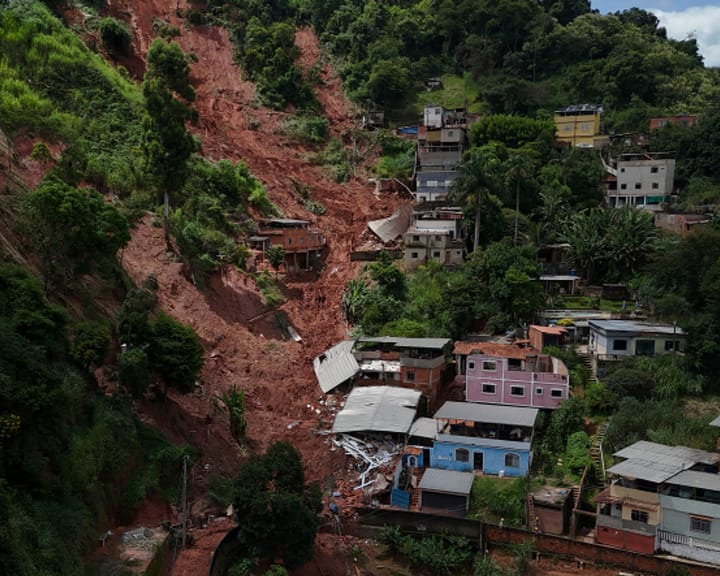
Scientists urge ending fossil fuel use to halt lethal floods in Brazil's coffee region
Record floods that have caused death and devastation in Brazil’s coffee‑growing heartland are projected to worsen if fossil‑fuel consumption continues, a new analysis indicates.
In Minas Gerais, dozens of people have been buried by landslides or swept away as roads turned into streams over the past month.
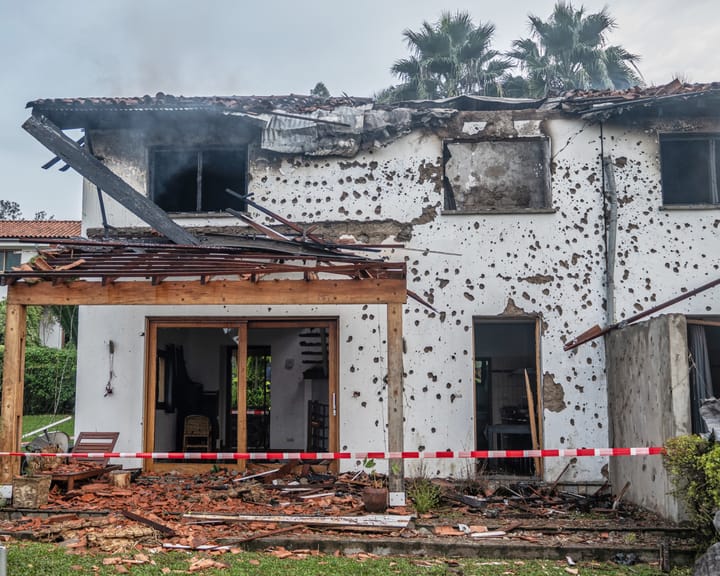
M23 rebels report a French aid worker and two others killed in a drone strike in eastern DRC.
A drone strike in Goma killed three individuals, among them a French humanitarian employed by the UN, according to a representative of the M23 rebels.
The incident occurred around 4 a.m. on Wednesday in Himbi, an upscale residential district of the city that has been under M23 control since
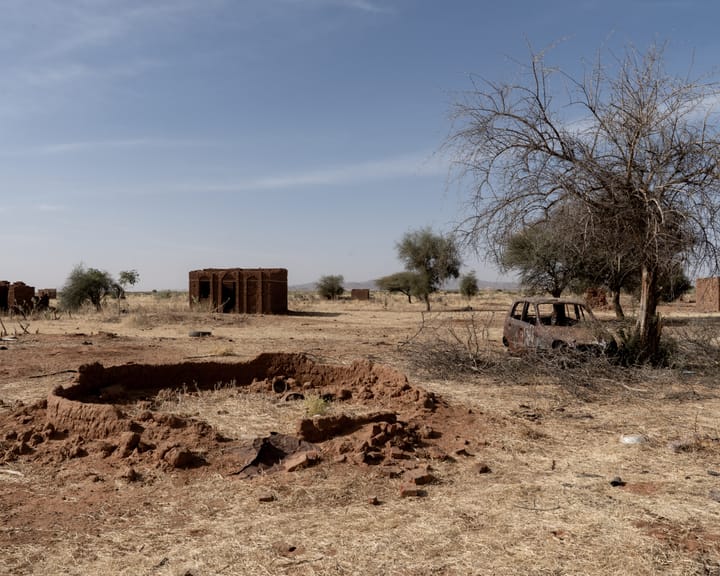
Drone strikes on Sudan school kill at least 17 people.
On Wednesday, a drone packed with explosives, attributed to Sudan’s paramilitary Rapid Support Forces, hit a secondary school and a medical centre, killing at least 17 individuals, the majority of whom were schoolgirls.
Dr. Musa al‑Majeri, head of Douiem Hospital—the closest large clinic to the area—reported