
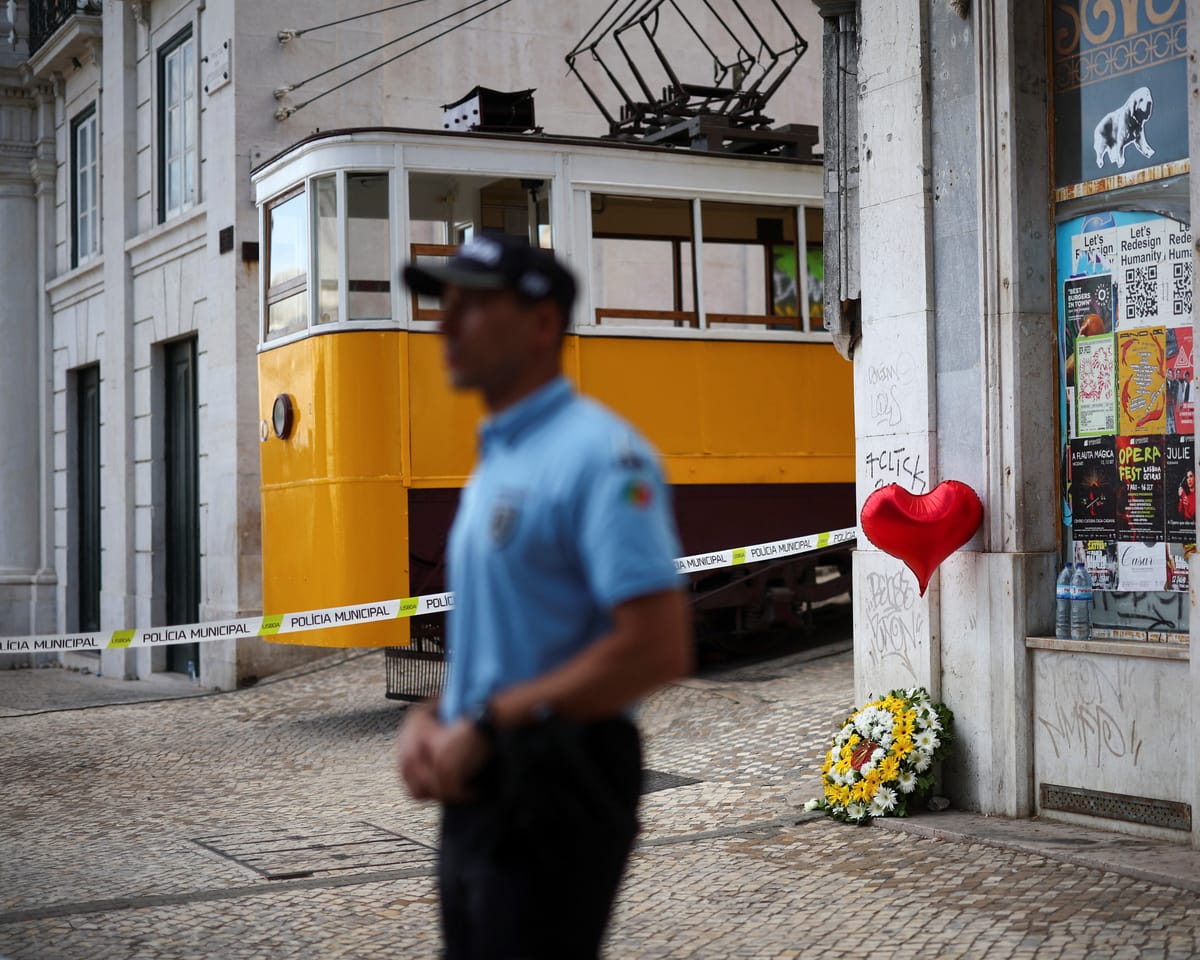
António Azevedo was in central Lisbon early on Wednesday evening, preparing to take a group of tourists in his tuk-tuk, when he heard what sounded like dozens of glass bottles shattering.
He glanced around Restauradores Square but saw no sign of broken glass—only smoke rising from the lower station of the Elevador da Glória funicular, about a hundred meters from where he stood.
Azevedo and other nearby workers rushed to the scene and found that one of the Glória trams had left the tracks and collided with a building on Avenida da Liberdade, the city’s main thoroughfare.
Amid the chaos of screams and sobs, the group began gathering scattered pieces of metal, unsure whether they should attempt to lift the wreckage in case survivors were trapped beneath.
One person handed Azevedo a bleeding young boy, who wept for his father. Moments later, authorities arrived and instructed the bystanders to step back.
“The screams faded into silence,” said the 45-year-old driver. “There was a heap of bodies, motionless—some were torn apart. I’d never witnessed anything like it.”
Mohammad Farid hurried down from his shop in Restauradores Square to assist, but for most, help came too late.
“We wanted to save lives,” Farid said. “But no one cried for help—they were already gone.”
By Thursday morning, the accident site—where 16 people lost their lives and 21 were injured—was covered in flowers and candles, honoring the victims as Portugal observed a national day of mourning.
The list of those affected highlighted the disaster’s international impact. Alongside Portuguese nationals, the injured included individuals from Canada, Cape Verde, France, Germany, Italy, Morocco, South Korea, Spain, and Switzerland. Officials confirmed the deceased included five Portuguese citizens, two Koreans, and one Swiss national.
Nearby, locals speculated on the cause of the tragedy. Argentina Pereira, 80, once worked at a hotel near the derailment site and recalled how much the funicular had changed over the years.
“Back in the 1970s, I used it daily,” she said. “It was different then—no more than 20 passengers at once. Now they allow over 40. That may be too many without stricter checks.”
Azevedo, too, felt the tragedy deeply.
Read next

Pete Hegseth's proposal to stream executions aligns US with controversial nations.
If the US defense secretary, Pete Hegseth, proceeds with plans to livestream the execution of a soldier radicalized to extremist Islam, who killed 13 people at a military base in Texas, the US would join a group of lesser powers and rogue actors known for public executions in recent years.

Criminals steal €5m from renowned Italian winery
In a significant theft in Tuscany, thousands of wine bottles valued at €5 million have been stolen from the renowned Marchesi Antinori winery, marking what is considered the largest heist of its kind in Italy. A group of at least seven masked individuals breached the winery's cellar in
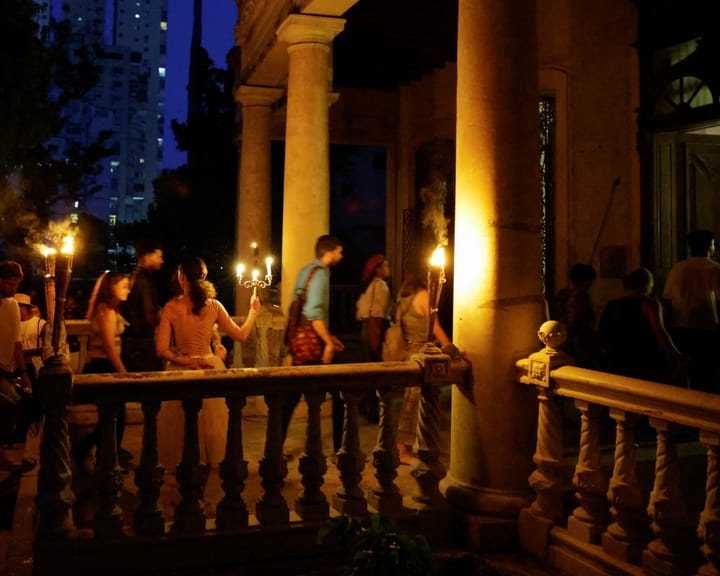
Illuminated Theater in Havana – A Photographic Journey
Widespread blackouts have become more frequent in Cuba since the US imposed energy sanctions in January. These outages often last longer than 24 hours as the aging electrical grid struggles to cope. The Impulso theatre group has been forced to adapt, as the power cuts present significant challenges for the