
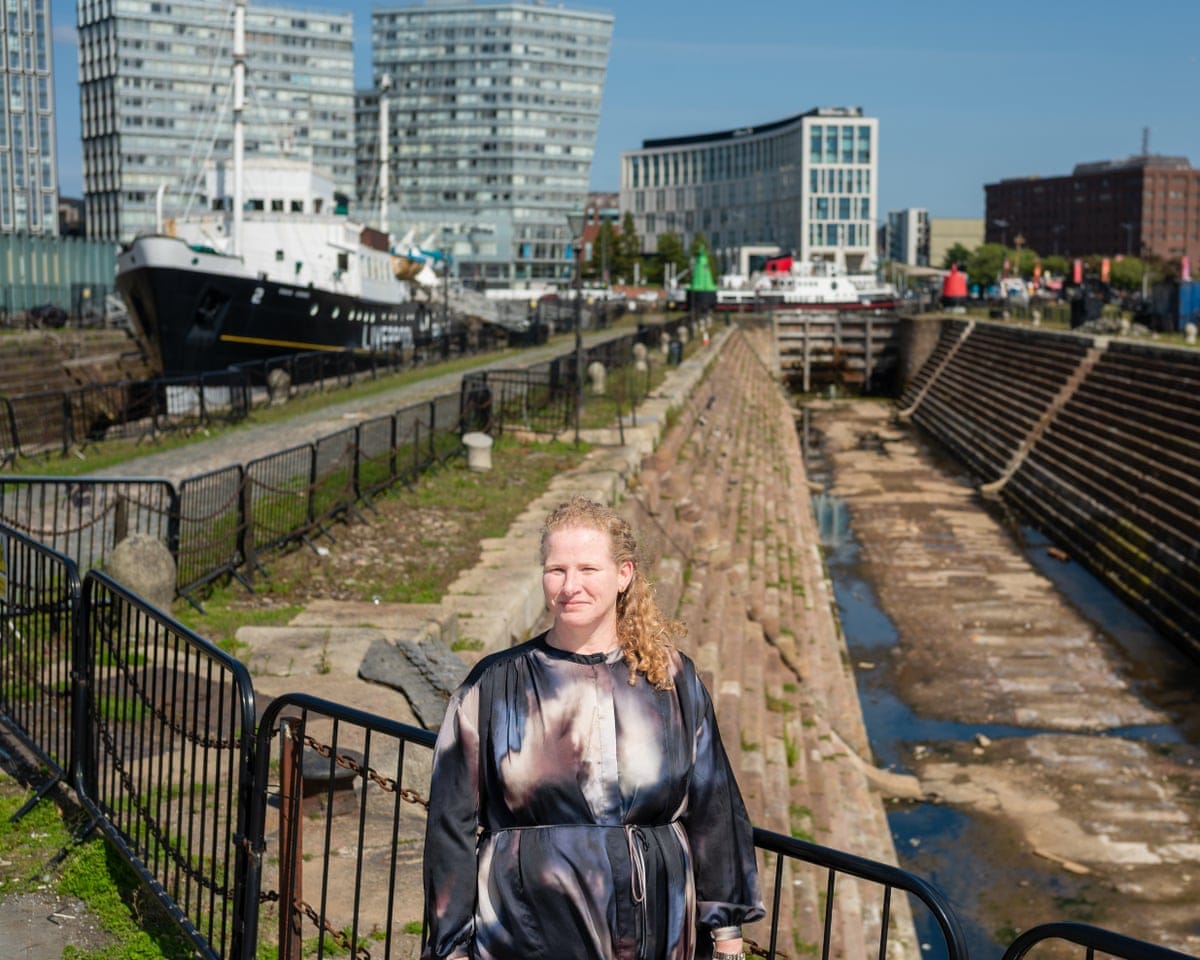
A 19th-century advertisement for a British slave ship has been uncovered in Liverpool, where a location once central to the transatlantic slave trade is being redeveloped into a space for reflection, drawing attention to a rarely acknowledged past.
The Liverpool Black History Research Group (LBHRG) discovered the 1805 notice for the *Metis* while studying the history of Canning Dock on the River Mersey, as part of research commissioned by National Museums Liverpool.
Published in *Gore’s Liverpool General Advertiser*, the 220-year-old announcement states: “Apply to Lake and Brown: We have on sale by private contract, the remarkably fast sailing ship *Metis*, Liverpool built, about nine years old, copper fastened on the stocks, is very well found and will carry by the present act, about 185 slaves. Now lying in No 3, graving dock, where she may be inspected.”
A graving dock, or dry dock, is a basin that can be flooded to admit a vessel or drained for maintenance. For two centuries, Liverpool’s dry docks played a crucial role in sustaining the profits of merchants by enabling swift repairs to ships, including those used to transport enslaved Africans across the Atlantic.
Research by LBHRG revealed that slave ships returning from the Americas often carried goods for the British market—many acquired through trade involving British-made weapons, which fueled conflicts and further captures during the 18th and 19th centuries.
For the first time, the human cost tied to this history is being recognized through a £58m redevelopment of the waterfront, which includes converting No. 2 dry dock into a public reflection space.
Liz Stewart, head of the Museum of Liverpool, confirmed that the design—developed in collaboration with local groups Writing on the Wall, 20 Stories High, Squash, and LBHRG—is now finalized, with planning approval secured and construction set to begin this summer.
“When examining Liverpool’s 18th-century records, many references describe ships as ‘ready for the African trade’ in vague terms,” said Stewart. “But others, like the *Metis* ad, are strikingly direct. Ships would enter the wet docks and, if space allowed, quickly move into dry docks for repairs. Meanwhile, their cargo—products tied to colonial exploitation, such as rum, cotton, sugar, and tobacco—was unloaded for sale.”
LBHRG found that one of the individuals named in the *Metis* notice was its captain, John Brown, who participated in slaving voyages for three decades, illustrating how a single person could contribute to the forced displacement of thousands.
Liverpool’s involvement in the slave trade dates back to its first recorded voyage in 1699. The construction of the Old Dock—the world’s first enclosed commercial dock—further cemented the city’s role.
Read next

Bolivia Probes Ex-President Evo Morales for Suspected Involvement in 2009 Killings
The Bolivian attorney general has initiated an investigation into former leftist president Evo Morales, citing allegations of his involvement in the murder and torture of European nationals in 2009.
In 2009, police conducted a raid on a Santa Cruz hotel, resulting in the deaths of Eduardo Rózsa Flores, a Bolivian-

Argentina Closes Iguazu Falls Temporarily Due to El Niño-Induced Water Surge
Heavy rainfall driven by a potent El Niño weather pattern temporarily led Argentinian authorities to close tourist access to the renowned Iguazu Falls. The closure occurred due to concerns that rising water levels might cause the river to overflow its banks.
On Monday, national park officials implemented this precautionary measure

Mysterious Drones Strike Two Vessels Near Bulgarian Coast – Europe Live
Morning Update: Two Ships Targeted by Drones Off Bulgarian Coast
This morning, two ships in the Black Sea near Bulgaria were struck by drones of unknown origin. The attack led to the sinking of one vessel and initiated emergency rescue operations, as reported by Bulgarian Prime Minister Rumen Radev. Rescue