
The new leader of Lloyd’s has emphasized the insurance market’s neutral stance in what appears to be a shift in its approach to climate policy, while also highlighting the increasing dangers posed by more frequent extreme weather events.
Patrick Tiernan, who became CEO in June after succeeding John Neal, stated that the company would no longer prevent insurers in the market from covering coal and other fossil fuel projects.
Speaking to a major financial publication, he noted that Lloyd’s intends to allow insurers greater flexibility, stressing that the company adheres to the laws of the countries where they operate and supports the energy policies set by their governments.
In a statement on the Lloyd’s website, Tiernan said, “We must remain neutral. Our impartiality is a key part of our role. In a time of strained global relations, Lloyd’s presence provides stability.”
Recent political actions have included the introduction of extensive trade duties and the push for expanded oil, gas, and coal production, with calls for increased drilling while reducing support for renewable energy initiatives. These measures have also been aimed at influencing other nations’ energy choices.
In past years, Lloyd’s has raised concerns about the rising intensity and occurrence of climate-related disasters, from destructive wildfires to severe flooding. The company began reducing its involvement in coal-related ventures in 2018.
Tiernan’s predecessor faced criticism for delays in action, though Lloyd’s had previously committed in a 2020 report to gradually end insurance and investment ties to coal power stations, coal mines, oil sands, and new Arctic energy projects.
The report stated that starting in 2022, Lloyd’s managing agents, who represent insurers, would be urged to stop new coverage or investments in these sectors. However, the company did not enforce divestment, instead leaving the decision to individual firms.
While Tiernan’s stance suggests a change in direction, a Lloyd’s representative denied any shift in energy underwriting policy. “Our role is to support the energy choices made by governments while allowing agents to be at the forefront of emerging energy technologies,” they said. “For the market to function well, participants must be free to make independent decisions.”
Tiernan warned that global risks—such as large-scale natural disasters, economic instability, and geopolitical tensions—persist but are intensifying due to factors like climate change, artificial intelligence, civil unrest, and rising legal liabilities.
“The landscape is shifting rapidly, with risks like cyber threats, supply chain disruptions, and financial flows now interlinked, making crises less contained and more widespread,” he said.
Read next
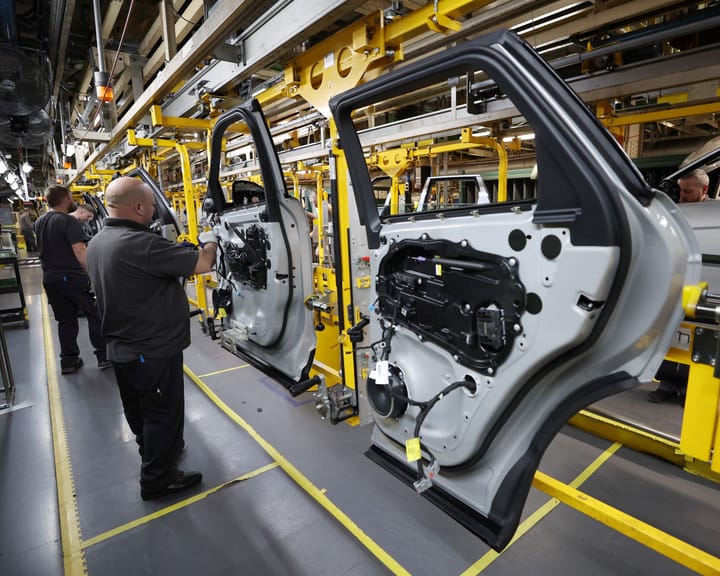
Jaguar Land Rover suppliers voice ‘everything is against us’ amid cutbacks
David Roberts, chair of Coventry-based Evtec, says the outlook for Britain’s automotive sector is grim, with “everything against us.” Evtec is a tier 1 supplier to Jaguar Land Rover, which this week announced 4,000 job cuts over two years despite chancellor John Healey’s attempt to talk
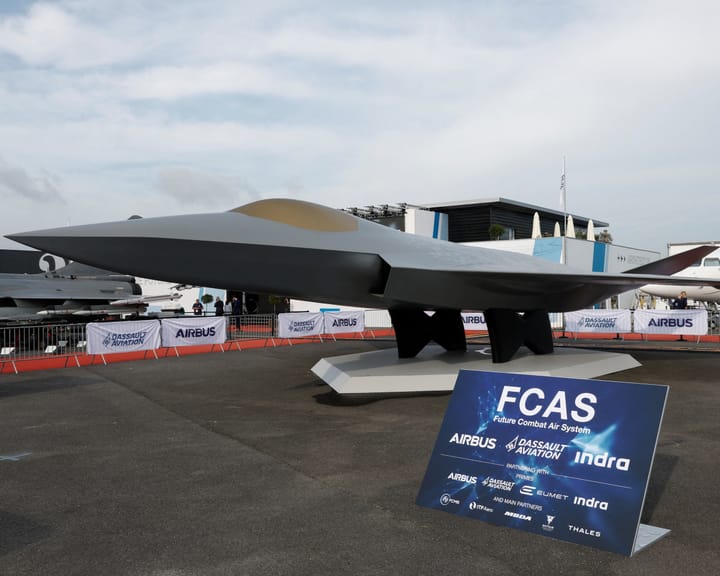
Europe’s fighter jet plans in disarray: what comes next?
When former ECB president and Italian PM Mario Draghi urged Europe to catch up economically with the US and China, defence collaboration was prescribed. No more should each nation build independent boats, tanks or jets; allies should share costs and technologies.
Europe stumbled at the first hurdle. German Chancellor Friedrich
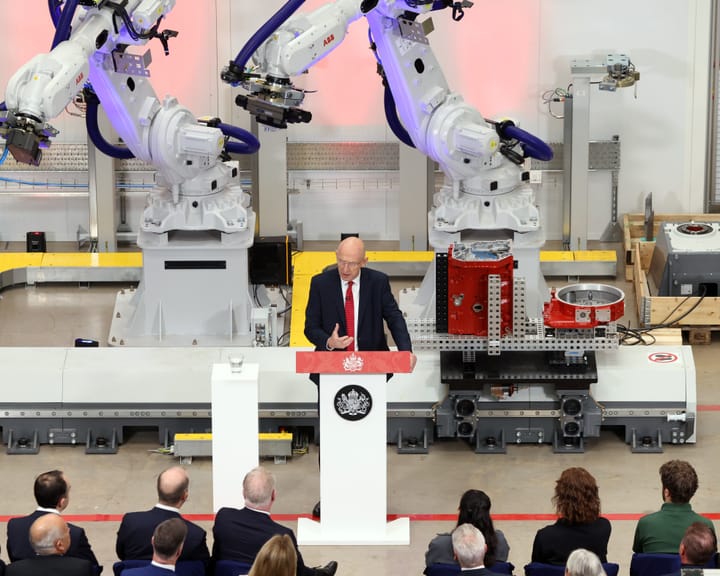
John Healey supports growth but insists Labour must be truthful about spending
John Healey has stated that his primary goal as chancellor will be to boost economic growth, while acknowledging that Labour must be straightforward about controlling public spending at next month's budget.
In his first major address since assuming the role in July, Healey said the leading focus of