
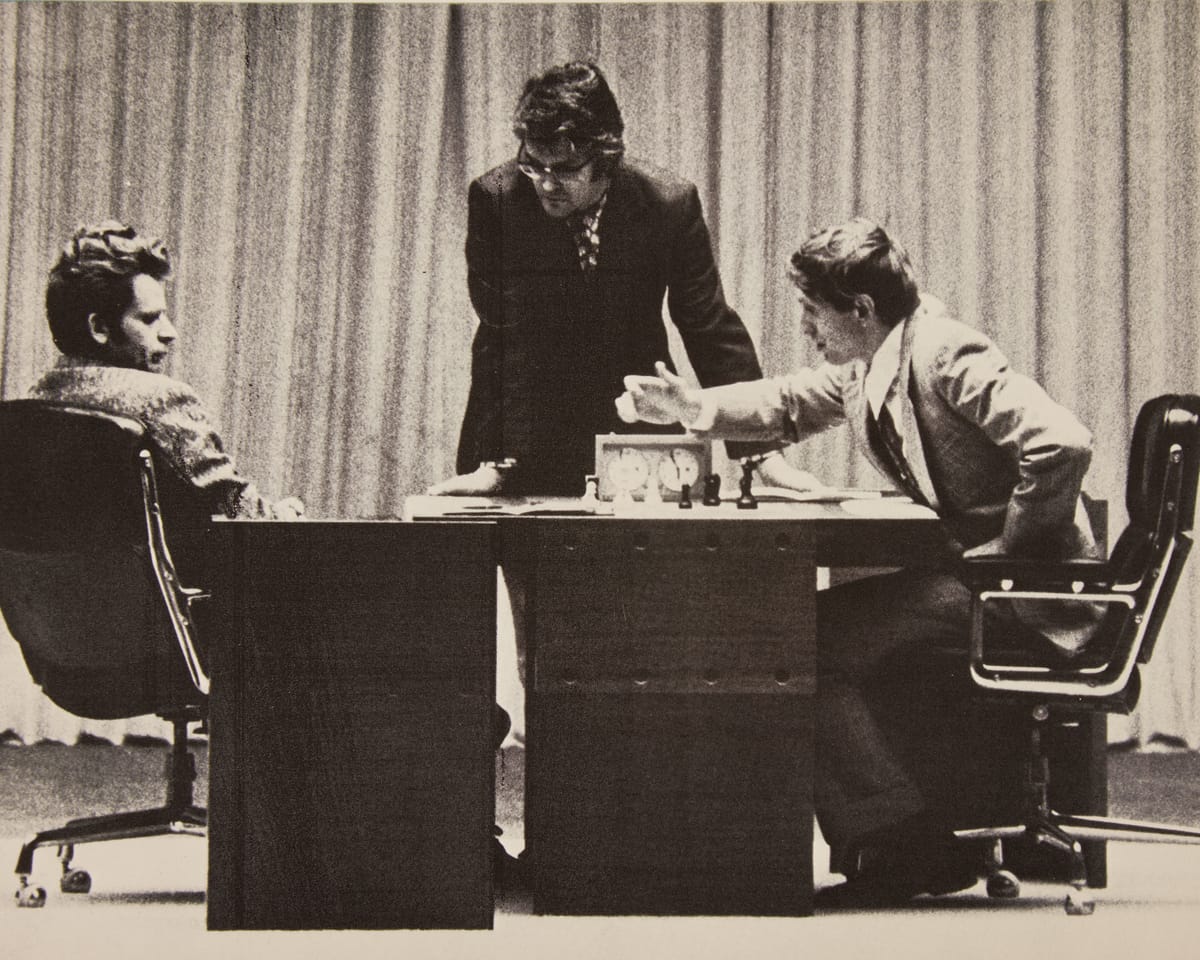
A substantial assemblage of chess memorabilia, featuring items from the 1972 “Match of the Century” and regarded as the largest and most significant private collection of its type, will be offered at Sotheby’s in London next month.
The trove belonged to German grandmaster Lothar Schmid, whose enthusiasm for the game extended far beyond the board.
Recognised as one of Germany’s leading chess figures, Schmid is most remembered for serving as chief arbiter of the 1972 World Chess Championship in Reykjavik, contested by Soviet Boris Spassky and American Bobby Fischer.
Among the pieces slated for sale are Schmid’s score sheets from the encounter, labelled the “Match of the Century,” together with those of Spassky and Fischer and other relics of the Cold‑War showdown. The collection comprises more than 50,000 objects spanning several centuries.
Schmid’s three children are handling the sale; the items were stored until recently in the grandmaster’s extensive home in Bamberg, southern Germany, where he died in 2013.
His son Bernhard Schmid recalled his father’s devotion to the objects he amassed, saying: “He was obsessed with the game and everything connected to it. He travelled to five continents to acquire pieces he loved, once journeying to South America for a book he told us was as costly as a house.”
That book, a highlight of the auction, is *Repetition of Loves and the Art of Chess*. Written by Luis Ramírez de Lucena, a prominent Spanish player around 1497, it is the earliest known work to describe chess rules and strategy and the oldest surviving chess volume, produced as the modern game took shape in Spain. Sotheby’s estimates a sale price of at least £70,000.
Also included are rare documents relating to the Mechanical Turk, the celebrated chess‑playing automaton first presented to Empress Maria Theresa in 1769 and exhibited across Europe and the United States for more than eight decades before its secret was uncovered. Though it appeared to operate by clockwork, a concealed human player manipulated its arms via magnets and levers.
Gabriel Heaton, a specialist in English literary and historical manuscripts at Sotheby’s, noted that collections of this nature seldom reach the market. He observed that the lot underscores the sport’s long‑standing appeal, which, together with recent growth in interest, is likely to draw a diverse group of bidders and observers.
“To possess something that has engaged humanity for centuries is especially compelling today. It relies on pure strategy rather than chance, and its rules are universally known, which gives it a steady foundation,” he said.
Read next

Lewis Hamilton says Ferrari will challenge Mercedes for the 2026 F1 championship.
Lewis Hamilton said he is enthusiastic and confident that Ferrari can challenge Mercedes for the world title after the new Formula One season began in Australia on Sunday.
The Melbourne Grand Prix was won by Mercedes driver George Russell, with teammate Kimi Antonelli finishing second, while Ferrari took third and
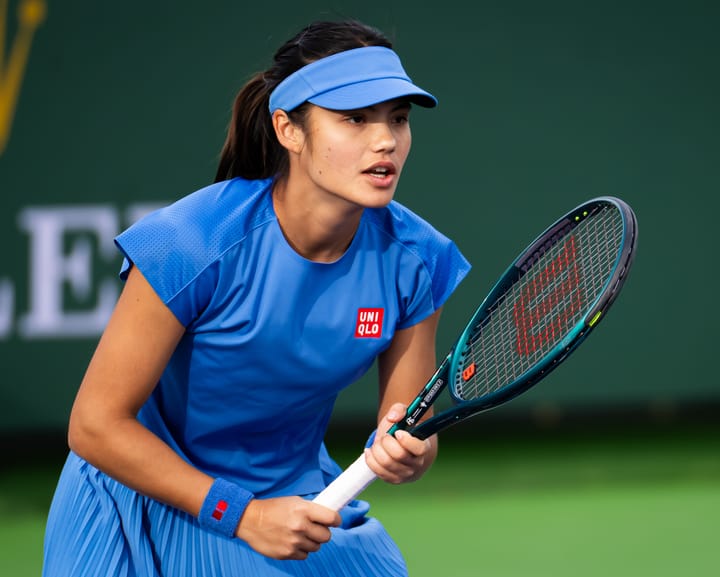
Raducanu falls in 52 minutes to No. 6 seed Anisimova in Indian Wells third round
Emma Raducanu endured a swift 52‑minute loss to Amanda Anisimova in the third round at Indian Wells. The British No. 1 was far from her best, falling 6‑1 6‑1 to the American world No. 6.
Seeded 25, Raducanu appeared to be hampered by a physical problem, repeatedly

Scotland shows promise to chase the Six Nations crown and ease its woes against Ireland
The sense that Scotland may finally have mastered the art of winning keeps growing. Producing attractive rugby on occasion has never been an issue. Securing substantial victories, however, remains more elusive.
One of the most engaging aspects of the remarkable triumph over France – and there were, to put it mildly,