
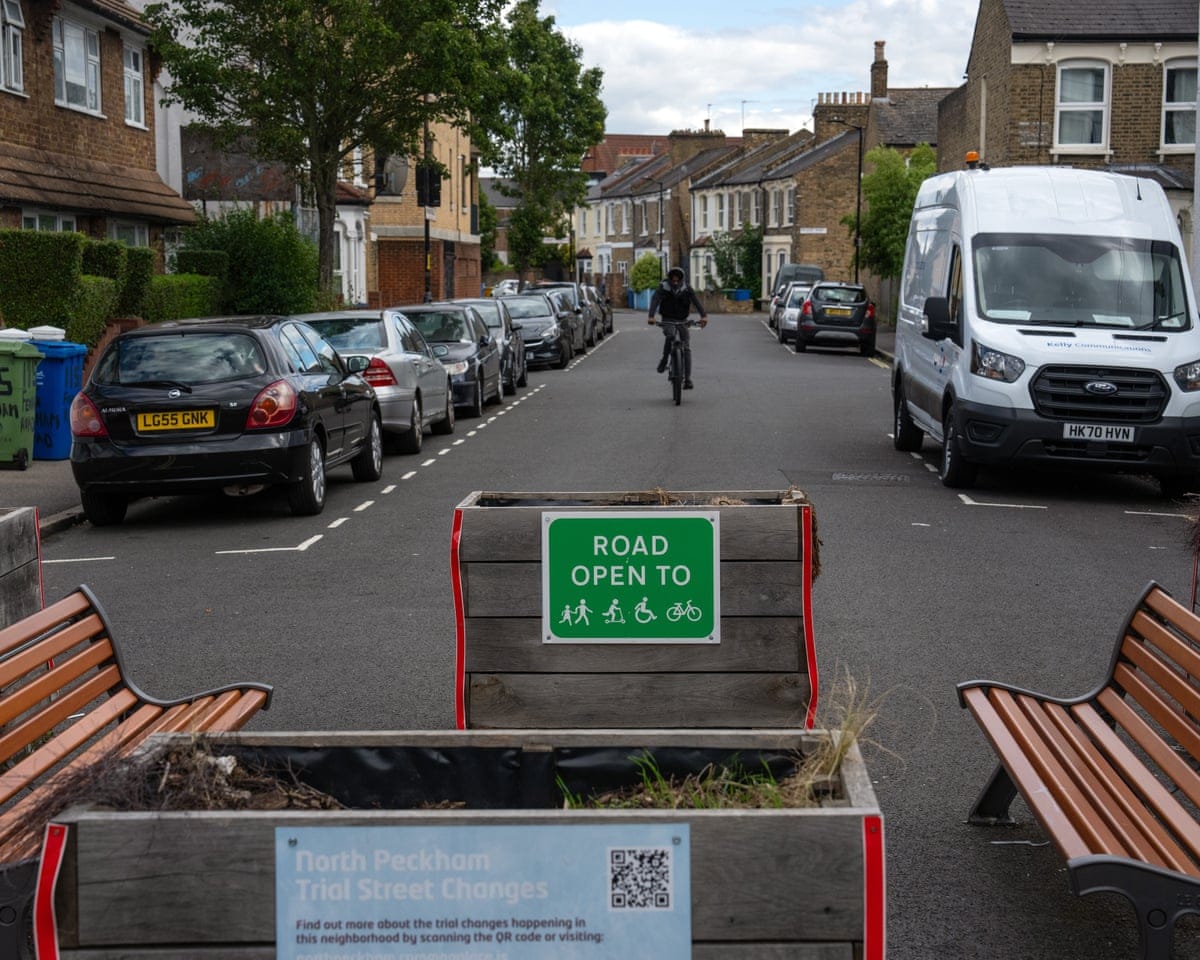
Low-traffic zones (LTZs) reduce road injuries and fatalities by over a third within their designated areas without noticeable safety drawbacks on adjacent roads, according to new research.
The study compared over a decade of traffic incident data from 113 LTZs in London with similar roads that lacked such measures. Results showed a 35% decrease in all injuries, rising to 37% for severe or fatal incidents.
In practical terms, the findings suggest that implementing LTZs averted more than 600 injuries, including 100 cases involving serious harm or death.
On surrounding roads near LTZs, no significant change in overall casualty numbers was observed.
LTZs enhance pedestrian, cycling, and mobility access in residential streets by restricting through-traffic with barriers. Though used in the UK for years and common in many European cities, their increased adoption since 2020 has drawn opposition from some political and media figures.
Critics argue that LTZs merely shift traffic to bordering roads, increasing risks there. However, prior research found minimal traffic impact, and the new study, published in *Injury Prevention*, shows the same for injuries and fatalities.
Of the 113 LTZs examined, 27 were later removed. Analysis by researchers from Westminster University and the London School of Hygiene & Tropical Medicine estimated that keeping them would have prevented 116 injuries, 16 of them severe or fatal.
Overall, LTZs were linked to preventing around 613 injuries, including 100 serious or fatal ones.
The study examined road casualties between 2012 and 2024 across London’s road segments, comparing those within or bordering LTZs with unaffected roads to account for broader trends, such as reduced traffic during the pandemic.
One notable difference was that safety improvements in outer London LTZs were less pronounced than those in inner London. Some outer London schemes also saw smaller traffic reductions.
Despite these nuances, the large-scale findings bolster arguments that LTZs effectively reduce injuries and deaths, much like the 20mph speed limits in Wales.
Read next

Bolivia Probes Ex-President Evo Morales for Suspected Involvement in 2009 Killings
The Bolivian attorney general has initiated an investigation into former leftist president Evo Morales, citing allegations of his involvement in the murder and torture of European nationals in 2009.
In 2009, police conducted a raid on a Santa Cruz hotel, resulting in the deaths of Eduardo Rózsa Flores, a Bolivian-

Argentina Closes Iguazu Falls Temporarily Due to El Niño-Induced Water Surge
Heavy rainfall driven by a potent El Niño weather pattern temporarily led Argentinian authorities to close tourist access to the renowned Iguazu Falls. The closure occurred due to concerns that rising water levels might cause the river to overflow its banks.
On Monday, national park officials implemented this precautionary measure

Mysterious Drones Strike Two Vessels Near Bulgarian Coast – Europe Live
Morning Update: Two Ships Targeted by Drones Off Bulgarian Coast
This morning, two ships in the Black Sea near Bulgaria were struck by drones of unknown origin. The attack led to the sinking of one vessel and initiated emergency rescue operations, as reported by Bulgarian Prime Minister Rumen Radev. Rescue