
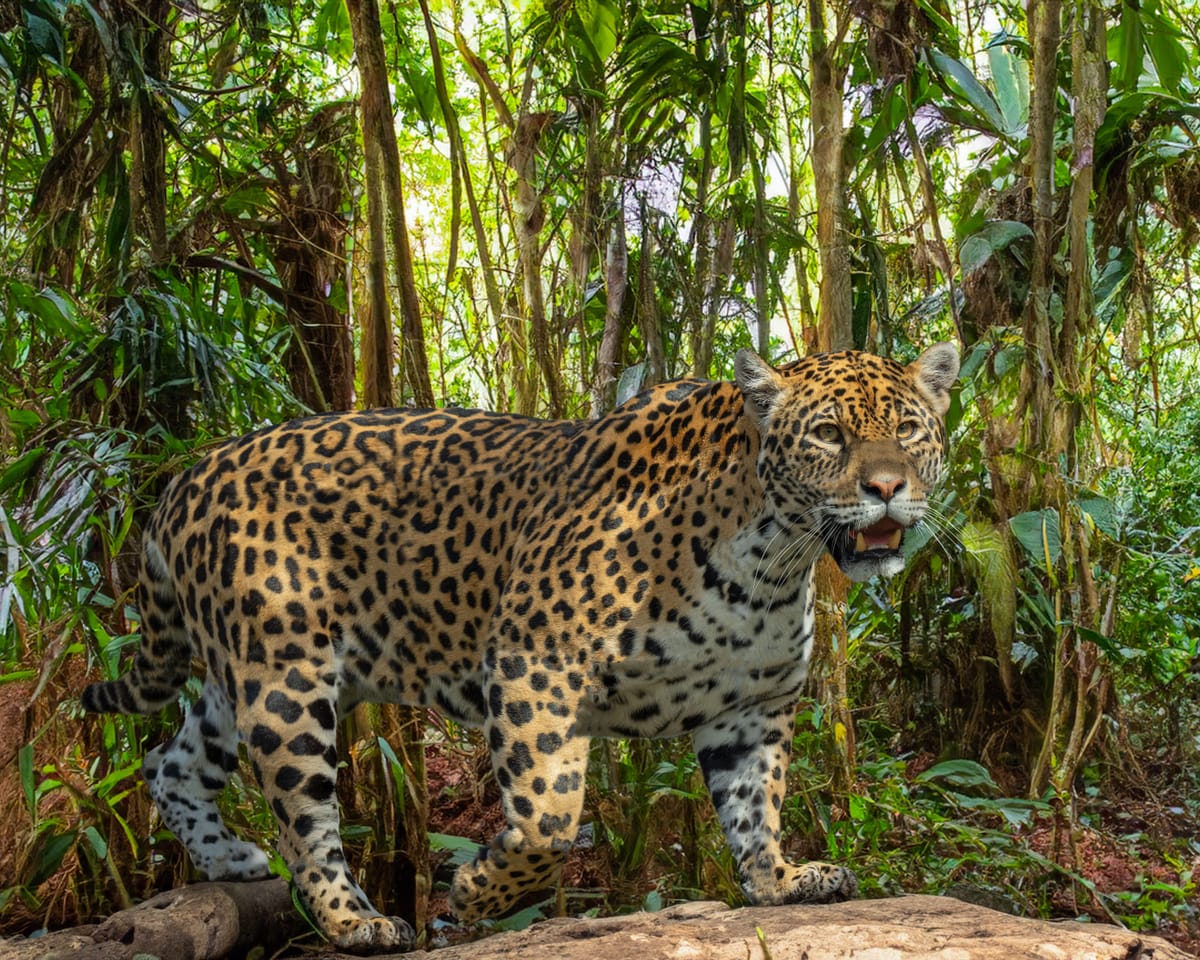
In 2010, Gerardo Ceballos and a team of researchers sought to determine the number of jaguars in Mexico. It was widely believed that the population had dwindled significantly due to hunting, habitat destruction, and conflicts with livestock owners.
Initially, Ceballos and his colleagues from the National Alliance for Jaguar Conservation estimated there were around 1,000 jaguars nationwide. However, after conducting the country’s first thorough survey, they discovered the figure was 4,100.
“It was a tremendous relief,” Ceballos stated. “While 4,000 still means the species faces extinction threats, it was far more than we expected.”
Fifteen years later, the situation has improved further. The latest survey, conducted in 2024, recorded 5,326 jaguars in Mexico—a 30% increase since 2010.
“Maintaining and expanding the jaguar population over the past 14 years is remarkable,” Ceballos remarked. “This is encouraging news for Mexico and the world.”
The survey spanned 90 days across 15 states, utilizing 920 motion-sensor cameras and involving nearly 50 researchers and local volunteers. Covering 414,000 hectares, it became Mexico’s largest mammal population study.
The Yucatán Peninsula had the highest jaguar count (1,699), followed by the south Pacific region (1,541), the northeast and central Mexico (813), the north Pacific (733), and the central Pacific coast (540).
Ceballos attributes the population growth to three key factors: preserving protected natural areas, minimizing conflicts with livestock owners, and raising public awareness about the species.
“In the past, few people knew about jaguars,” he said. “Now, they’re widely recognized in Mexico.”
Despite progress, at the current growth rate, it could take 25 to 30 years before jaguars are no longer considered at risk. Ceballos hopes to cut that time to 15 years.
Challenges remain significant. Deforestation continues to threaten their survival—Mexico has lost 600,000 hectares of forest and jungle in the last six years, with the Yucatán alone losing 60,000 hectares annually.
“It’s a tragic loss,” Ceballos acknowledged, “but in remaining habitats, the population is increasing.”
Additionally, an illegal trade in jaguar body parts persists online. Ceballos aims to collaborate with digital platforms to eliminate such sales.
Expanding infrastructure, including new highways, also poses risks to their habitat.
Read next

Pete Hegseth's proposal to stream executions aligns US with controversial nations.
If the US defense secretary, Pete Hegseth, proceeds with plans to livestream the execution of a soldier radicalized to extremist Islam, who killed 13 people at a military base in Texas, the US would join a group of lesser powers and rogue actors known for public executions in recent years.

Criminals steal €5m from renowned Italian winery
In a significant theft in Tuscany, thousands of wine bottles valued at €5 million have been stolen from the renowned Marchesi Antinori winery, marking what is considered the largest heist of its kind in Italy. A group of at least seven masked individuals breached the winery's cellar in

Illuminated Theater in Havana – A Photographic Journey
Widespread blackouts have become more frequent in Cuba since the US imposed energy sanctions in January. These outages often last longer than 24 hours as the aging electrical grid struggles to cope. The Impulso theatre group has been forced to adapt, as the power cuts present significant challenges for the