Picture a vacant 6,000‑square‑metre hall arranged to hold forty compact performance areas across several floors. One wall displays the ruins of Troy, the opposite side evokes ancient Carthage. In the shadowed middle lies a maze, while overhead a lavish divine realm watches the mortals beneath. The visual style blends steampunk gloom with Berlin‑style cabaret.
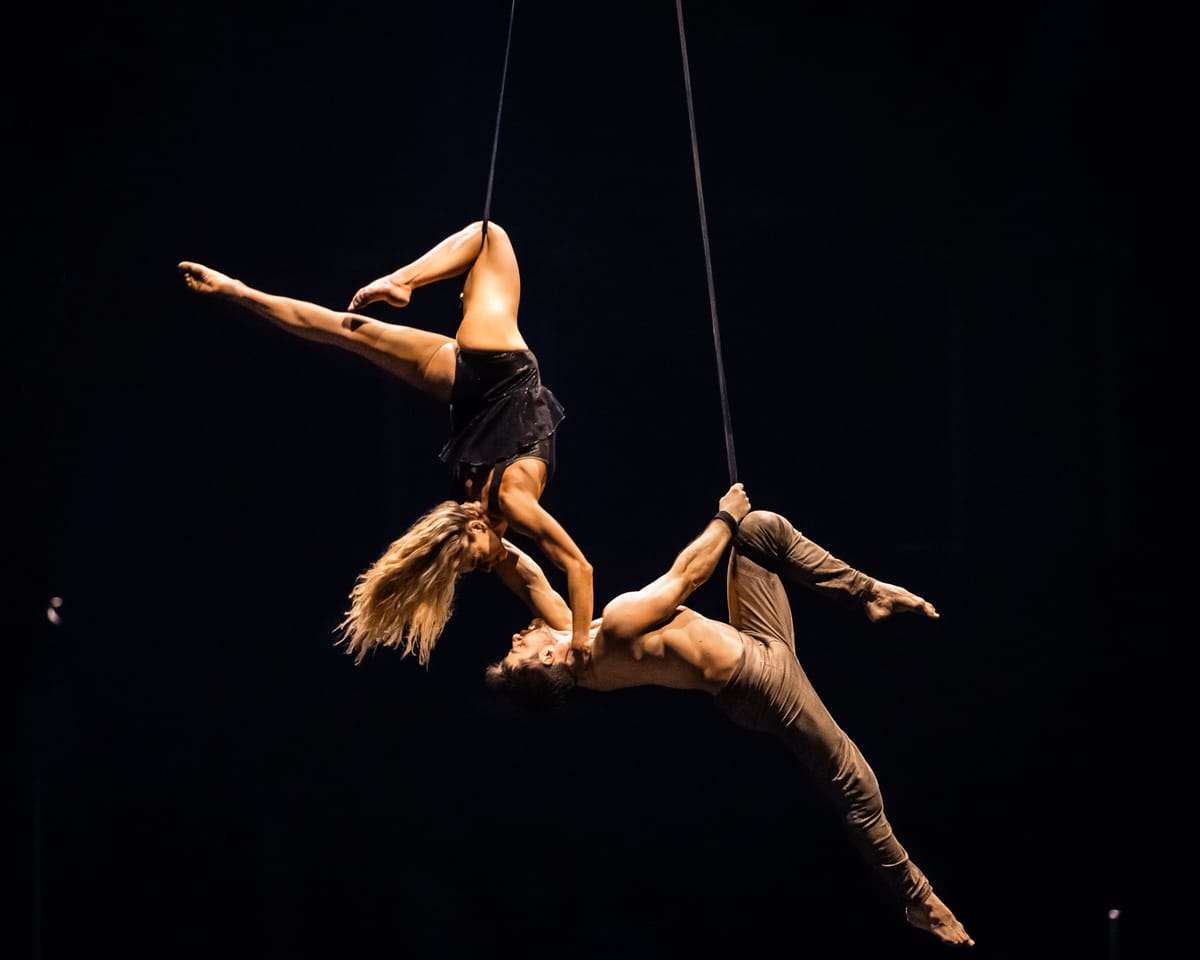
Passing a black‑curtained doorway leads to a neon‑bathed bar where two acrobats contort and rotate on ropes overhead. A spiral stair ascends to a pool beneath which a goddess dangles by her hair, turning wildly. In the depths a creature pulls a woman into the maze’s core, where shadow consumes her. Above, displaced Trojan fighters bow to a commanding queen. A courtier flees, pursued by a soldier and a handful of spectators. No safety net or conventional stage separates audience from action.
Envision all these elements occurring at once, with several separate acts unfolding over a two‑hour period, and the picture approaches that of Walk My World, which debuted in Budapest last year. Combining contemporary circus, dance and cabaret, the work presents an immersive setting of considerable size. The narrative—actually a set of narratives, as twenty‑six performers each follow an individual thread—is drawn from the fourth book of Virgil’s Aeneid, the story of Dido and Aeneas. Figures from the wider epic—gods, monsters, lovers and soldiers—are also incorporated into a more flexible storyline. Spectators move through the venue, trailing characters or exploring at leisure, frequently encountering scenes unexpectedly. Some segments extend beyond thirty minutes, others last only a few minutes; some are solo pieces, others involve varied groupings of jugglers, aerialists, gymnasts, acrobats and dancers.
Walk My World was conceived by Bence Vági, founder and artistic director of the Hungarian contemporary circus troupe Recirquel. Trained as a dancer and choreographer, Vági’s career has consistently crossed disciplinary boundaries, a trait reflected in his company’s work.
Born in the last decade of the Cold War, Vági’s initial exposure to performance came through the circus. He notes that every Soviet‑aligned nation maintained a robust circus tradition, providing a form of entertainment considered politically harmless. His childhood, however, spanned both communist Hungary and the West. Vági’s father, an athlete granted travel permission for competition, led the family across the border when Bence was five and did not return. The family spent five years in West Germany before returning to Hungary after the Berlin Wall fell.

stage