
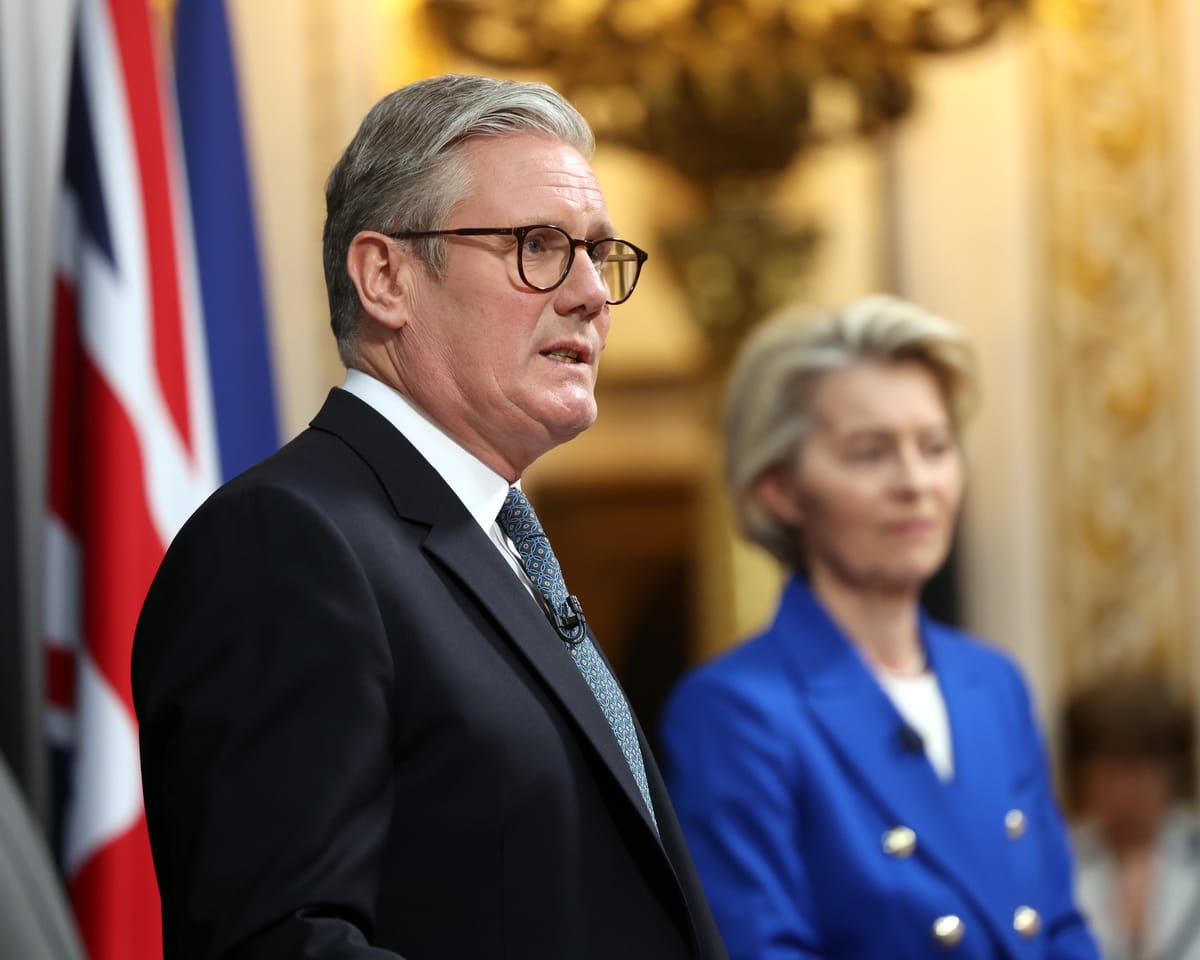
Keir Starmer’s attempts to overhaul the United Kingdom’s ties with the European Union are being criticised for a lack of “direction, definition and drive”, the House of Commons foreign affairs committee said.
The committee’s report, drawn from months of testimony from specialists, noted that the Lancaster House summit between the UK and the EU in May last year had “considerably improved the overall political relationship” after a period of intense criticism of Brussels by Conservative ministers.
Nevertheless, the document concluded that the United Kingdom “does not have clear strategic priorities”, a shortfall that creates “the impression that the EU has made more tangible progress on its most urgent demands than the UK”.
Emily Thornberry, Labour MP and chair of the committee, said: “Unfortunately we found that, despite advances in some fields, the government’s reset is stalling, hampered by an absence of direction, definition and drive. It feels as if we are on a journey without a clear destination.
“In many areas the government has failed to set timetables, milestones or priorities, and it does not appear to possess an ambitious, strategic vision for the UK’s new relationship with the EU.”
The report warned that unless the government establishes a framework and a transparent vision with concrete objectives, it will repeat “these mistakes” when it enters the second round of talks following a further bilateral summit scheduled for early July.
Last May’s summit was described as a “historic” occasion and produced a formal accord to upgrade the Brexit settlement concluded under Boris Johnson, with aims that included a youth‑mobility scheme, re‑entry into the Erasmus student programme and an agricultural pact to ease barriers for food exporters.
To date the only element that has been finalised is the Erasmus arrangement; several crucial topics – regulation of chemicals, mutual recognition of standards, professional qualification equivalence and concessions for touring musicians – remain off the negotiating table.
The committee noted that progress “has been hindered by the EU’s recent shift of the goalposts, demanding a financial contribution to the economic development of lower‑income EU states, a request absent from last year’s summit”.
It also criticised what it called an “exorbitant” €2 billion (£1.7 billion) price tag for the UK’s participation in the first phase of the EU’s €150 billion Security Action for Europe (SAFE) defence‑procurement programme.
While welcoming the UK‑EU security and defence partnership, the report urged both parties and individual member states “to move further and faster”.
Sources indicate the United Kingdom is negotiating a deal on a second potential fund to assist Ukraine with military equipment and to address budgetary issues such as salaries for teachers, doctors and other public servants.
The €90 billion fund would be sourced from loans raised on the basis of the EU’s AAA credit rating and would be repaid by Russia through reparations or frozen assets.
The UK is reportedly ready to provide several hundred million pounds to help cover the interest on the loan in return for arms contracts for British firms.
Read next
Badenoch returns to Conservative conference, markedly stronger than a year ago
A year ago, Tory MPs feared a fresh leadership revolt against Kemi Badenoch as Tories hit historic 14-16% support; November, after 12 months, was hushed: decisive challenge month. Yet, despite poor polls, “Keminisation” saw her impose style and authority.
More in Common’s Luke Tryl, director, said Badenoch holds

UK sanctions plan on illegal Israeli settlements faces criticism from US, Israel and British MPs
Today, with the agreement of Prime Minister Netanyahu, Israeli officials announced a series of countermeasures in response to new sanctions declared by the British foreign secretary of the Labour government, following a sequence of anti-Israel decisions by the same administration.
The accusations leveled today by the Labour foreign secretary,
UK announces trade ban on Israeli settlements as tougher stance
Ed Miliband will announce a broad reset of the UK’s relations with Israel on Tuesday, pledging a more active stance in support of the Palestinian cause. In an intervention drawing fierce criticism from the US and Israel, the foreign secretary will impose a ban on trade in goods and