
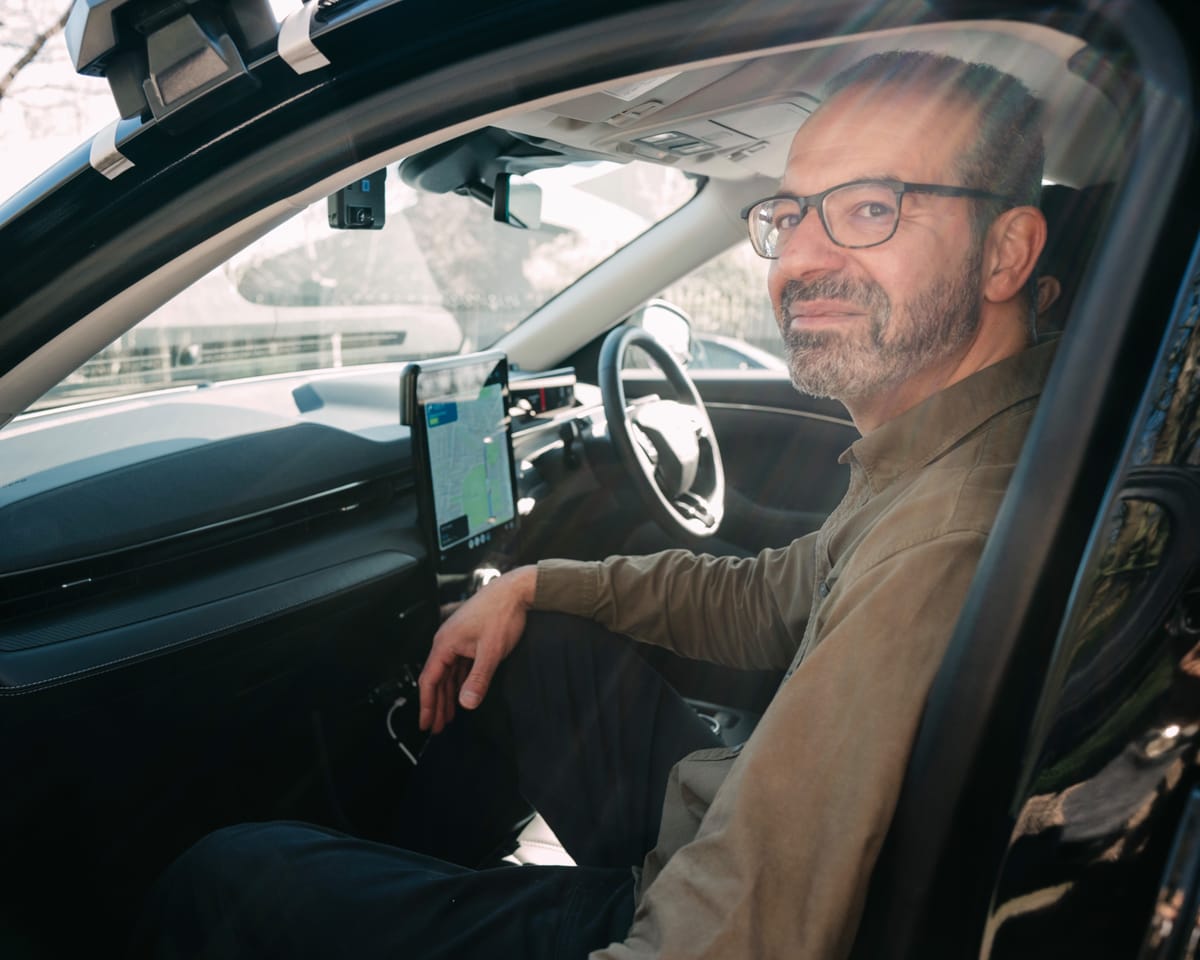
“I’m really excited to show you this,” says Alex Kendall, chief executive of Wayve, as he settles into the driver’s seat of the firm’s electric Ford Mustang. He then does nothing. The vehicle moves to a junction on a busy King’s Cross road entirely on its own. “You can see it handling speed, steering, brakes and signals,” he tells me from the passenger side. “It’s making choices as it proceeds. Here we have an unprotected turn, so we have to wait for a gap in traffic…” The steering wheel turns without his input and the car merges out smoothly.
Experiencing a driver‑less car for the first time feels a bit like an inaugural airplane flight: a few moments of unease followed by a surprisingly ordinary ride. That was my impression. After stepping out twenty minutes later, I was convinced that Wayve’s system drives better than most people – certainly better than I do.
Londoners will soon be able to form their own opinions, as robotaxis are set to appear in the city. Following the Automated Vehicles Act of 2024, the British government aims to clear self‑driving taxis for operation by the end of next year. Wayve, working with Uber, will be among the first, alongside the American firm Waymo and China’s Baidu, among others. The capital may change dramatically.
Robotaxis already operate in major U.S. and Chinese metropolises such as San Francisco, Los Angeles and Shanghai, but London presents a tougher test, with its narrow streets, historic layout, unpredictable pedestrians, errant e‑bikers, aggressive drivers and parked delivery vans. “Compared with San Francisco, London has roughly twenty times more roadworks and eleven times more cyclists and pedestrians, making it a far more intricate environment to navigate,” says Kendall, a tidy‑looking 33‑year‑old.
Wayve’s system passes our informal test. When a man with a walking stick approaches a zebra crossing, the car comes to a stop before he steps onto it. “We don’t program the vehicle for each scenario; it learns from human body language,” Kendall explains as we observe. Several other pedestrians pass the crossing, and the car recognises that they are not intending to cross.
That is how Wayve’s artificial intelligence differs, Kendall notes as we resume the journey. “It can anticipate how the world behaves, assess risk and safety, and grasp the dynamics of a scene.” London’s streets throw every challenge at it: confusing double roundabouts, narrow lanes with oncoming traffic. When another driver flashes their lights, the car interprets the signal as a courtesy to proceed. Kendall never touches the steering wheel or any controls, though a human remains in the seat for now.
Wayve has been gathering data across the United Kingdom since 2018. Its vehicles look almost identical to conventional cars, apart from a bar of cameras and radar mounted on the roof.
Read next

Senior European reporter suspended for using AI‑generated quotations
The owner of the Dutch daily De Telegraaf and the Irish Independent has placed a senior reporter on leave for now after he confessed to employing artificial intelligence to “incorrectly attribute statements to individuals.”
Peter Vandermeersch, who previously led Mediahuis’s Irish division, said he “succumbed to hallucinations” – the label
Fire specialists stay alert as lithium‑ion battery risks rise
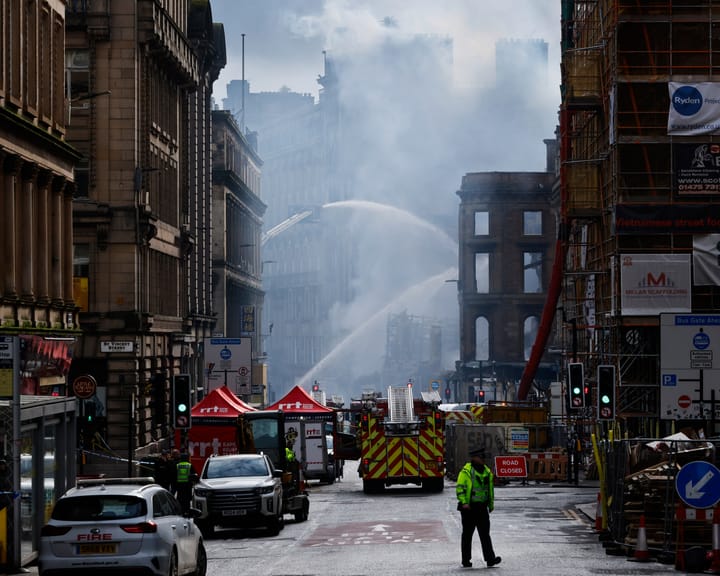
Lithium‑ion cells now pose a fresh technological risk, a fire‑science specialist admits keeps him restless at night, while fire‑service leaders caution that the proliferation of these cells in daily items is outstripping public awareness and safety rules.
The inferno that ravaged a historic Glasgow structure and forced

Meta, Google test: Do infinite scroll and autoplay foster addiction?
There was a period when social‑media feeds had an end. Today the scroll goes on indefinitely.
“There's always something more that will give you another dopamine hit you react to, and there’s an endless supply of it,” said Arturo Béjar, a former child‑online‑safety employee