
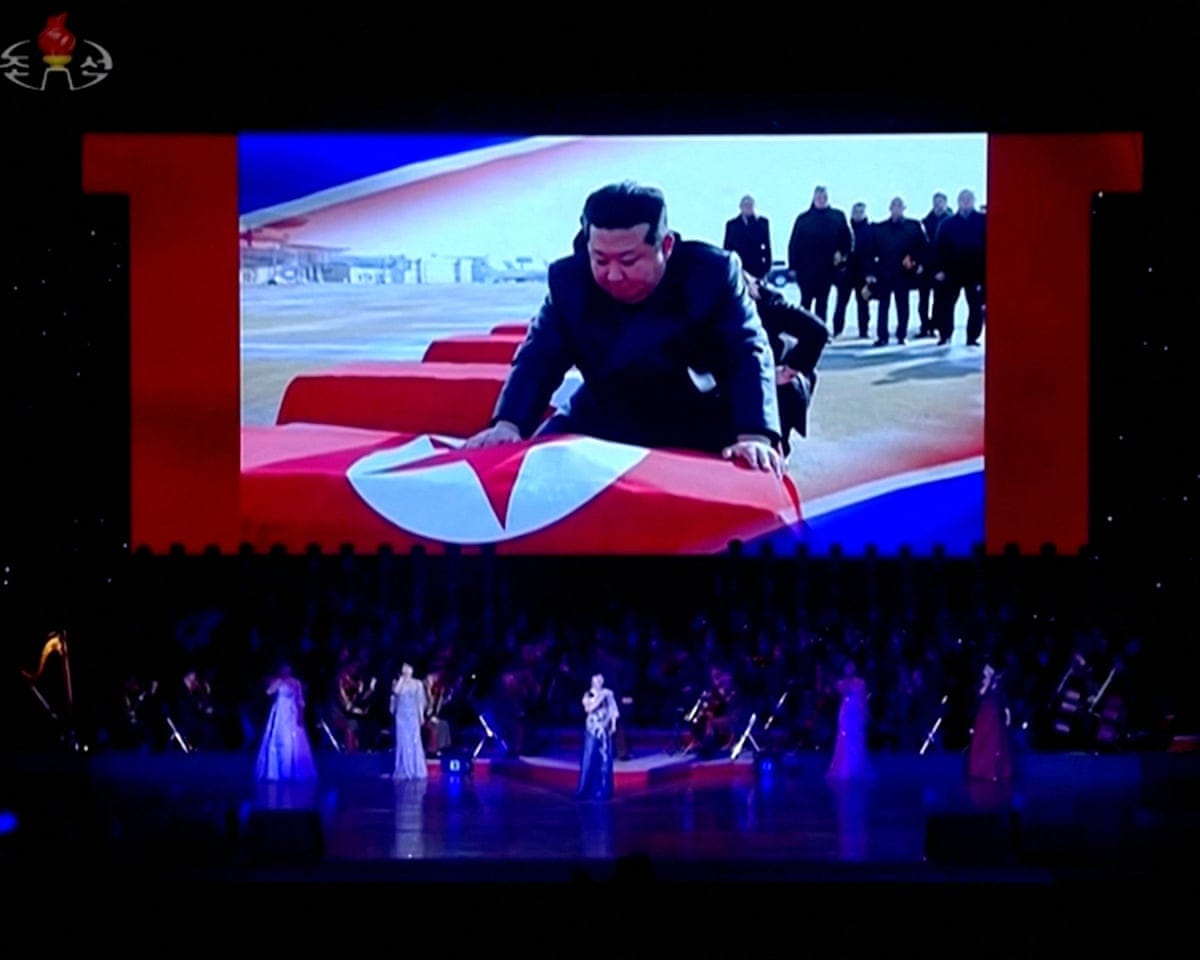
Korean troops had been deployed to assist Russian forces in Ukraine, though they did not specify the number of casualties. The recent ceremony appears to be a rare public acknowledgment of these losses.
The tribute took place during a performance commemorating the one-year anniversary of the military agreement signed between North Korea and Russia last year. Photographs displayed during the event showed Kim standing solemnly before several coffins covered with the national flag, while footage praised the alliance between the two nations.
Scenes of Kim with the fallen soldiers followed images of troops from both countries waving flags, reinforcing the message of solidarity. One picture showed what appeared to be a blood-stained notebook, reportedly recovered from the Kursk region in Russia, with notes expressing resolve in battle under Kim’s leadership.
Winter attire worn by Kim and other officials during the repatriation suggests the ceremony may have occurred months earlier, with the images only now being made public. The move follows months of denials that North Korean soldiers were involved in the conflict. Analysts suggest the display is an effort to frame these losses as a noble sacrifice.
"The authorities likely want to present the fallen soldiers as heroes in a successful mission," said Hong Min, a researcher at the Korea Institute for National Unification. He noted that the footage was released after both countries reported progress in their joint military efforts in the Kursk region.
North Korea’s state media broadcast the event, showing Kim alongside Russia’s culture minister, Olga Lyubimova, and his daughter, Kim Ju-ae. Reports indicated an emotional atmosphere, with some audience members seen wiping away tears.
The state-run KCNA agency described the ceremony as a demonstration of the strong bond between the two nations, forged through mutual struggle. The acknowledgment of troop deployments in April by Russia and North Korea marked the first formal confirmation of Pyongyang’s direct involvement in the war, though details on losses had remained unclear until now.
Read next
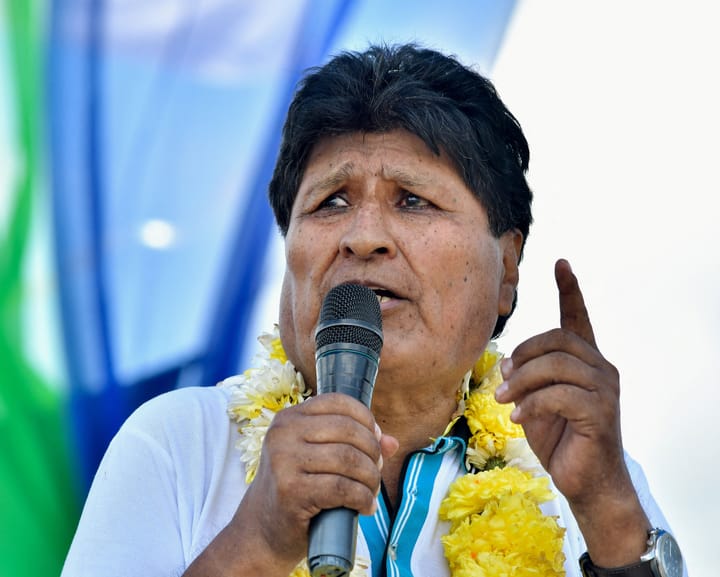
Bolivia Probes Ex-President Evo Morales for Suspected Involvement in 2009 Killings
The Bolivian attorney general has initiated an investigation into former leftist president Evo Morales, citing allegations of his involvement in the murder and torture of European nationals in 2009.
In 2009, police conducted a raid on a Santa Cruz hotel, resulting in the deaths of Eduardo Rózsa Flores, a Bolivian-
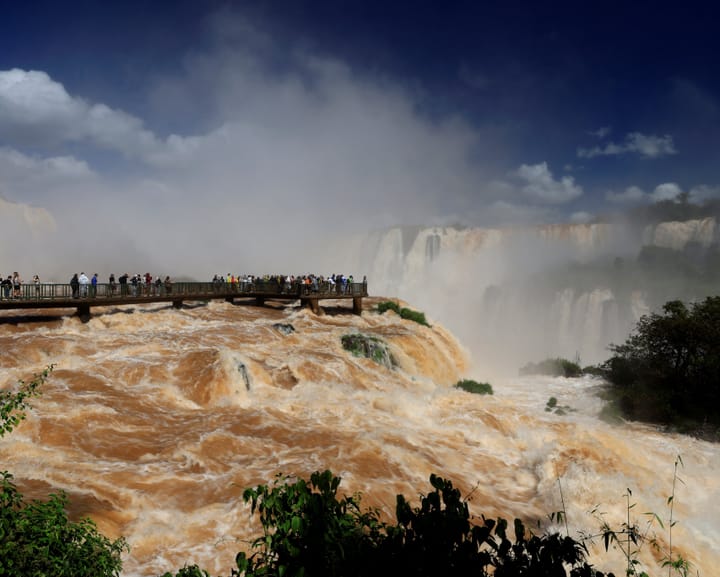
Argentina Closes Iguazu Falls Temporarily Due to El Niño-Induced Water Surge
Heavy rainfall driven by a potent El Niño weather pattern temporarily led Argentinian authorities to close tourist access to the renowned Iguazu Falls. The closure occurred due to concerns that rising water levels might cause the river to overflow its banks.
On Monday, national park officials implemented this precautionary measure
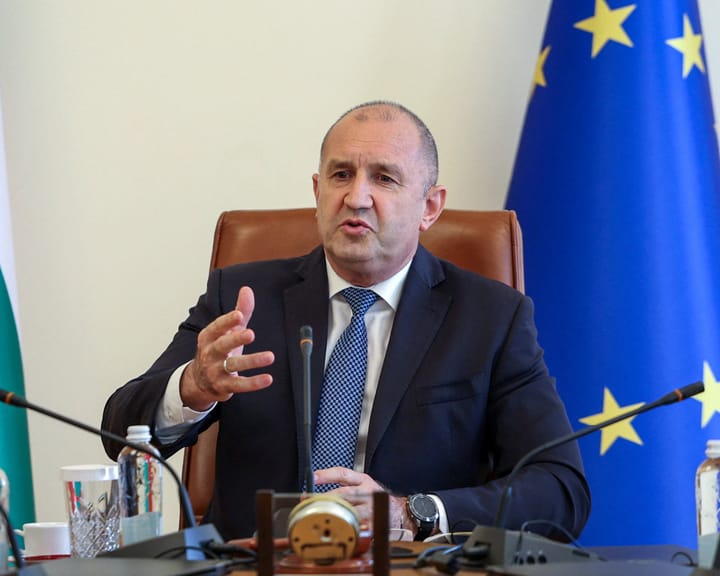
Mysterious Drones Strike Two Vessels Near Bulgarian Coast – Europe Live
Morning Update: Two Ships Targeted by Drones Off Bulgarian Coast
This morning, two ships in the Black Sea near Bulgaria were struck by drones of unknown origin. The attack led to the sinking of one vessel and initiated emergency rescue operations, as reported by Bulgarian Prime Minister Rumen Radev. Rescue