
When North Korea tested multiple ballistic missiles from its eastern coast in May, South Korea reacted quickly. Within hours, Seoul joined Washington and Tokyo in labeling the launch as a serious risk to regional stability.
Yet just weeks earlier, when a North Korean KN-23 missile—designed to hit targets in the South—struck a residential building in Kyiv, killing 12 civilians, Seoul remained silent.
The lack of response follows a similar pattern. There was no comment when reports emerged of Russia sending a missile defense system to shield Pyongyang, nor when Ukrainian intelligence revealed that Russian instructors were training North Korean drone operators—even as Kim Jong-un pledged full backing for Moscow’s war.
North and South Korea, still technically at war, maintain strained relations. The subdued reaction has led analysts to question whether Seoul fully understands the implications of what many see as Pyongyang’s most substantial military shift in decades—one forged in actual combat during the fighting in Ukraine.
“We should absolutely be concerned,” says Chun In-bum, a former South Korean special forces officer. “But people often ignore or downplay grim realities.”
Adapting to modern combat
Ukrainian intelligence reports suggest North Korea provides 40% of all ammunition used by Russian forces. It has also boosted domestic arms production, with Moscow paying Pyongyang directly.
Late last year, Pyongyang reportedly sent around 12,000 troops to Russia’s Kursk region. Since then, the deployment has grown significantly. An additional 6,000 soldiers, along with engineers, logistics teams, and other specialists, are now focused on rebuilding war-damaged areas, according to Ukrainian officials.
This alliance with Moscow has been highly beneficial for Kim Jong-un’s government, said Maj. Gen. Vadym Skibitskyi of Ukraine’s military intelligence agency.
“North Korea’s military received new equipment from Russia, and its troops gained firsthand experience in modern warfare. No other regional force—Japan, South Korea, or others—has engaged in large-scale conventional warfare recently.”
The ideological devotion of these troops became evident when Ukraine captured two injured North Korean soldiers in January.
“They were like bio-robots. They attempted suicide by biting their own veins,” Skibitskyi said. When asked if he wished to return home, one soldier replied, “Yes, because I’ll be honored as a hero. I fought in a real war.”
North Korean forces are now learning combined arms tactics, drone operations, electronic warfare, and other modern military strategies.
Read next

Digital Breach Causes Freezing Failure in Two French Supermarket Chains
French supermarket chains Intermarché and Cooperative U have experienced a significant cyber-attack that led to the defrosting of their refrigerators, according to statements from the retailers.
Approximately 150-200 Intermarché locations and nearly 100 Cooperative U stores were targeted in the attack, as reported on Monday. Paris prosecutors confirmed
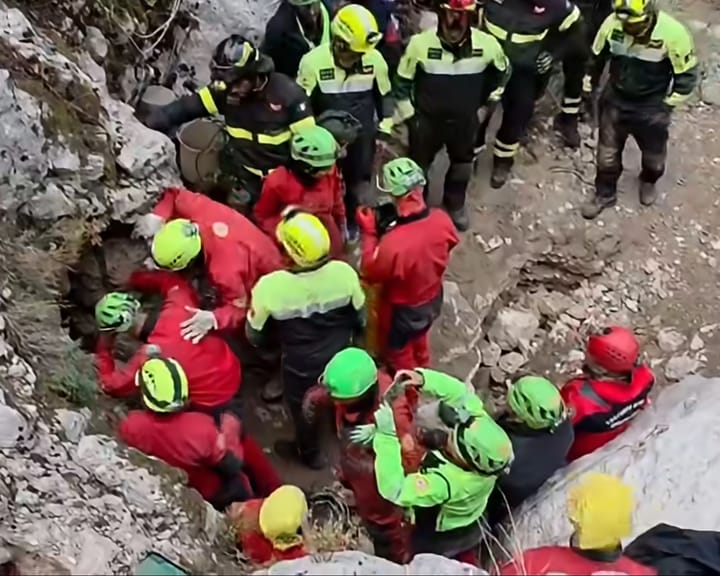
Man Freed from Sardinian Cave After 26-Hour Rockslide Ordeal
A 31-year-old man was rescued alive from a cave on the Italian island of Sardinia after being trapped about 10 meters underground for 26 hours due to a rockslide.
In an extensive and intricate rescue operation, emergency teams worked continuously after Luca Olmetto became trapped in the Gorroppeddu
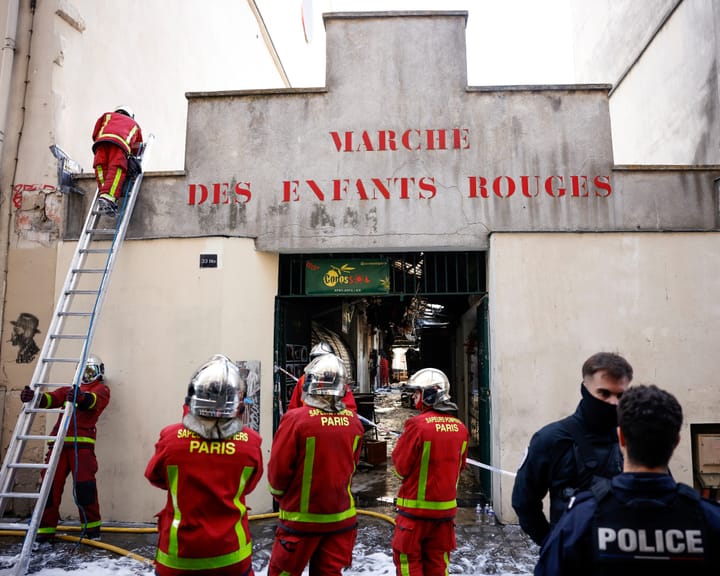
Marché des Enfants Rouges, Known as Paris' 'Coolest Market,' Ravaged by Fire
A devastating fire has swept through Paris's oldest surviving covered food market, a beloved street food destination in the Marais district. This historical venue, which attracted both locals and tourists daily, dates back to the 17th century.
Ariel Weil, the mayor of central Paris, described the Marché des