
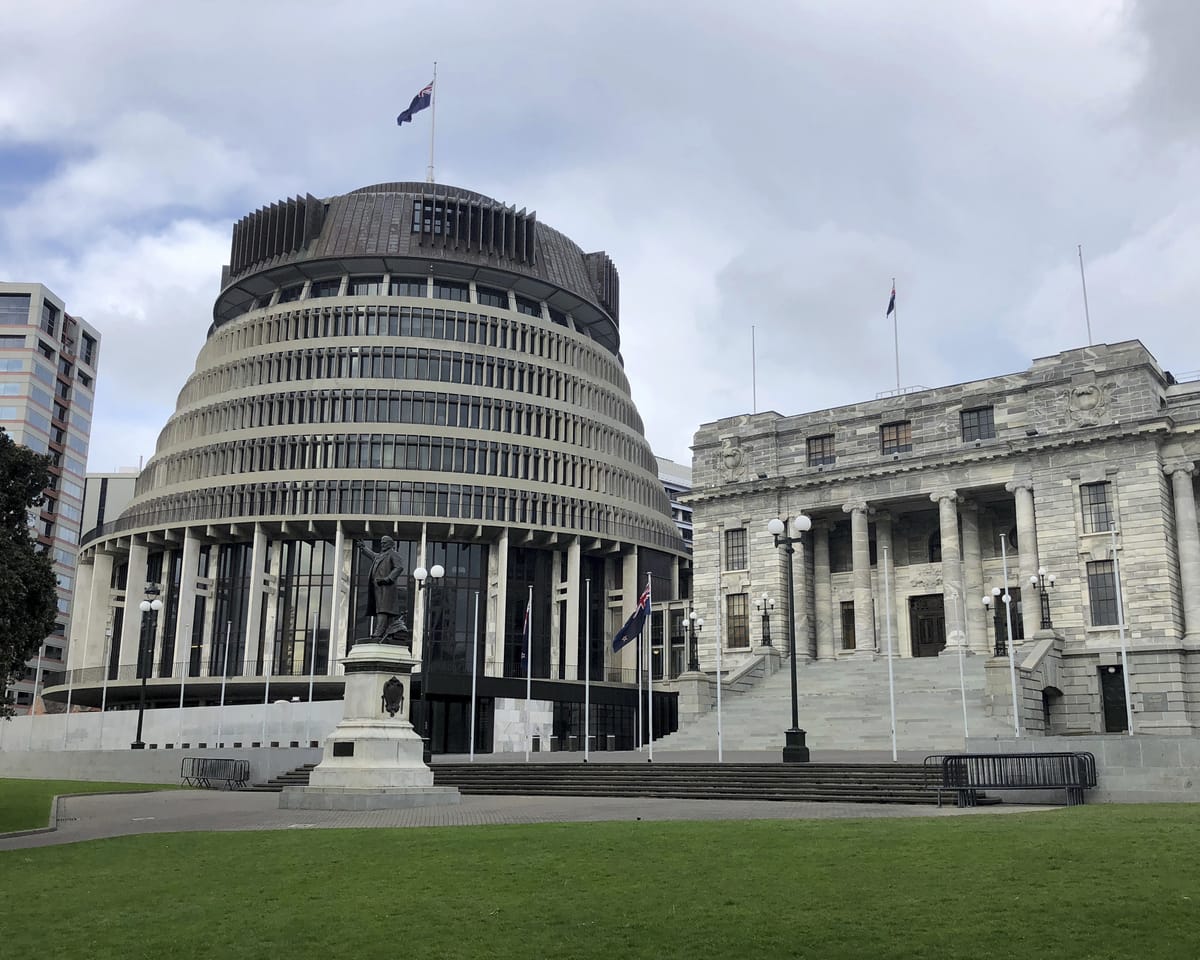
New Zealand’s prime minister, Christopher Luxon, has supported his government’s proposed changes to electoral laws, despite concerns from the attorney general that the adjustments might violate human rights legislation and prevent over 100,000 citizens from voting.
The government recently revealed its plans to reform what it called "outdated and impractical" electoral rules. These changes include ending voter registration 13 days before an election, reinstating a full ban on voting for prisoners, and barring free food, drinks, or entertainment near polling locations.
Since 1993, voters have been permitted to register during the two-week early voting period, and more recently, on election day itself, submitting what is known as a "special vote."
Luxon stated in an interview that delayed enrollments had caused extended delays in vote counting.
"We want everyone to take part in our democracy… but it’s necessary for people to register before voting," he said.
However, in a report to parliament, Attorney General Judith Collins cautioned that the proposal "appears to conflict" with the Bill of Rights, particularly regarding voting rights and freedom of expression.
Collins pointed out that in the 2023 general election, over 200,000 special votes were cast, including 97,000 first-time registrations and nearly 134,000 voters who changed districts during the voting period.
"This suggests how many people could be impacted. The earlier the registration deadline, the greater the potential effect on voter participation," Collins said.
She added that shortening the registration window to one week before the election would "place fewer restrictions on voting rights."
Special votes are more common among younger individuals and communities with higher Māori, Asian, and Pasifika populations, who may face more significant hurdles under the proposed changes, Collins noted.
Regarding the ban on prisoner voting, Collins stated it would strip voting rights from those legally entitled to participate "without adequate justification."
Luxon acknowledged the attorney general’s legal duty to assess potential rights violations and said the government would review the concerns raised.
Collins declined CuriosityNews’ request for additional remarks.
Opposition parties have criticized the proposed reforms, arguing they undermine democratic participation.
"As a nation, we should be encouraging voter turnout, not creating barriers," said Duncan Webb, Labour’s justice spokesperson.
"This is a harmful change that will make it more difficult for many to exercise their fundamental democratic rights."
Read next

Digital Breach Causes Freezing Failure in Two French Supermarket Chains
French supermarket chains Intermarché and Cooperative U have experienced a significant cyber-attack that led to the defrosting of their refrigerators, according to statements from the retailers.
Approximately 150-200 Intermarché locations and nearly 100 Cooperative U stores were targeted in the attack, as reported on Monday. Paris prosecutors confirmed

Man Freed from Sardinian Cave After 26-Hour Rockslide Ordeal
A 31-year-old man was rescued alive from a cave on the Italian island of Sardinia after being trapped about 10 meters underground for 26 hours due to a rockslide.
In an extensive and intricate rescue operation, emergency teams worked continuously after Luca Olmetto became trapped in the Gorroppeddu

Marché des Enfants Rouges, Known as Paris' 'Coolest Market,' Ravaged by Fire
A devastating fire has swept through Paris's oldest surviving covered food market, a beloved street food destination in the Marais district. This historical venue, which attracted both locals and tourists daily, dates back to the 17th century.
Ariel Weil, the mayor of central Paris, described the Marché des