
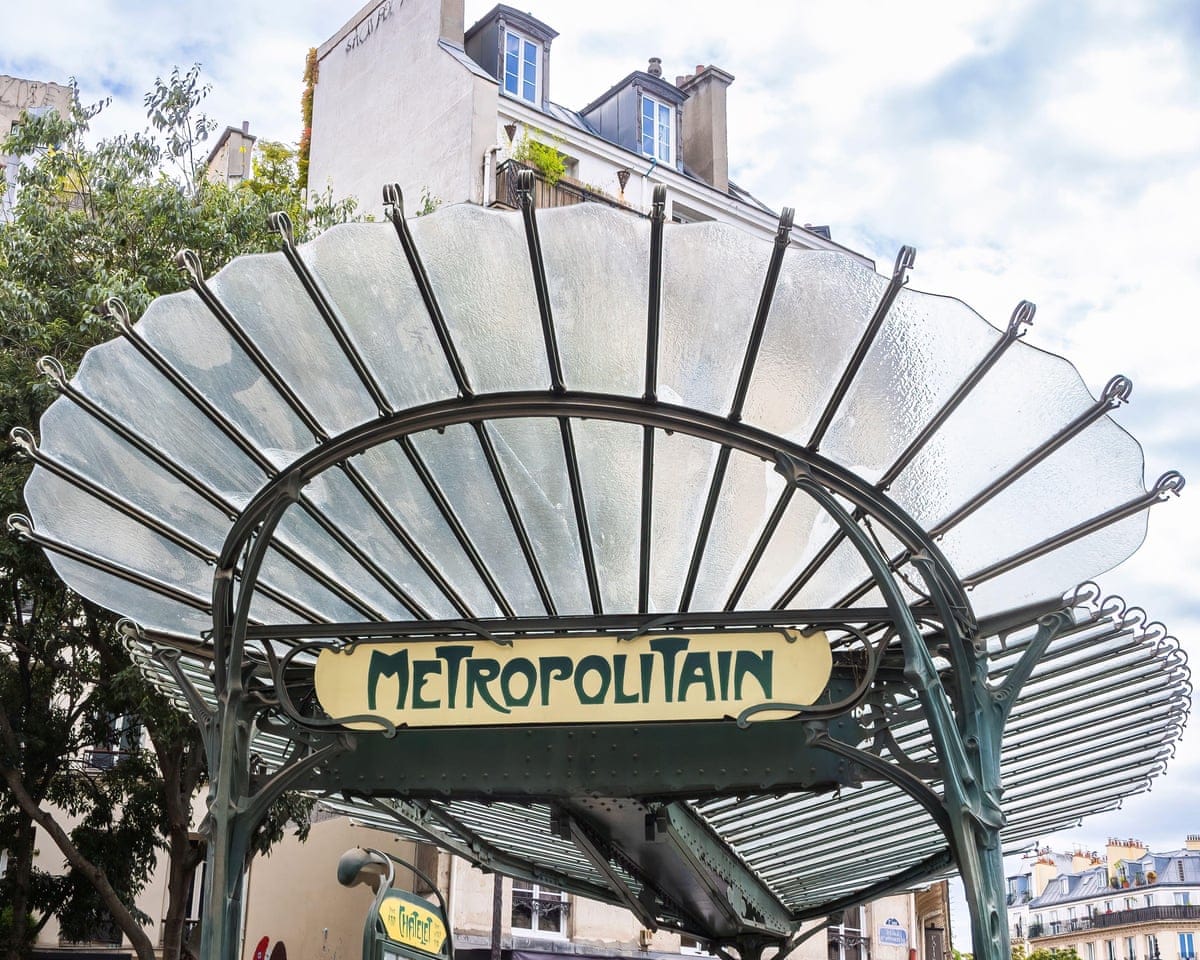
The often-overlooked architect behind Paris’s most famous Métro station entrances and art nouveau structures will finally receive recognition with a museum honoring his contributions.
Hector Guimard shaped Parisian architecture in the early 20th century, crafting intricate Métro entrances with sweeping iron and glass formations that earned comparisons to dragonfly wings.
Today, these surviving curved cast-iron structures, adorned with lily-of-the-valley lamps and topped by the stylized "Métropolitain" sign—also Guimard’s design—appear in travel guides and photographs. Yet, when first unveiled, they sparked outrage among Parisians.
Critics dismissed the green color as “unpatriotic,” while others claimed the ornate lettering confused children and baffled foreigners.
As art nouveau fell out of favor, transport officials abandoned Guimard’s designs by 1913. By the time of his death in 1942—age 75, in New York, where he and his American Jewish wife had fled Nazi persecution—much of his work had been discarded, and his legacy faded.
“Though international admirers celebrate art nouveau, the French never embraced it,” said Fabien Choné, a Guimard collector involved in the museum’s creation. “Parisians ridiculed the Métro entrances as ‘spaghetti style,’ bewildered by their appeal to visitors.”
Guimard’s widow, Adeline, an artist exhibited at the 1899 Beaux-Arts salon, returned to Paris in 1948, striving to protect his work, including around 50 residential buildings. She donated sketches and furnishings to museums, mostly in the U.S., and proposed gifting their art nouveau home, Hôtel Guimard, to the state or city. Both refused; the building became apartments, its contents dispersed.
Post-war modernism favored minimalism, and many of Guimard’s pieces were deemed worthless and demolished. Of his 167 Métro entrances—praised by Salvador Dalí as “divine”—only 88 survive.
“For decades, the city removed Guimard’s designs during street renovations,” Choné noted. “Even in the ’60s and ’70s, preservation wasn’t a priority.”
The museum will occupy Hôtel Mezzara, a 1910 Guimard-designed building in Paris’s 16th arrondissement, featuring his hallmark ironwork, a striking glass skylight, and chandeliers.
Read next

Bolivia Probes Ex-President Evo Morales for Suspected Involvement in 2009 Killings
The Bolivian attorney general has initiated an investigation into former leftist president Evo Morales, citing allegations of his involvement in the murder and torture of European nationals in 2009.
In 2009, police conducted a raid on a Santa Cruz hotel, resulting in the deaths of Eduardo Rózsa Flores, a Bolivian-
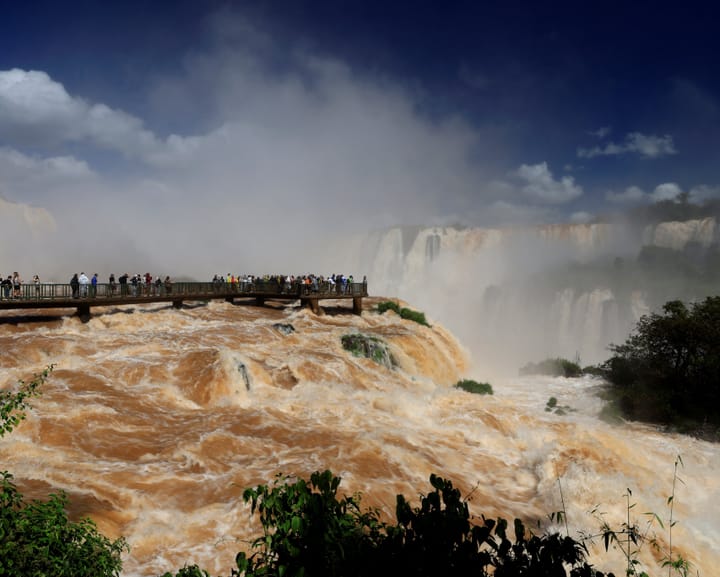
Argentina Closes Iguazu Falls Temporarily Due to El Niño-Induced Water Surge
Heavy rainfall driven by a potent El Niño weather pattern temporarily led Argentinian authorities to close tourist access to the renowned Iguazu Falls. The closure occurred due to concerns that rising water levels might cause the river to overflow its banks.
On Monday, national park officials implemented this precautionary measure

Mysterious Drones Strike Two Vessels Near Bulgarian Coast – Europe Live
Morning Update: Two Ships Targeted by Drones Off Bulgarian Coast
This morning, two ships in the Black Sea near Bulgaria were struck by drones of unknown origin. The attack led to the sinking of one vessel and initiated emergency rescue operations, as reported by Bulgarian Prime Minister Rumen Radev. Rescue