
Pacific leaders have asked for assistance with fuel supplies, while others caution against “panic buying” as the import‑dependent nations confront worries about possible shortages and rising costs stemming from the conflict in the Middle East.
Crude prices have climbed to almost $110 a barrel after attacks on energy facilities in Iran and the Gulf region.
“Island states in the Pacific are particularly exposed to disruptions in fuel deliveries and price hikes because they depend almost wholly on imports,” said Paul Barker, executive director of the Institute of National Affairs in Papua New Guinea.
“Many of these economies are relatively fragile, with limited buying power and a heavy reliance on remittances and foreign aid, making them vulnerable to worldwide price shocks,” Barker added.
He warned that higher fuel expenses jeopardise vital sectors such as tourism and “make it increasingly hard to provide basic government services to remote islands.”
In Samoa, roughly two‑thirds of electricity generation is derived from imported diesel.
After meeting New Zealand’s prime minister Christopher Luxon, Samoan premier La’aulialemalietoa Leuatea Schmidt said he had inquired whether fuel could be rerouted to Samoa in a crisis.
“We cannot predict what will happen next,” La’aulialemalietoa said.
He noted that Samoa obtains its fuel from Singapore and other sources, but asked Luxon to help “cover us if something occurs.”
In Tonga, where about 80 % of power comes from imported diesel, Prime Minister Lord Fakafanua said New Zealand and Australia are “sharing intelligence” with his government to better prepare for any shortfall.
“Our task is to prepare as well as we can, and part of that is exchanging information with partners such as Australia and New Zealand. My worry is ensuring the nation has sufficient energy,” he said, adding that “for now we appear to be OK.”
Tourism accounts for 25 % of Samoa’s GDP and 11 % of Tonga’s, heightening concerns for economies that rely heavily on airlines now facing steep jet‑fuel costs.
In Papua New Guinea, prices for petrol, diesel and kerosene have risen. The nation of about ten million people exports liquefied natural gas but still imports refined fuels, leaving domestic prices vulnerable to the global oil shock.
Petroleum minister Jimmy Maladina said the government is cooperating with suppliers to keep fuel flowing in the months ahead.
“Our biggest worry in PNG is storage capacity,” Maladina said this week, noting that authorities are monitoring the situation and will intervene if necessary.
In the capital, Port Moresby, businesses are already feeling the impact of higher fuel costs.
Janet Sios, part‑owner of a local hospital, said the surge in fuel prices has pushed up food and service costs and that the situation is likely to deteriorate in the coming weeks.
Read next

My final clashwith my Palestinian dad lingers, leaving the past unburied for both of us
The last argument my father andI ever had took place on a May night in 2021, the evening before his first chemotherapy session. At that point in our story I had just become a mother, and he was a year and a half away from dying. To treat his stage‑
Experts WarnRussia's War Is Pushing Black Sea Dolphins to Breaking Point
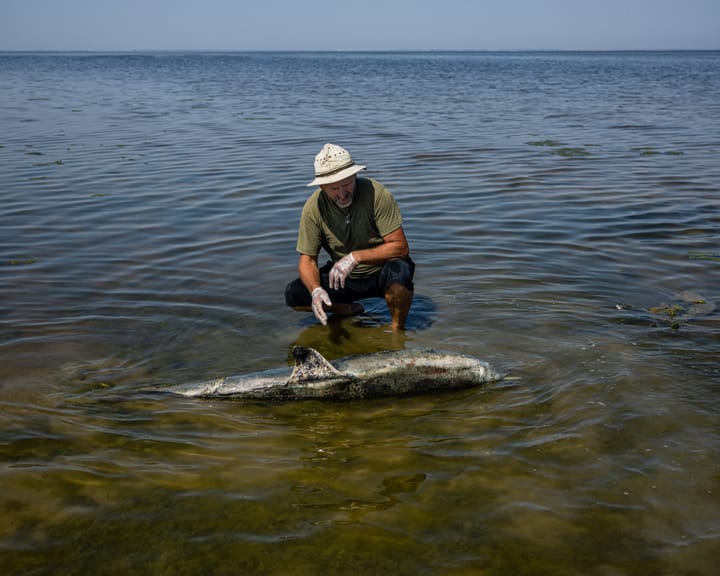
Inthe besieged harbours of Odesa, a research vessel rides at anchor, its hull scarred by unseen harm. No one can approach the damage to the Boris Alexander caused by Russian drones and artillery that have struck the port city throughout four years of war in Ukraine; the risk is too

Italy confiscates€20 million in assets tied to embezzlement from Ursula Andress
Italian authorities have confiscated assets worth €20 million (£17.3 million) in Tuscany, comprising real‑estate, vineyards and olive groves, allegedly purchased with funds embezzled from the actress Ursula Andress.
The 90‑year‑old Swiss‑born star lodged a complaint in her home country claiming a “progressive and significant depletion