
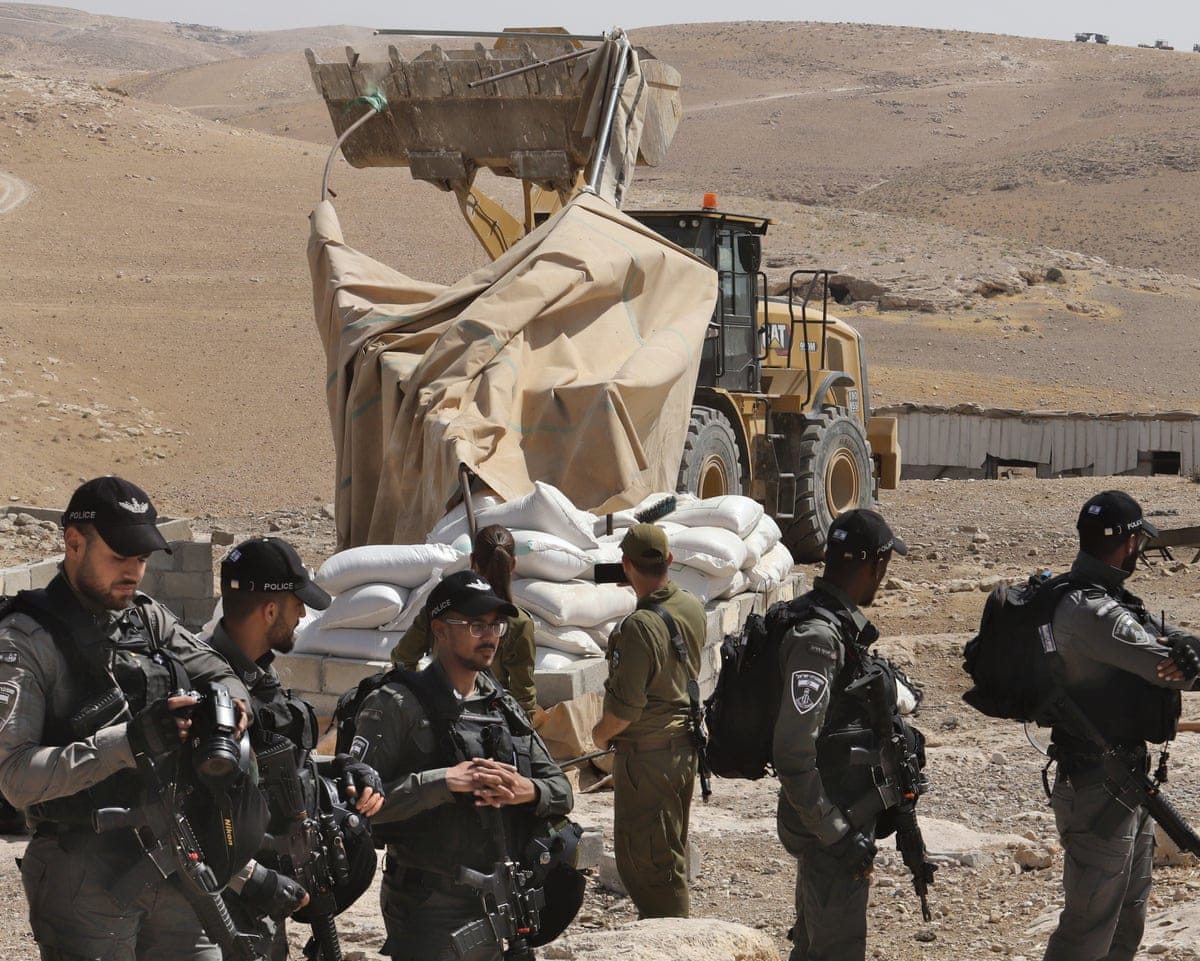
Ali Awad is exhausted. The 27-year-old lives in Tuba, one of several villages that form Masafer Yatta in the dry hills of the southern West Bank. He spent a sleepless night watching as a masked Israeli settler on horseback circled his family’s home.
“When we saw the masked settler, we knew he was looking for trouble,” said Awad, his eyes weary. This time, they were fortunate—the settler vanished before authorities arrived.
For men in Masafer Yatta, rest is scarce. They take shifts keeping watch at night, fearing attacks from nearby Israeli settlers under darkness.
Daytime offers little relief. Villagers go about their days listening for approaching vehicles, scanning the horizon for bulldozers that could mean their homes will be torn down.
In 1981, Israel declared Masafer Yatta a military training area—designated as Firing Zone 918, where civilian presence is prohibited. Since then, authorities have worked to remove the roughly 1,200 remaining residents. For over two decades, these residents have fought legal battles to halt evictions, slowing but not stopping the demolition of Palestinian homes.
Recently, an Israeli administrative body issued a ruling that experts and activists say may clear the path for demolitions in Masafer Yatta. This could result in the forced displacement of 1,200 people—an act the UN has warned may constitute a war crime.
“This would amount to forcible transfer, which is a war crime. It could also be a crime against humanity if carried out as part of a widespread or systematic attack on civilians,” the UN human rights office stated on June 26.
On June 18, the Civil Administration’s central planning bureau—the military body overseeing construction permits in Palestinian territories—ordered all pending building requests in Masafer Yatta to be rejected.
Previously, residents could submit construction applications, and while under review, their structures were protected from demolition. The new directive cancels all pending requests without review, removing legal barriers to tearing down homes.
The decision coincides with a sharp rise in demolitions across the West Bank and East Jerusalem, with 933 structures destroyed this year alone—a record rate, according to UN figures. As demolitions increase, so does the violence. Since the war in Gaza began on October 7, 2023, Palestinian officials report at least 950 deaths and 9,000 injuries in the West Bank due to Israeli military and settler actions.
Read next

Bolivia Probes Ex-President Evo Morales for Suspected Involvement in 2009 Killings
The Bolivian attorney general has initiated an investigation into former leftist president Evo Morales, citing allegations of his involvement in the murder and torture of European nationals in 2009.
In 2009, police conducted a raid on a Santa Cruz hotel, resulting in the deaths of Eduardo Rózsa Flores, a Bolivian-

Argentina Closes Iguazu Falls Temporarily Due to El Niño-Induced Water Surge
Heavy rainfall driven by a potent El Niño weather pattern temporarily led Argentinian authorities to close tourist access to the renowned Iguazu Falls. The closure occurred due to concerns that rising water levels might cause the river to overflow its banks.
On Monday, national park officials implemented this precautionary measure

Mysterious Drones Strike Two Vessels Near Bulgarian Coast – Europe Live
Morning Update: Two Ships Targeted by Drones Off Bulgarian Coast
This morning, two ships in the Black Sea near Bulgaria were struck by drones of unknown origin. The attack led to the sinking of one vessel and initiated emergency rescue operations, as reported by Bulgarian Prime Minister Rumen Radev. Rescue