
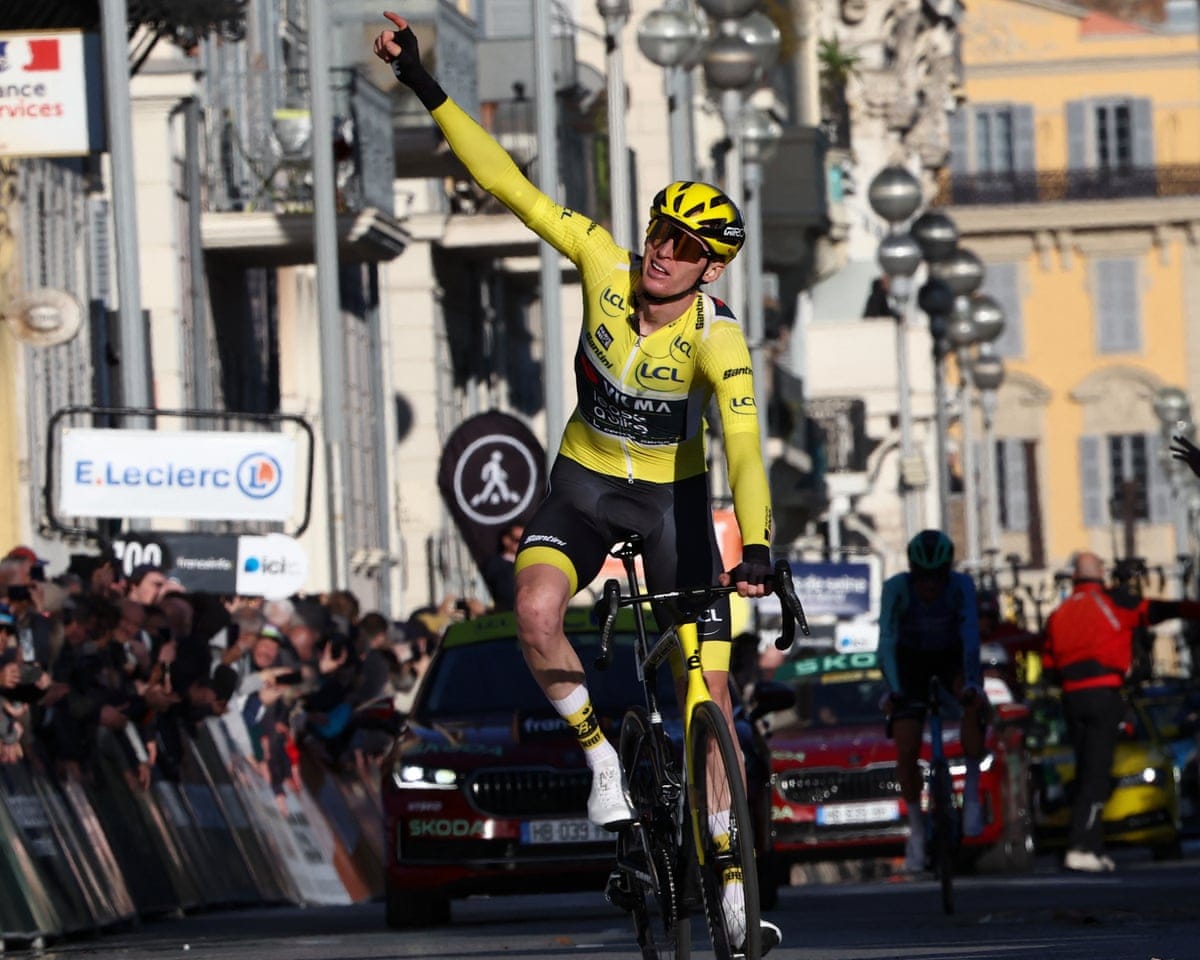
Matteo Jorgenson stands out. Not in the way towering athletes like Dexter Lawrence or Chet Holmgren do, nor like most imposing American sports stars. But in professional cycling, Jorgenson’s stature is notable. In a sport where endurance often favors smaller frames, a rider who measures 6 feet 4 inches (1.93 meters) and weighs around 70 kilograms (154 pounds) is seen as unusually large.
With broad shoulders and a wide chest that can catch the wind, Jorgenson’s build would typically disqualify him from contending in Grand Tours such as the Tour de France or the Giro d’Italia. These races are often decided in the mountains, where lighter riders dominate. Yet Jorgenson defies expectations—despite his height, his weight remains remarkably low, giving him a rare combination of long limbs, strong legs, and the efficiency needed to ascend mountains with speed. His climbing ability rivals that of his Visma–Lease a Bike teammate Jonas Vingegaard, a two-time Tour winner and one of the best climbers in the world, who stands at just 5 feet 9 inches and weighs 57 kilograms (125 pounds).
Naturally, this raises a question: when will Matteo Jorgenson aim for GC?
GC, or general classification, refers to the overall standings in a race—whether the yellow jersey of the Tour, the pink of the Giro, or the red of the Vuelta a España. Most cyclists of Jorgenson’s size don’t even enter the GC conversation, as they lack the climbing prowess required. Larger riders often focus on sprint stages or specialize in one-day races like the Tour of Flanders or Paris-Roubaix, where strength matters more than efficiency. But Jorgenson could be an exception. Last year, he finished eighth in the Tour de France, proving his potential.
For now, however, with Vingegaard as the team’s lead rider, Jorgenson is unlikely to be given full GC support at the Tour. His role will be as a domestique, assisting Vingegaard while chasing stage wins when possible.
That leads to another possibility: why not target the Giro or Vuelta, where he could become only the second American to win the former and the third to claim the latter?
For Jorgenson, the answer is simple—he’s not quite ready.
While his size may define him now, patience could become his greatest strength.
Jorgenson’s cycling journey began in Boise, Idaho, where he joined a local youth cycling club called Byrds—the Boise Young Rider Development Squad—at age six. The program wasn’t designed to produce elite racers, but simply to encourage kids to be active outdoors. Even so, racing captivated him. By eight, he was competing in mountain bike and cyclo
Read next

Weekly Sports Quiz: Focus on Harry Kane, Victor Wembanyama, and WSL Champions
Local Community Efforts Drive Environmental Change
In a small town nestled between rolling hills and dense forests, residents have taken it upon themselves to spearhead a movement aimed at fostering environmental sustainability. This grassroots initiative is drawing attention for its comprehensive approach to tackling ecological challenges.
At the heart of
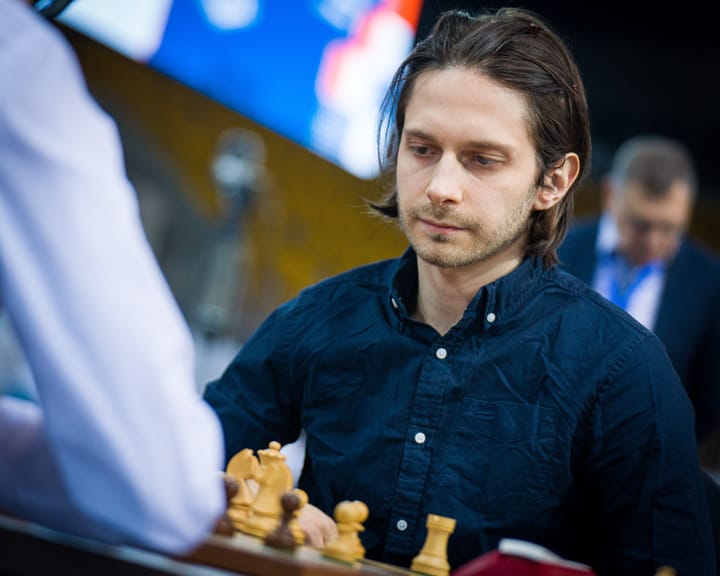
France and US Reign in Rapid and Blitz at Pall Mall Masters Chess Event
Mastering chess in central London is uncommon, though the annual ChessFest in Trafalgar Square draws over 20,000 visitors.
In London's Pall Mall club scene, the RAC clubhouse has been the site for the Oxford vs. Cambridge Varsity match for nearly fifty years. In 2023, the Athenaeum hosted
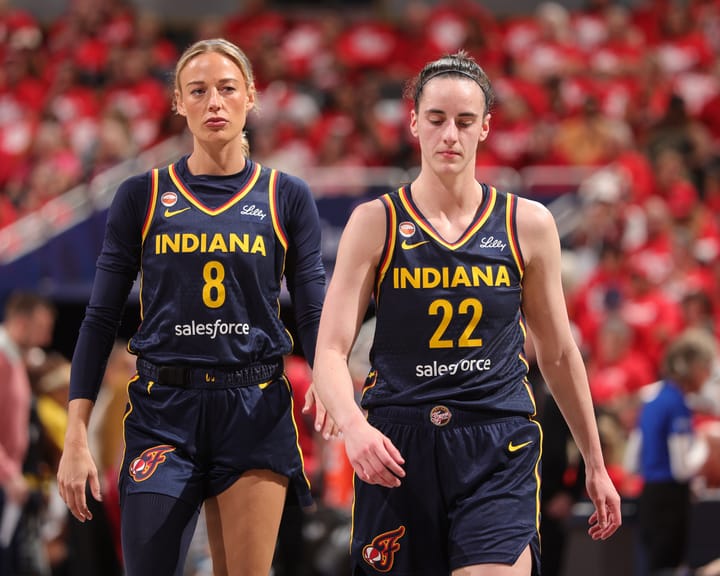
Indiana Fever and the Magasphere: A Risky Route to Fame for a WNBA Team
The Indiana Fever's season has concluded, marked by both its on-court performance and off-court controversies. Despite being eliminated by the Las Vegas Aces for the second consecutive year, the team has drawn significant attention, becoming a focal point in the WNBA this season.
The Fever'