
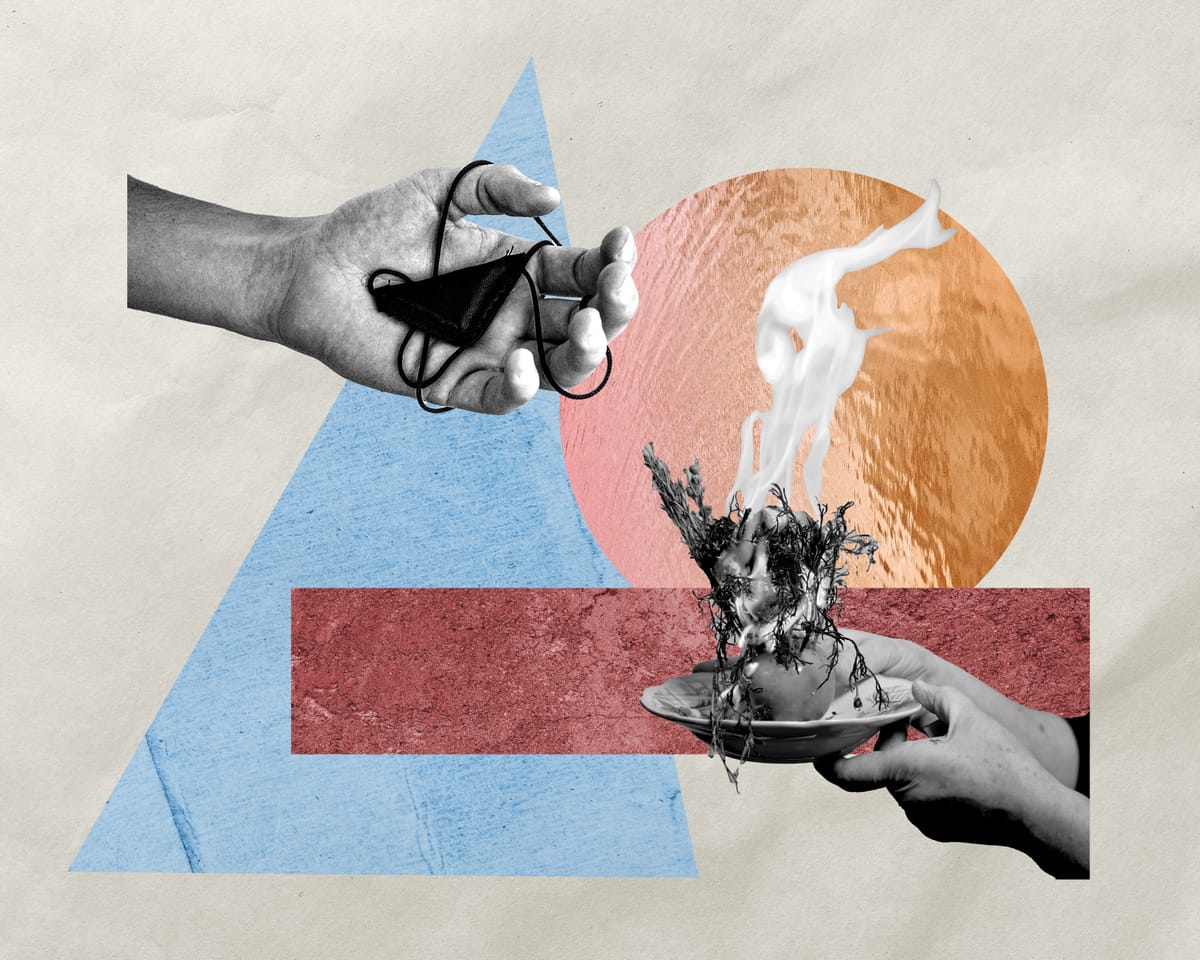
As I prepared to leave London for Melbourne, my eldest sister-in-law reminded her children to honor the “tradition”—tossing a bowl of water behind me as I walked out the door. Just a light spill on the ground, a custom far older than nations. *"La har azaab po aman se,"* she murmured in Pashto—may hardships stay far from you. The children laughed as they waved, splashing the water between amusement and hesitation.
My mother did the same in Afghanistan. Whenever I traveled, especially abroad, she would quietly accompany me to the gate with water in hand, whispering blessings I couldn’t always catch. But this moment, between two distant cities, with children raised a world away from where the ritual began, felt different. Gentler. A quiet melancholy, like hearing an old melody sung in an unfamiliar tongue.
I spent my childhood between Kabul and Karachi—two cities perpetually on the brink. One scarred by war, the other straining under its own weight, short on resources yet somehow enduring. In both, I learned that survival comes not just from faith but from the quiet, unnoticed acts—small practices threaded into daily life. Unspoken, unofficial. Yet brimming with tenderness and hope.
I witnessed it everywhere. My grandmother placing black cloth near the door after an illness or a valuable purchase—warding off ill fortune. My aunt burning esfand over her children upon their return from celebrations where they’d drawn too much admiration. Another sister-in-law dotting her baby’s ear with kohl when he smiled too brightly. “People aren’t always kind,” she’d say. “Too much joy invites envy. Best to stay a little unseen.”
From my own experiences, these gestures—the cleansing smoke of esfand, the pulse of qawwali, the solace of a taweez worn on the wrist—transcend superstition. They are anchors: steadying, soothing, shielding. No scripture taught them. No formal lessons passed them down. They were gathered like loose stones, handed from mothers to daughters, grandmothers to grandchildren—sometimes to sons who took notice.
Even the most devout I’ve known—those who prayed daily, fasted every Ramadan, recited the Qur’an by heart—kept these customs. Never as contradictions, but as threads of belief and heritage intertwined. Simple acts to foster safety and calm.
When I came to Melbourne, I brought them with me.
Read next
The world craves more compliments; just don’t make it awkward | Emma Beddington
I hope you won’t take offense at my remark that you look particularly sharp today. No, that’s not quite right—let’s begin again.
Lately I’ve been mulling over the nature of compliments: their purpose, their delivery, the ones that lift and the ones that fall flat.

The Guardian editorial: Trump's war on Iran will burden the world's poorest the most.
Rising fuel costs, the termination of mortgage schemes and the likelihood of higher prices for everything from groceries to smartphones are straining households. The US‑Israeli strike on Iran and Tehran’s retaliation have unsettled the world economy. Consumers are already bearing the brunt of the most severe energy‑supply

Who's to blame for the expanding surveillance age? Chances are, it's you – Tatum Hunter
A TikTok comedian recently set up a bogus ICE tip line and was flooded with calls – one even came from a teacher urging agents to investigate a kindergartener in her class. While governments and corporations design the framework of surveillance, ordinary citizens are increasingly eager to take part. The focus