
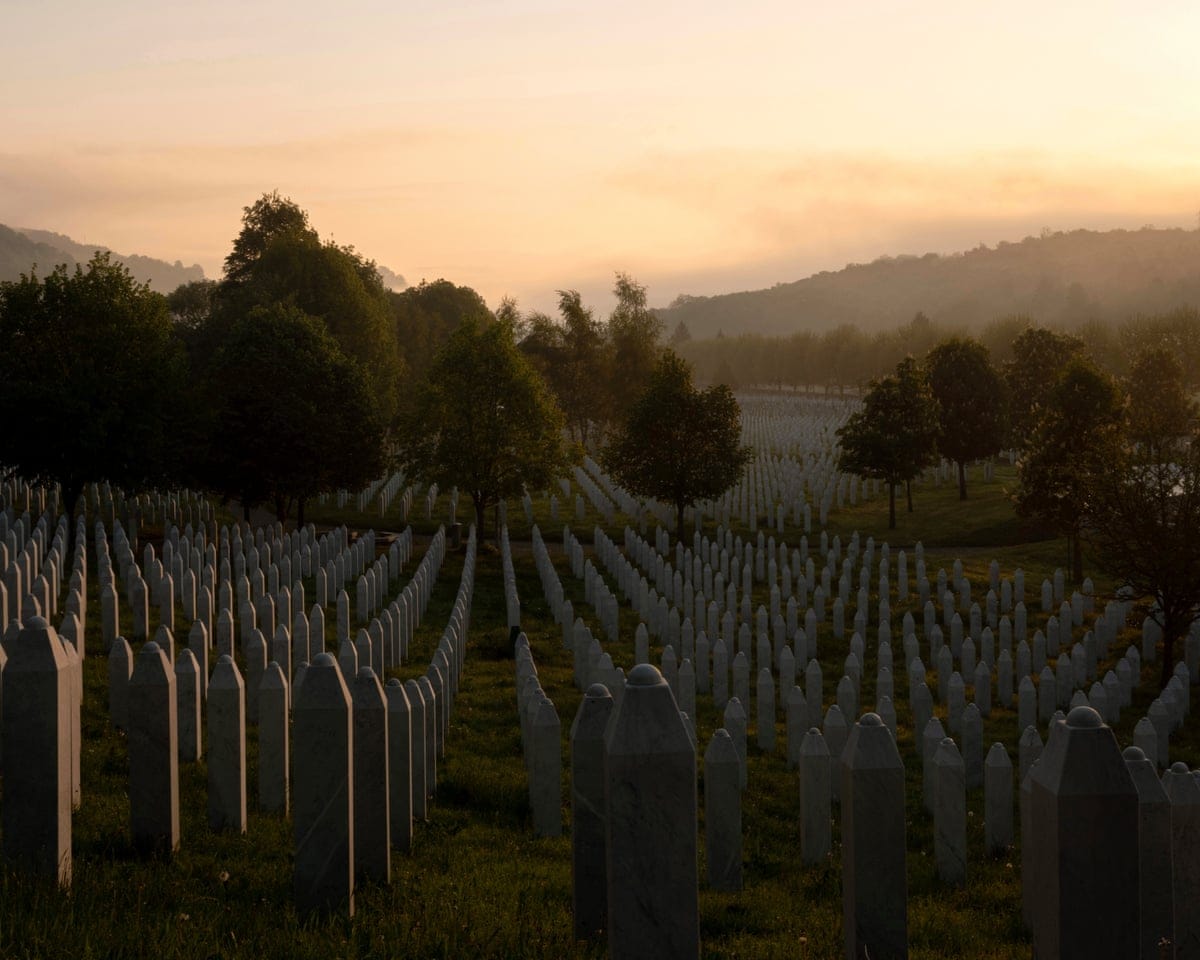
Behind damaged houses, the sky stretches blue and endless. Stairways clinging to the sides of buildings have led nowhere for decades. Along the road by Lake Perućac, on the border between Bosnia and Herzegovina and Serbia, silence prevails, broken only by birdsong. A handful of families gather by the water, grilling fish they caught in the man-made lake.
The lake holds dark memories—238 bodies were recovered from its depths, victims of the Srebrenica massacre. From Šehra’s window, the view of Lake Perućac appears almost unreal, softened by the veil of her curtains. Once a popular destination in the Drina national park, the area now lies forgotten, its restaurants and docks decayed. The only signs of activity come from the distant, foreign shore.
For Šehra, 59, the view is a painful reminder of the past. She recalls narrowly escaping death in 1995 when she was just 29. Among the few Bosnian Muslims who returned to Srebrenica in the decades since, she sought solace in reclaiming her rural home—a way to escape the weight of unspoken horrors. The trauma she endured, she says, might explain—but not justify—why her former husband abandoned their two daughters after the war. For many women, the stigma of wartime sexual violence lingers, an unshakable mark of shame. "Some days, I want to end it all," Šehra confesses. "But prayer keeps me going. At least I have that."
A narrow path winds through fenced pastures, leading to the village of Urisići. Once home to 70 families, only 11 households remain. Like other fading settlements in the region, the abandoned houses are swallowed by nature, their stories buried under ivy and overgrowth.
The Srebrenica municipality lost around 10,000 lives to systematic violence, leaving its pre-war population hollowed out. Most former residents never returned, staying abroad as refugees or resettling elsewhere in Bosnia. Bosniaks, who once made up three-quarters of the area’s population, are now a minority. Those who came back often live in unease, under the shadow of resurgent nationalist rhetoric.
Nizama, 18, tilts her head toward the sun, sighing deeply. "What did I do to deserve this?" she asks. Sitting on her porch, surrounded by sheds and animal pens, she watches over her nephew Daoud—the only child born in Urisići since the war. Nearby, a bright rocking horse and a toy chainsaw lie in the dirt.
For the Šoljić family, returning to their remote farm took 30 years—an entire generation. Nizama’s father, Fahrudin, was 18 when he last stood on this land. The wounds of war remain.
Read next

Bolivia Probes Ex-President Evo Morales for Suspected Involvement in 2009 Killings
The Bolivian attorney general has initiated an investigation into former leftist president Evo Morales, citing allegations of his involvement in the murder and torture of European nationals in 2009.
In 2009, police conducted a raid on a Santa Cruz hotel, resulting in the deaths of Eduardo Rózsa Flores, a Bolivian-
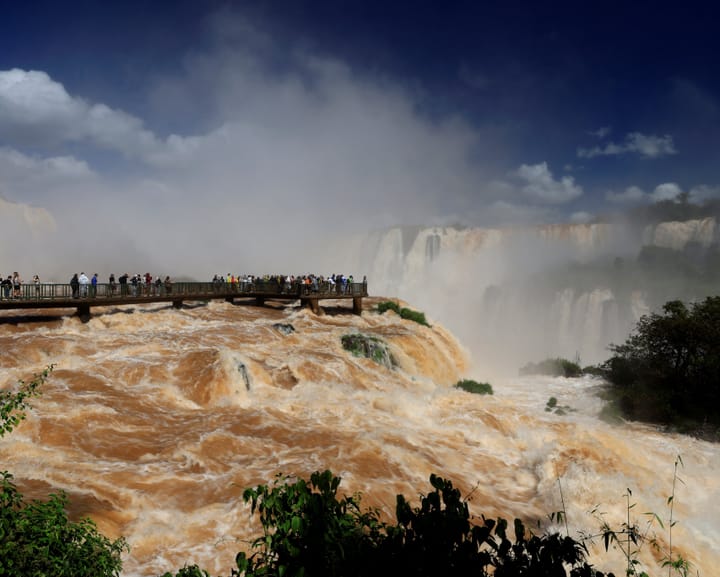
Argentina Closes Iguazu Falls Temporarily Due to El Niño-Induced Water Surge
Heavy rainfall driven by a potent El Niño weather pattern temporarily led Argentinian authorities to close tourist access to the renowned Iguazu Falls. The closure occurred due to concerns that rising water levels might cause the river to overflow its banks.
On Monday, national park officials implemented this precautionary measure

Mysterious Drones Strike Two Vessels Near Bulgarian Coast – Europe Live
Morning Update: Two Ships Targeted by Drones Off Bulgarian Coast
This morning, two ships in the Black Sea near Bulgaria were struck by drones of unknown origin. The attack led to the sinking of one vessel and initiated emergency rescue operations, as reported by Bulgarian Prime Minister Rumen Radev. Rescue