
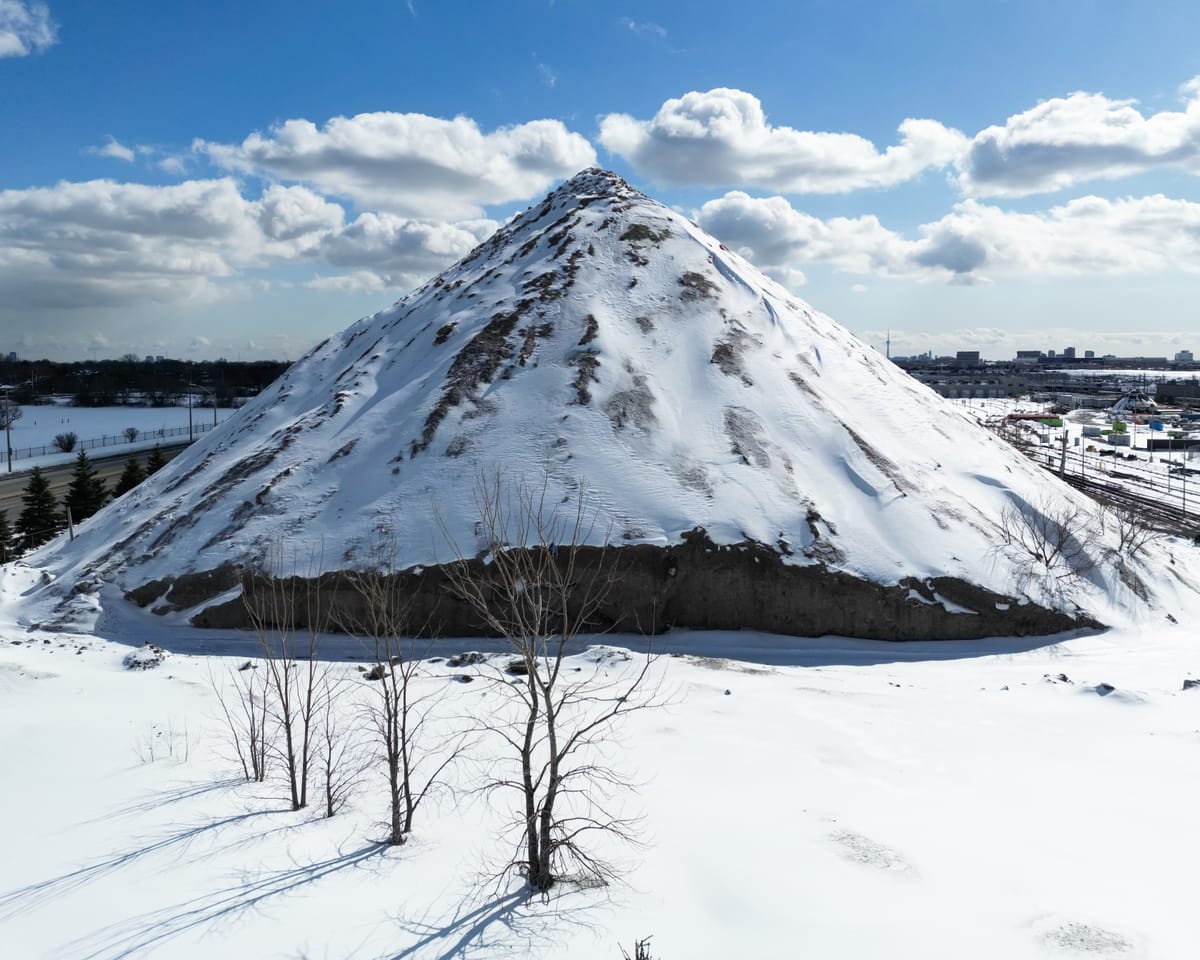
Most peaks require tens of millions of years to develop. Toronto’s latest “mountain” appeared in a matter of days.
Rising above a stand of evergreens, it lacks any limestone or granite core. There are no spires, cornices, or headwalls—only layers of snow blended with road salt, antifreeze, oil, coffee cups and misplaced keys. It serves as the final repository for the weather forces that have battered the city in recent weeks and poses a serious environmental threat.
In late January, Toronto experienced what many specialists described as the most intense single‑day snowfall on record for the city. In certain locations, almost 23 inches fell, driven by a clash of weather systems. By mid‑February the municipality had already cleared 264,000 tonnes of snow from 1,100 km (680 miles) of streets, sidewalks and bike paths.
A comparable storm struck New York City at the end of February, depositing more than 25 inches of snow in some areas during a two‑day event accompanied by hurricane‑strength winds.
Metropolitan areas that endure harsh winters have long faced the reality that snow cannot remain on thoroughfares or walkways. The usual remedy is to haul the snow—sometimes for weeks—to storage sites on the urban fringe.
Toronto now hosts six such snow piles scattered across the city. Most are kept out of sight to discourage illegal dumping. One location on the north‑western edge of the city, however, is clearly visible to motorists on the highway. It can accommodate 144,000 cubic metres of snow on a two‑acre plot.
Reaching almost 100 feet—about the height of a ten‑storey building—it looks like an Italian marble quarry, with yellow excavators working in unison against the ashen drifts. Vents of steam rise from large melting units, roughly the size of shipping containers, that gradually shrink the pile. Operators work long shifts; during severe storms the equipment runs around the clock, seven days a week.
“Certainly there’s a need to clear snow to reduce hazards on roads and sidewalks, especially from a public‑safety standpoint,” said Donald Jackson, a professor of ecology at the University of Toronto. “But the challenge lies in what they’re trying to balance against: the ultimate impact on aquatic ecosystems.”
Canada’s largest city has spent more than C$1 billion over the past decade to restore the mouth of the Don River, reviving its natural flood‑control functions and a riparian ecosystem once thought lost.
The city reports using a range of measures to keep contaminants such as automotive oil from entering water bodies, yet salt remains a pervasive problem, passing through most storm‑water treatment processes.
Toronto has already applied over 130,000 tonnes of salt this season, and municipal authorities are confronting a shortage—even though the world’s largest salt mine lies less than 150 miles west of the city.
Read next
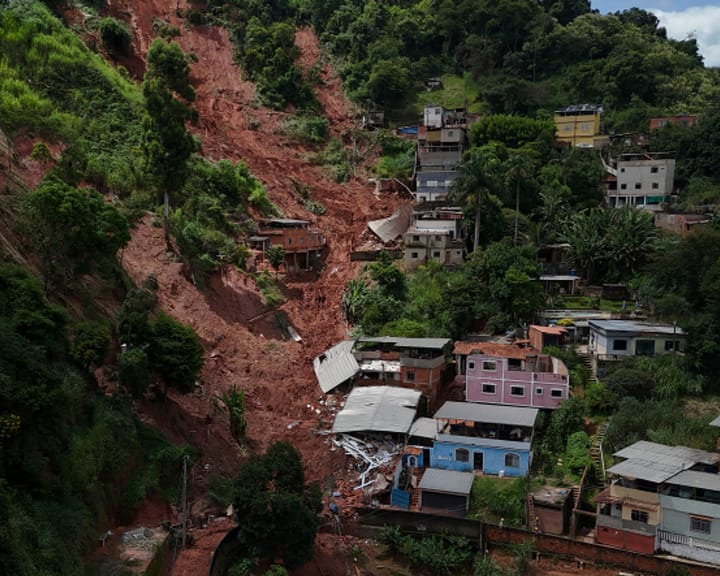
Scientists urge ending fossil fuel use to halt lethal floods in Brazil's coffee region
Record floods that have caused death and devastation in Brazil’s coffee‑growing heartland are projected to worsen if fossil‑fuel consumption continues, a new analysis indicates.
In Minas Gerais, dozens of people have been buried by landslides or swept away as roads turned into streams over the past month.

Jihadist attacks in Nigeria's northeast kill at least 65 soldiers
At least 65 Nigerian soldiers have been slain in jihadist assaults across the country’s northeast over the past fortnight, as the West African nation strives to curb one of the world’s most lethal terror outfits.
On 5 and 6 March, gunmen belonging to Islamic State West Africa Province
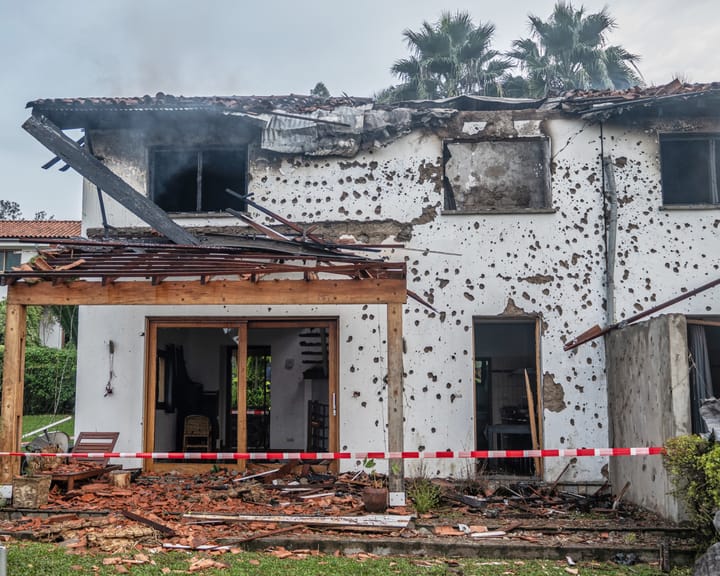
M23 rebels report a French aid worker and two others killed in a drone strike in eastern DRC.
A drone strike in Goma killed three individuals, among them a French humanitarian employed by the UN, according to a representative of the M23 rebels.
The incident occurred around 4 a.m. on Wednesday in Himbi, an upscale residential district of the city that has been under M23 control since