

Treasury officials are reportedly concerned about the timing of a revision to UK productivity forecasts by the Office for Budget Responsibility (OBR), as it may complicate fiscal planning.
Rachel Reeves could be forced to consider up to £30bn in tax increases or spending reductions for her budget on 26 November if, as anticipated, the OBR lowers its productivity growth forecast to align with broader expert consensus.
The OBR's decision to reassess its productivity expectations—which will directly influence the fiscal projections Reeves must work with—has caused unease within the government.
One frustrated Labour figure noted that had the OBR adjusted its productivity outlook earlier, such as in 2023, former chancellor Jeremy Hunt's pre-election reductions to national insurance contributions might have been deemed unaffordable. A senior former Labour adviser remarked: "Rachel has every right to be furious."
For some time, the OBR has been more optimistic about productivity—a crucial factor in economic growth—than other independent forecasters. After reviewing its modelling approach, the OBR is expected to reduce future growth estimates by as much as 0.2%, potentially leaving Reeves £20bn short without policy adjustments.
This comes on top of an additional £10bn shortfall from recent policy reversals—including changes to welfare cuts and the winter fuel allowance—as well as rising borrowing costs.
With initial projections already shared with the Treasury, officials are attempting to convince the OBR that recent policy shifts, such as planning reforms and trade agreements with India and the EU, warrant a slight revision in the government’s favor. A source familiar with the discussions suggested the Treasury was applying pressure on the independent forecaster.
In its March assessment, the OBR did raise its GDP forecast for 2029-30 by 0.2% due to Labour’s planning reforms, a move influenced by Reeves’ former chief economic adviser, John Van Reenen.
However, some economists are doubtful the OBR will go further. "These measures seem designed to meet existing productivity expectations—ones already below the OBR’s current assumptions," said Michael Saunders, a former Bank of England policymaker now at Oxford Economics.
Ministers are also reportedly weighing whether to declare that only the autumn OBR forecast will assess the chancellor’s fiscal decisions against budget rules, while the spring forecast would focus on economic growth. This idea, recently proposed by the IMF, could reduce persistent market speculation about Reeves’ next steps.
However, OBR director Richard Hughes has downplayed the need for such a change, stating the chancellor already has discretion in how forecasts are applied.
Read next
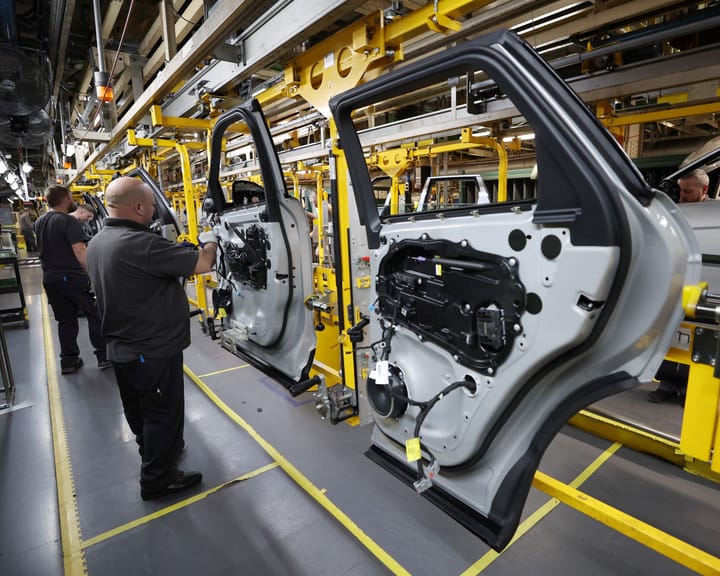
Jaguar Land Rover suppliers voice ‘everything is against us’ amid cutbacks
David Roberts, chair of Coventry-based Evtec, says the outlook for Britain’s automotive sector is grim, with “everything against us.” Evtec is a tier 1 supplier to Jaguar Land Rover, which this week announced 4,000 job cuts over two years despite chancellor John Healey’s attempt to talk

Europe’s fighter jet plans in disarray: what comes next?
When former ECB president and Italian PM Mario Draghi urged Europe to catch up economically with the US and China, defence collaboration was prescribed. No more should each nation build independent boats, tanks or jets; allies should share costs and technologies.
Europe stumbled at the first hurdle. German Chancellor Friedrich
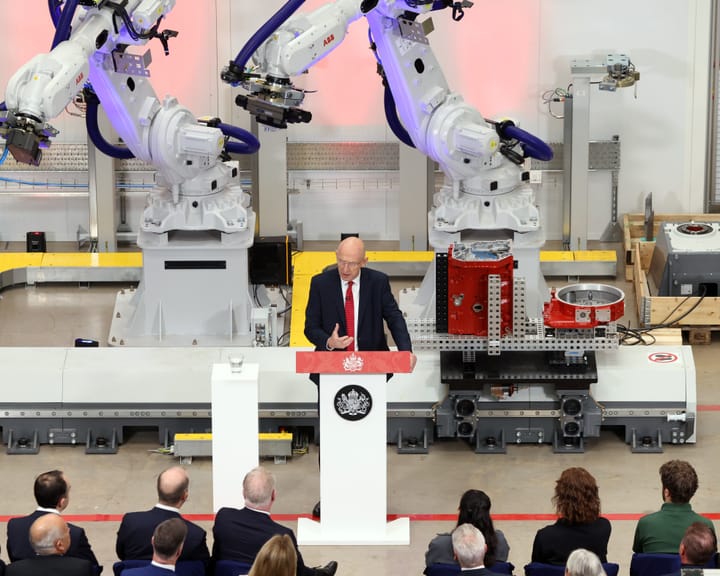
John Healey supports growth but insists Labour must be truthful about spending
John Healey has stated that his primary goal as chancellor will be to boost economic growth, while acknowledging that Labour must be straightforward about controlling public spending at next month's budget.
In his first major address since assuming the role in July, Healey said the leading focus of