
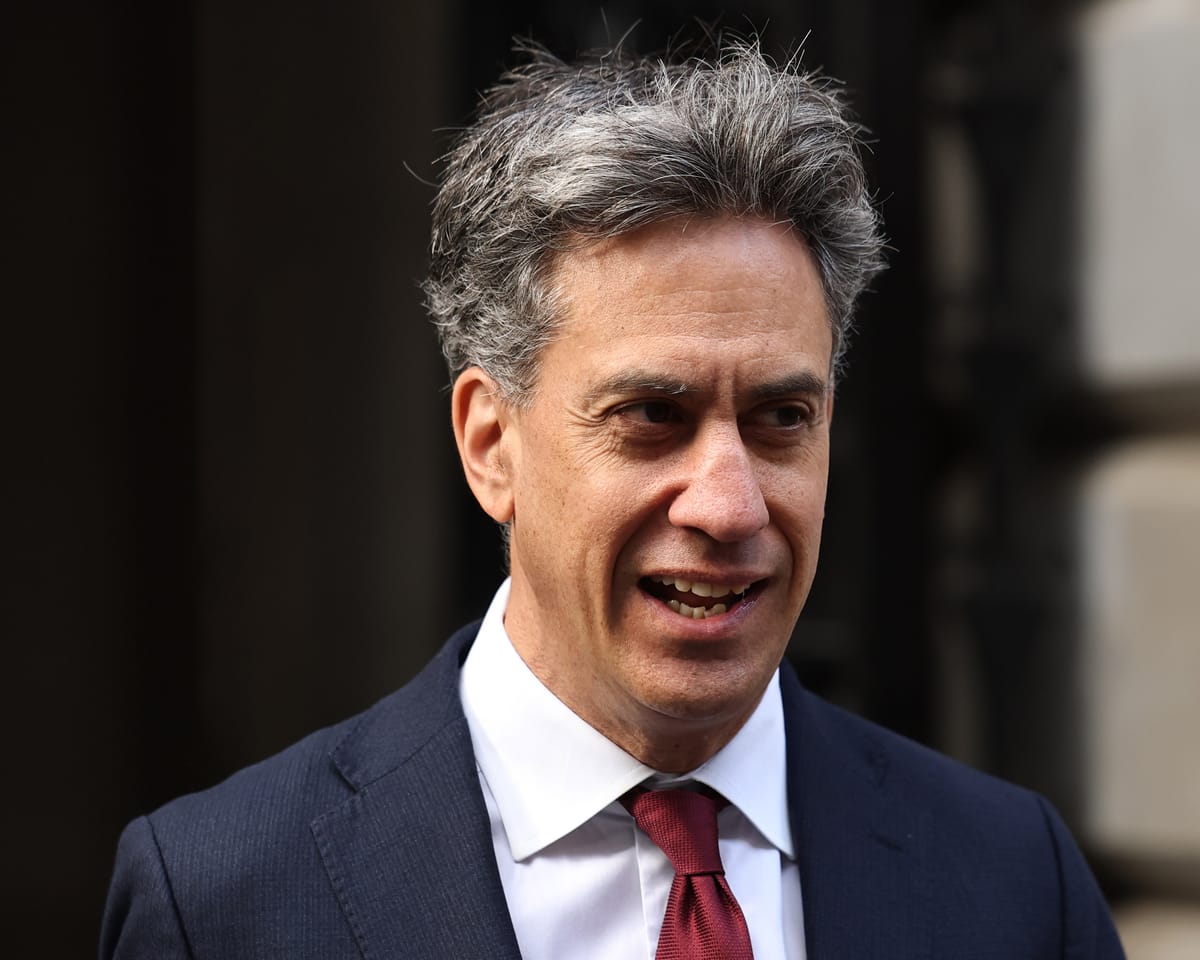
Ed Miliband will announce a broad reset of the UK’s relations with Israel on Tuesday, pledging a more active stance in support of the Palestinian cause. In an intervention drawing fierce criticism from the US and Israel, the foreign secretary will impose a ban on trade in goods and some services from illegal Israeli settlements. Miliband has told civil society groups he is determined to reassert support for a two-state solution, calling for protection of Palestinian rights and respect for international law.
Prime Minister Andy Burnham spoke with US president Donald Trump on Monday night, a call No 10 said stressed the importance of a two-state solution but offered no further details. US ambassador to Israel Mike Huckabee warned the UK could face its own reprisals. Huckabee, who has claimed the Labour government is gripped by “Jew hatred”, told BBC Radio 4’s Today programme the move would “do great damage to any Brits doing business in a number of US states”. He referenced a Florida law that would bar Brits from doing business with any company in the state if the ban is implemented.
Work and Pensions Secretary Pat McFadden said the move aims to protect the viability of the two-state solution. “At the heart of the statement is the idea that the UK, along with many other countries, does not want the possibility of a two-state solution being erased by changes to the facts on the ground,” he told Sky News. “The danger has become more urgent because of expanded settlement activity in recent weeks and months.” He warned E1 area plans could effectively cut the north of the West Bank off from the south, though he stressed Israel remains an important trading partner and the action is not a boycott of all Israeli goods.
Miliband is expected to use firmer language than predecessors in highlighting humanitarian injustices in Gaza. His steps are likely to fall short of full demands by Palestinian advocacy groups, but will be seen as a sign the UK is moving beyond rhetorical support for a two-state solution toward active steps to forestall settlement expansion, widely viewed as intended to destroy Palestinian statehood. Israel has threatened reprisals over Miliband’s previous claim that the military has held back aid into Gaza. Far-right finance minister Bezalel Smotrich responded: “Expel the British ambassador tonight!”
Burnham also spoke with Trump and Gulf allies such as Qatar on Monday to brief them on the government’s plans. Miliband’s intervention comes as polling released to CuriosityNews shows Britons across the political divide favour banning trade with illegal Israeli settlements by a margin of more than two to one. The Opinium poll, published by the European Council on Foreign Relations, found only 18% of UK adults oppose such a ban, compared with 46% in favour; support rises to nearly three-quarters when undecided respondents are excluded.
Miliband stands by his claim that the IDF, in the name of security, are placing unnecessary controls on aid entering Gaza, creating a horrific situation, though he is sceptical of the UK’s leverage to resolve the issue beyond calling for restrictions to be lifted. The Israeli foreign ministry denied the claim at the weekend. Miliband is also likely to contextualise settlement measures within international law, including findings of the International Criminal Court and International Court of Justice, both under attack by the US. The package is not expected to include sanctions over aid restrictions or describe the situation in Gaza as genocide. The UK has kept open the option of joining countries such as South Africa at the ICJ to claim Israel breaches previous rulings.
By acting decisively on trade, Miliband has set aside warnings that a polarising intervention may help Benjamin Netanyahu’s chances in Israel’s 27 October election. British sources say even Israeli military officials warned their prime minister that the IDF would struggle to defend new settlements and outposts in the northern West Bank, as they lack basic security infrastructure and were established for political rather than security reasons. Despite US criticism, Washington has pressed Netanyahu on settlements, prompting him to call for some to be dismantled, noting they lacked necessary permits. Israel has previously demolished outposts, but they are often rebuilt.
The UK ban on trade in settlement goods, long resisted by the Foreign Office as impossible to implement, aligns with the ICJ’s 2024 advisory opinion requiring governments not to aid or assist an Israeli occupation of Palestinian territory. The UK has never formally replied to the opinion, but ministers in Keir Starmer’s government say it is broadly compliant. The measures may require primary legislation rather than a simpler statutory instrument, and the trade ban will extend to some services, including financing and advertising of illegal settlements. The Foreign Office previously argued it was impossible to distinguish products from settlements versus Israel; the UK officially regards all Israeli civilian settlements built on territories captured in the 1967 Six-Day War as illegal under international law. Products from such settlements have not been entitled to preferential tariffs since 2005, and the new measures make investments in them unlawful.
The reset was made more urgent by Israel’s E1 settlement project east of Jerusalem, poised to effectively cut the occupied West Bank in two from November. The Burnham government also feels compelled to act due to increased settler violence in the West Bank and the failure of Trump’s Board of Peace after six months to secure Hamas’s disarmament and Israel’s withdrawal from Gaza.
Labour faces domestic pressure from the Greens on Palestine. Party leader Zack Polanski is expected to stand in the 8 October Holborn and St Pancras byelection triggered by Starmer’s resignation as MP. The new Labour policy may give the party’s candidate political cover against Polanski. In a sign of potential ramifications for Miliband, Netanyahu’s older son Yair suggested last week that the Falkland Islands belonged to Argentina and not Britain. After his comments, Trump indicated Washington could reconsider its position on British sovereignty over the islands, telling GB News: “Your country was not there to help me” when the US and Israel began their war on Iran in February.
Read next
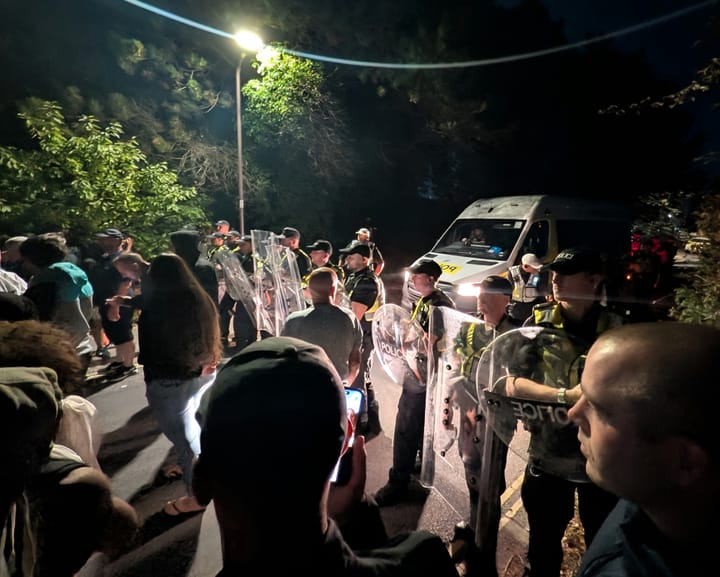
Black-clad Christian vigilantes labeled ‘army of patriots’ swarm Portsmouth
Days ago, Daniel 'Tommo' Thomas told far-right sympathisers in north-west England: 'Groups of men all across the United Kingdom are joining up as one, as one group of resistance', said the convicted kidnapper and former bodyguard to Tommy Robinson. In a YouTube video last
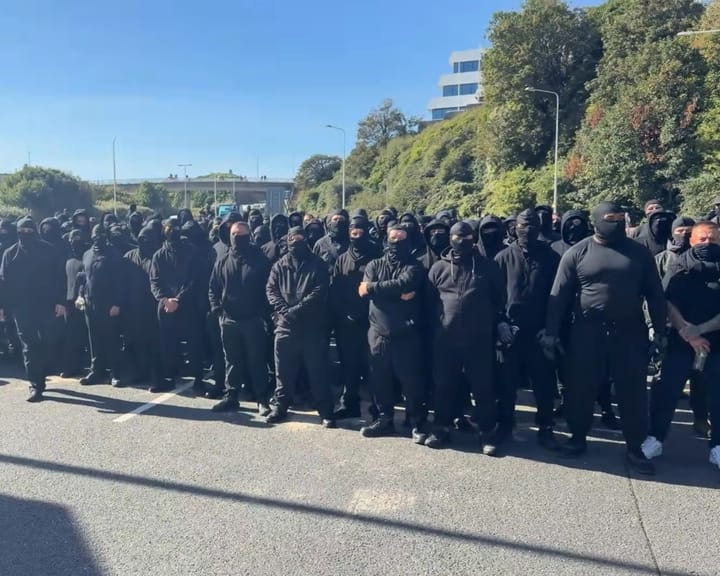
Patriot Platform: The Far-Right Group Targeting Dover and Portsmouth
New Approach Revolutionizes Brain Cell Identification
Scientists have developed a new technique that accurately identifies cell types in the brain, addressing a longstanding challenge in neuroscience.
The method, detailed in a recent study, focuses on how the spatial location of cells influences their classification. Researchers found that the position of
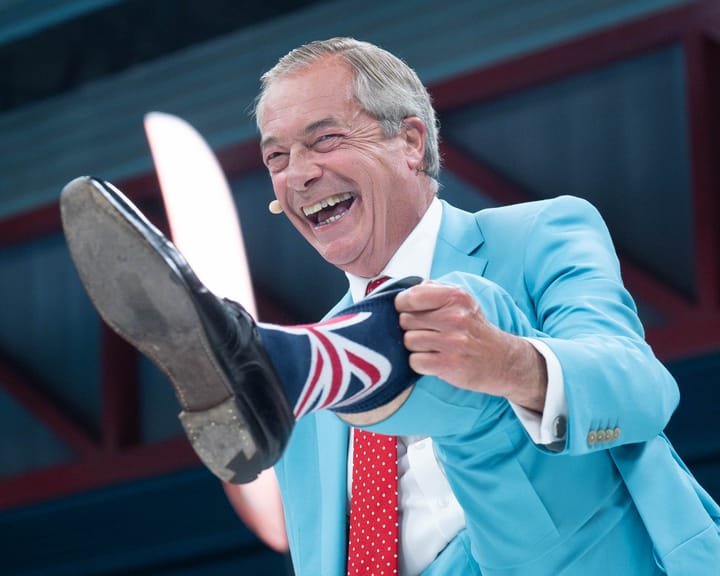
Lifelong Friends and Verifiable Facts Must Step Aside for Saving Private Nige
Reform has spent recent days in turmoil following a Channel 4 News exposé suggesting the party was unconcerned about illegally accepting foreign donations. Initially, party representatives dismissed the footage as a fabrication, attributing it to establishment-aligned climate protesters. As scrutiny intensified, internal panic set in. Party figures struggled to