

Business optimism declined sharply this month across the UK’s services sector as rising expenses and weak demand reduced profits and worsened expectations for the rest of the year.
A recent industry survey found that most firms were pessimistic about their future performance, dismissing the usual post-summer increase in activity.
With falling sales and higher costs squeezing profits, many businesses reduced hiring and scaled back investments, according to the report.
Consumer-facing firms reported a negative outlook for the eighth month in a row, while business-to-business service providers saw a decline in activity for the fourth consecutive month.
Sentiment regarding overall business conditions worsened, though the alarm caused by earlier trade tensions had eased somewhat. The proportion of firms optimistic about the next quarter improved slightly, from -43% in May to -29% in August.
An economist from the industry group described the findings as painting a "grim picture" of the sector, noting that limited areas of stability were not enough to counter a longer-term downturn.
Services represent around three-quarters of UK economic activity, making the sector a key indicator of broader economic health.
The economist added: “Higher labor costs are intensifying financial pressures, while weak demand is restricting firms' ability to raise prices. This has led to reduced hiring, lower investment, and shrinking profits, with many companies prioritizing short-term challenges.”
The latest survey follows similar concerns raised in a separate industry report, which recorded the steepest drop in new orders in nearly three years during July.
Another recent analysis, adjusting official jobless figures, found that unemployment rose from 4.7% in June to 5% in August as businesses postponed hiring.
The findings highlight challenges for policymakers ahead of upcoming fiscal decisions, where efforts to boost economic growth and employment will be a priority.
The conflicting signals—rising unemployment versus persistent inflation—could complicate decisions for monetary officials weighing potential interest rate changes.
Separate data showed manufacturers facing similar profit pressures, with factory gate prices rising at the fastest pace in two years in June.
Prices increased by 1.9% annually, up from 0.7% in April, with the sharpest rises seen in food production, textiles, clothing, and leather goods.
Read next
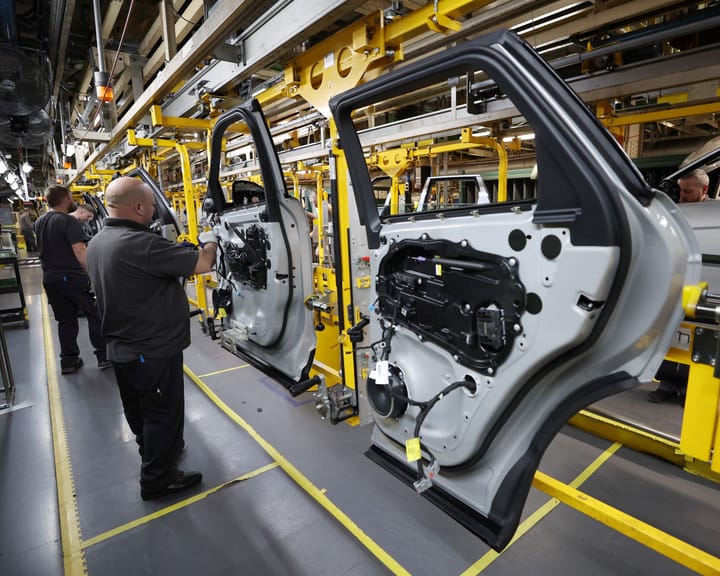
Jaguar Land Rover suppliers voice ‘everything is against us’ amid cutbacks
David Roberts, chair of Coventry-based Evtec, says the outlook for Britain’s automotive sector is grim, with “everything against us.” Evtec is a tier 1 supplier to Jaguar Land Rover, which this week announced 4,000 job cuts over two years despite chancellor John Healey’s attempt to talk

Europe’s fighter jet plans in disarray: what comes next?
When former ECB president and Italian PM Mario Draghi urged Europe to catch up economically with the US and China, defence collaboration was prescribed. No more should each nation build independent boats, tanks or jets; allies should share costs and technologies.
Europe stumbled at the first hurdle. German Chancellor Friedrich
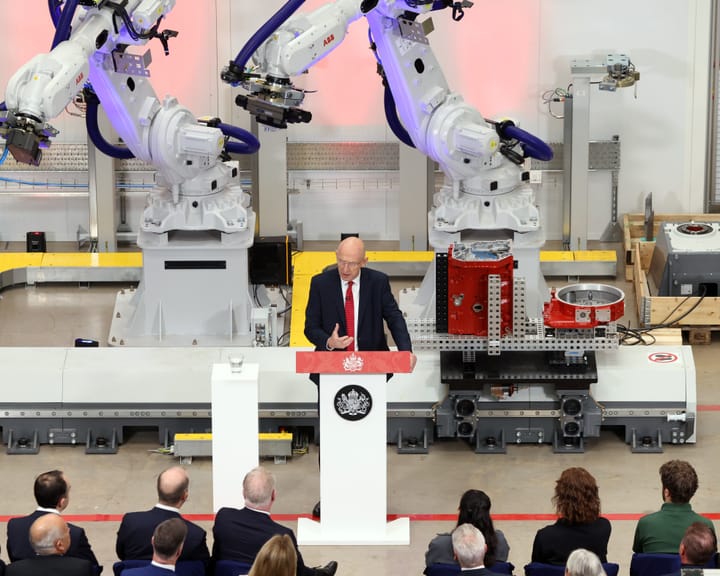
John Healey supports growth but insists Labour must be truthful about spending
John Healey has stated that his primary goal as chancellor will be to boost economic growth, while acknowledging that Labour must be straightforward about controlling public spending at next month's budget.
In his first major address since assuming the role in July, Healey said the leading focus of